
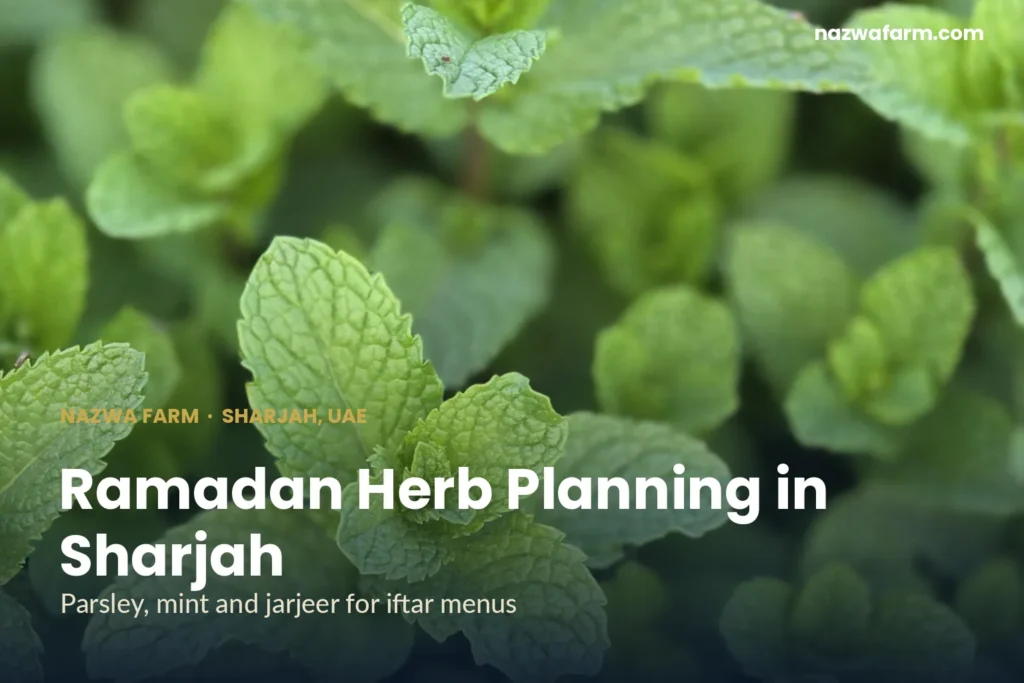
Quick answer: Ramadan vegetables in Sharjah follow the iftar menu: demand for parsley, mint and jarjeer jumps because fattoush, tabbouleh, mezze and mint drinks sell every evening. Plan by forecasting covers per dish, agreeing a daily schedule with your supplier before the month starts, and ordering smaller, fresher quantities rather than stockpiling.
How Does Ramadan Change Herb Demand for Sharjah Restaurants?
During Ramadan, a restaurant’s day turns around. Lunch trade drops, and almost everything happens in a short window around iftar, followed by a second wave for suhoor in many places. Herb usage follows that pattern.
On Sharjah’s waterfront dining strip, from Al Majaz and the Buhairah Corniche to Al Khan and Al Taawun, Lebanese, Turkish and grill restaurants lean heavily on fresh greens. Iftar platters almost always include a salad, a dip with a herb garnish and a cold drink. That puts three crops under pressure at once: parsley for tabbouleh and fattoush, mint for drinks, yoghurt dips and garnish, and jarjeer (rocket) for salads and grill plates.
The challenge is not just higher volume. It is higher volume compressed into a few hours, every single day, for a month. A herb shortage at 5 pm is far more costly than one at lunch on a normal day.
Which Herbs Do Iftar Menus Use Most?
Iftar herbs for restaurants are fairly predictable, which makes planning easier. This is how the main greens are typically used on a Ramadan menu in Sharjah.
| Herb | Typical iftar uses | Planning note |
|---|---|---|
| Parsley (bagdunis) | Tabbouleh, fattoush, kibbeh garnish, grilled meats | Usually the largest herb line; tabbouleh uses a lot per portion |
| Mint (nana) | Fattoush, lemon-mint drinks, laban and yoghurt dips | Drinks can double mint use; track it separately |
| Jarjeer (rocket) | Jarjeer salad, grill plates, sandwiches | Delicate leaf; order close to use |
| Coriander | Soups, samboosa fillings, South Asian iftar dishes | Rises for kitchens serving mixed menus |
| Radish | Fattoush, mezze plates | Holds better than leaves; good for advance prep |
Fattoush deserves special mention, because it pulls on parsley, mint, radish and often rocket together. If you sell it on every iftar set, plan fattoush ingredients in bulk as one combined line.
How Do You Forecast Ramadan Menu Herbs Without Over-Ordering?
The temptation in Ramadan is to order big “just in case”. With fresh herbs, that usually ends in yellow parsley and black-edged mint by the third day. A better approach:
- Use last year’s covers if you have them. Even rough numbers for weekday and weekend iftars help.
- Convert dishes to bundles. Work out how many bundles of each herb one batch of tabbouleh, fattoush or mint drink uses.
- Split by day type. Weekends and the final stretch of the month are usually busier than the first days.
- Order more often, not more at once. Smaller daily deliveries keep herbs fresher than a big order every few days.
- Review after the first week. Check your waste log and adjust quantities with your supplier.
If you are new to bundle and box units, our explainer on how wholesale herb bundles and boxes work will help you convert recipes into an order.
What Should You Agree With Your Supplier Before Ramadan Starts?
The weeks before Ramadan are the right time to talk to your supplier, not the first evening of the month. Use this checklist:
- Your expected herb list and approximate daily quantities.
- Whether you need a different schedule from your usual one, since kitchen hours shift during the month.
- Who on your team sends the daily order, and a backup person.
- How you will flag a sudden increase, for example a large group booking or a corporate iftar.
- Any specialty greens you plan to add to the Ramadan menu.
If you are still choosing a supplier, the questions in our guide to choosing a herb supplier for a restaurant apply just as well to Sharjah kitchens.
How Do You Keep Parsley, Mint and Jarjeer Fresh Through Iftar Service?
Long days, warm afternoons and constant door-opening in the cold room all shorten herb life during Ramadan. Simple handling habits help:
- Move herbs into the cold room as soon as they arrive.
- Wash and dry only what you need for that evening’s service. Wet herbs left in containers spoil quickly.
- Chop parsley for tabbouleh as close to service as practical. Pre-chopped parsley loses colour and leaks moisture.
- Pick mint leaves for drinks in the late afternoon and keep them chilled until use.
- Dress jarjeer at the last minute; it wilts fast once oil and lemon touch it.
- Keep a small reserve for late walk-ins rather than prepping everything at once.
Where to Get Ramadan Vegetables in Sharjah: Al Majaz, Al Khan and Al Taawun
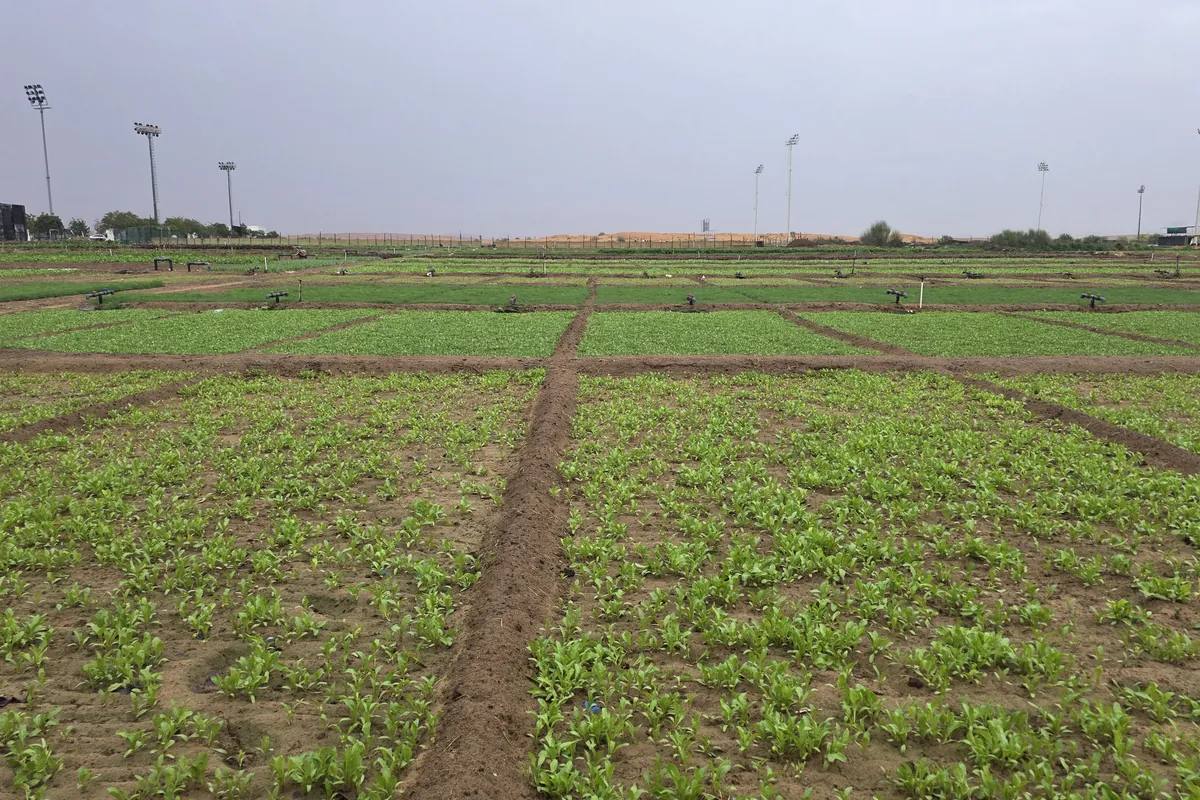
Nazwa Farm is a soil-based family farm in Nazwa, Sharjah, founded in 1999 by Md Mafzal Ahmed. We grow 22+ varieties of herbs and leafy vegetables, including parsley, mint and jarjeer, and supply restaurants, hotels and caterers across Sharjah, Dubai and Ajman every day.
Herbs are harvested the same morning and sent farm-direct, with no distributor markup. They come in bundles, packed in boxes of about 60 bundles. For waterfront restaurants and cafés, see our herb supply for Al Majaz, Al Khan and Al Taawun.
To plan your Ramadan supply, send your list, expected quantities and area on WhatsApp (+971 50 936 9091) or email admin@nazwafarm.com. We confirm the schedule the same day, and farm pickup in Sharjah is available daily. Message us for today’s farm-direct price.
Frequently Asked Questions
Which herbs are most in demand during Ramadan in the UAE?
Parsley, mint and rocket (jarjeer) are usually the busiest, because tabbouleh, fattoush, mezze and mint drinks appear on most iftar menus. Coriander also rises in kitchens that serve soups, samboosa and South Asian dishes. Radish is popular for fattoush and mezze plates. Exact demand depends on your own menu.
How far ahead should restaurants plan Ramadan herb orders?
Talk to your supplier a few weeks before Ramadan starts. Share your expected herb list, approximate daily quantities and any schedule changes. Then place frequent, smaller orders during the month instead of stockpiling, and review quantities after the first week based on your waste log and actual covers.
Should I stock up on herbs before Ramadan?
Not with fresh leafy herbs. Parsley, mint and jarjeer are perishable, so large stockpiles tend to wilt before use. It is better to agree a regular daily or near-daily schedule with your supplier. Items that hold better, such as radish, can be bought slightly ahead if you have cold storage.
How do I keep chopped parsley fresh for iftar tabbouleh?
Wash and dry the parsley thoroughly before chopping, because wet leaves turn mushy. Chop as close to service as you can, keep it covered and chilled, and add lemon and oil only when you assemble the dish. Prepping in smaller batches through the afternoon keeps the colour bright.
Key Takeaways
- Ramadan compresses herb demand into the iftar window, so a shortage costs more than usual.
- Parsley, mint and jarjeer carry most iftar menus in Sharjah’s Lebanese, Turkish and grill restaurants.
- Forecast by dish and covers, then order smaller quantities more often instead of stockpiling.
- Agree your list, schedule and backup contact with your supplier before the month begins.
- Nazwa Farm grows these herbs in Sharjah and harvests them the same morning they are sent.
Planning your Ramadan herb supply in Sharjah? Send us your list early. Order on WhatsApp: +971 50 936 9091