Quick answer: The most useful radish uses restaurant kitchens can adopt cover both parts of the plant: crisp roots for mezze, salads, pickles and mooli dishes, and peppery leaves for stir-fries, soups and dal. Buy radish with fresh leaves attached, separate them on arrival, and order same-morning harvest from Nazwa Farm on WhatsApp.
Which radish uses restaurant menus can build on?
Radish is cheap, colourful and crunchy, yet many kitchens use it only as a garnish. On Ajman’s Corniche and in Al Nakhil, where resort hotels, seafood restaurants and cafés serve Arabic, South Asian and international guests, radish can do much more.
White and red radish, known as fijl (فجل) in Arabic and mooli in South Asian kitchens, fits into at least four menu areas:
- Mezze and grills: whole red radishes with their leaves served beside grilled meat and fish, or sliced into fattoush.
- Salads and slaws: thin raw slices or matchsticks with lemon, olive oil and herbs, a natural partner for seafood.
- South Asian dishes: grated mooli in parathas, mooli raita, and cooked mooli with spices.
- Pickles and soups: quick-pickled radish, and white radish in clear soups and braises in East Asian cooking.
How do white and red radish differ in the kitchen?
The two types behave differently, so it pays to order each for its strengths.
| Feature | White radish (mooli) | Red radish |
|---|---|---|
| Flavour | Mild to sharp, juicy | Peppery, crisp |
| Best raw uses | Grated salads, raita, slaw | Mezze plates, fattoush, garnish |
| Best cooked uses | Curries, parathas, soups, braises | Quick roasting or sautéing |
| Pickling | Excellent, holds crunch | Good for quick pink pickles |
| Leaves | Larger, good for cooking | Smaller, tender, good raw or sautéed |
Asian kitchens rely heavily on white radish. For how it fits with pak choy and spring onion, see our guide to sourcing Chinese vegetables in Dubai.

How can kitchens use radish leaves instead of binning them?
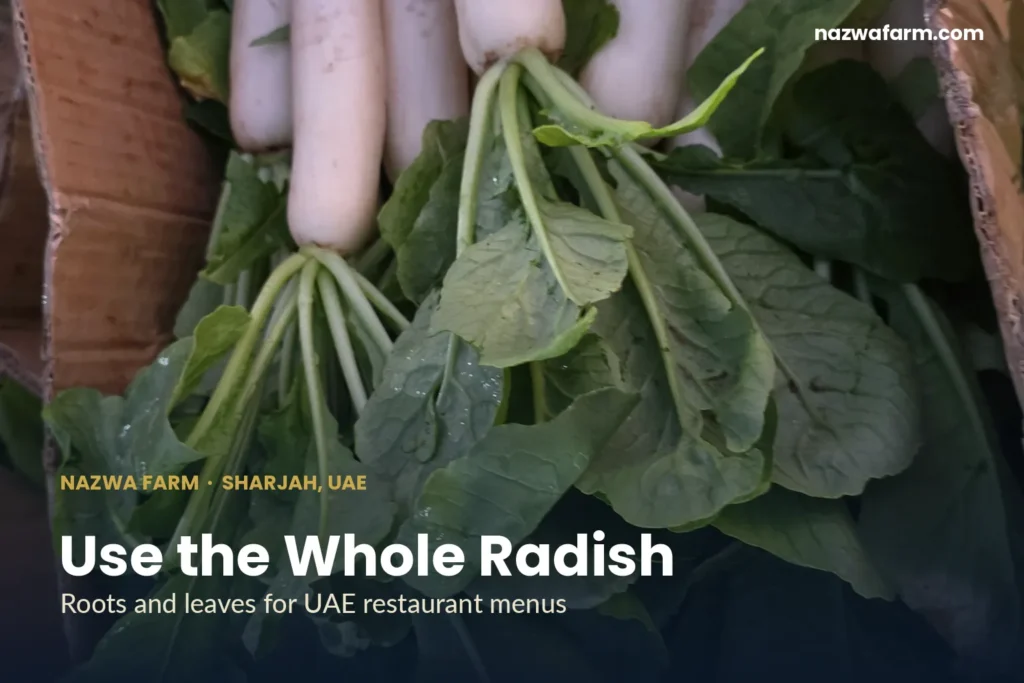
Radish leaves are often thrown away, but fresh ones are peppery, tender and fully edible. Using them turns one purchase into two ingredients.
- Sauté with garlic. Cook chopped leaves in oil with garlic and chilli as a side dish, much like spinach.
- Cook with spices. South Asian kitchens cook mooli leaves with potato, or with lentils in dal. Bengali cooks know them as mulo shak.
- Add to soups. Stir chopped leaves into lentil or vegetable soups at the end of cooking.
- Blend into sauces. Young leaves work in a green sauce or pesto-style dressing for grilled fish.
- Use raw when young. Small, tender leaves from red radish can go into mixed salads.
Only use leaves that look fresh and green. Yellow, limp or slimy leaves should be discarded.
What are good radish dishes for iftar and seafood menus?
Radish is especially useful in two situations that matter on the Ajman waterfront: Ramadan iftar buffets and seafood menus.
For iftar, a plate of fresh radishes, spring onion and herbs alongside dates, soup and fattoush is a familiar sight on many Arabic tables. Radish adds crunch and colour at low cost, and it holds up on a buffet better than soft leaves. For more planning ideas, read our guide to vegetables for iftar catering.
For seafood, thinly sliced raw radish with lemon cuts through fried or grilled fish. A quick radish pickle, made a day ahead, adds a bright side that keeps well through service.
How do you buy and store radish for a restaurant?
- Look for firm roots with smooth skin and no cracks or soft spots. A heavy root for its size is usually juicy.
- Check the leaves: fresh, green leaves are the clearest sign the radish was pulled recently.
- Separate on arrival: cut the leaves off a little above the root, because leaves keep drawing water out of it.
- Store roots chilled and use leaves within a day or two.
- Revive slices in ice water before service for extra crunch on mezze plates.
Radish grown in soil will carry some soil. Scrub roots under running water just before use rather than before storage.
Where to get fresh radish for restaurants on the Ajman Corniche
Nazwa Farm grows white and red radish along with 22+ herbs and leafy vegetables in soil on the family farm in Nazwa, Sharjah. Founded in 1999 by Md Mafzal Ahmed, the farm has supplied Al Aweer traders for about 25 years and now supplies Ajman, Sharjah and Dubai daily, harvesting the same morning with no middleman or distributor markup.
See what we send to hotels, seafood restaurants and cafés on our Ajman Corniche and Al Nakhil supply page. To order, send your list, quantity and area on WhatsApp +971 50 936 9091 or email admin@nazwafarm.com. Your schedule is confirmed the same day, and farm pickup in Sharjah is available daily. Message us for today’s farm-direct price.
Frequently Asked Questions
Can you eat radish leaves?
Yes. Fresh radish leaves are edible and have a peppery flavour similar to mustard greens. Restaurants can sauté them with garlic, cook them with potato or lentils, stir them into soups, or blend young leaves into green sauces. Use only leaves that are green and fresh, and wash them well before cooking.
What is the difference between mooli and fijl?
Mooli is the South Asian name for long white radish, and fijl is the Arabic word for radish in general, covering both white and red types. Arabic mezze plates often feature small red radishes, while South Asian kitchens mostly cook with white mooli. Nazwa Farm grows both.
How should restaurants store radish to keep it crisp?
Cut the leaves off as soon as the radish arrives, because they draw moisture from the root. Keep roots chilled and use leaves within a day or two. Before service, soak sliced radish in ice water for a few minutes to restore crunch for salads and mezze plates.
Where can Ajman restaurants buy fresh radish wholesale?
Ajman restaurants can buy radish at wholesale markets, through distributors or direct from local farms. Nazwa Farm grows white and red radish in Nazwa, Sharjah, and supplies Ajman daily, including the Corniche and Al Nakhil. Send your list on WhatsApp for today’s farm-direct price and a same-day confirmed schedule.
Key Takeaways
- Radish works across mezze, salads, South Asian dishes, pickles and soups.
- Use white radish for cooking and pickling, and red radish for raw mezze and salads.
- Radish leaves are edible and can be sautéed, cooked with lentils or added to soups.
- Separate leaves from roots on arrival and keep both chilled.
- Order same-morning radish from Nazwa Farm on WhatsApp for Ajman Corniche kitchens.
Want fresh radish with crisp leaves for your Ajman menu? Send your list. Order on WhatsApp: +971 50 936 9091