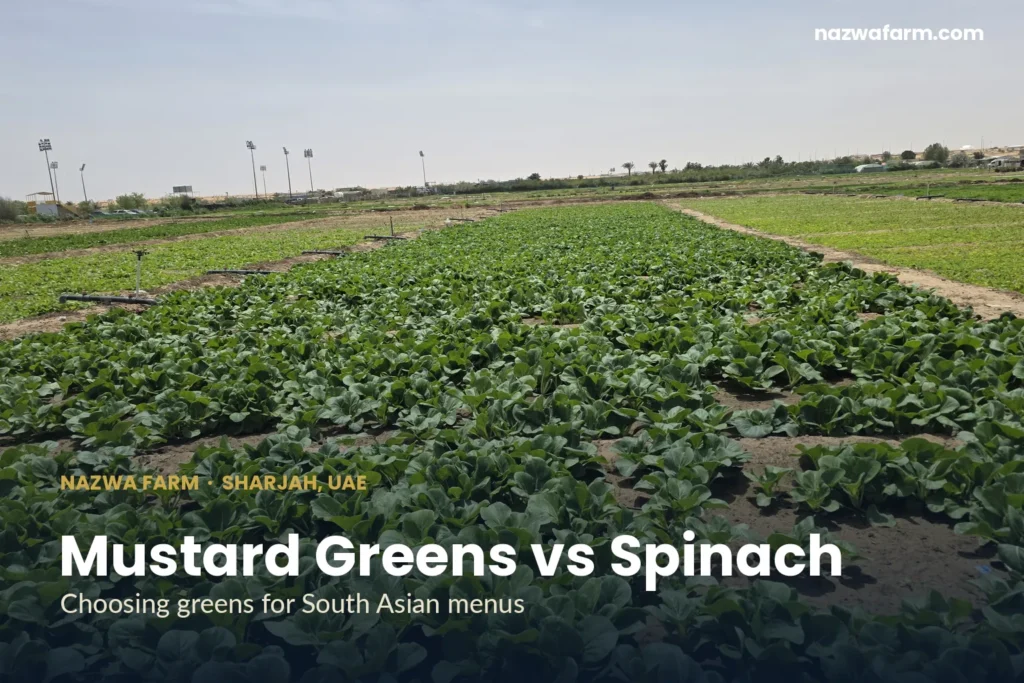
Quick answer: Mustard greens vs spinach is a choice between bite and body. Mustard greens (sarson, shorshe) are peppery, slightly bitter and need longer cooking. Spinach (palak) is mild, cooks in minutes and gives a smooth green base. Punjabi sarson ka saag blends both; Bengali shorsher shak is usually mustard greens on their own.
What is the difference between mustard greens and spinach?
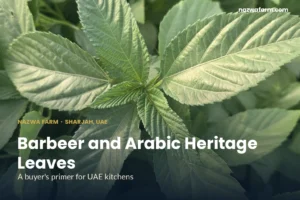
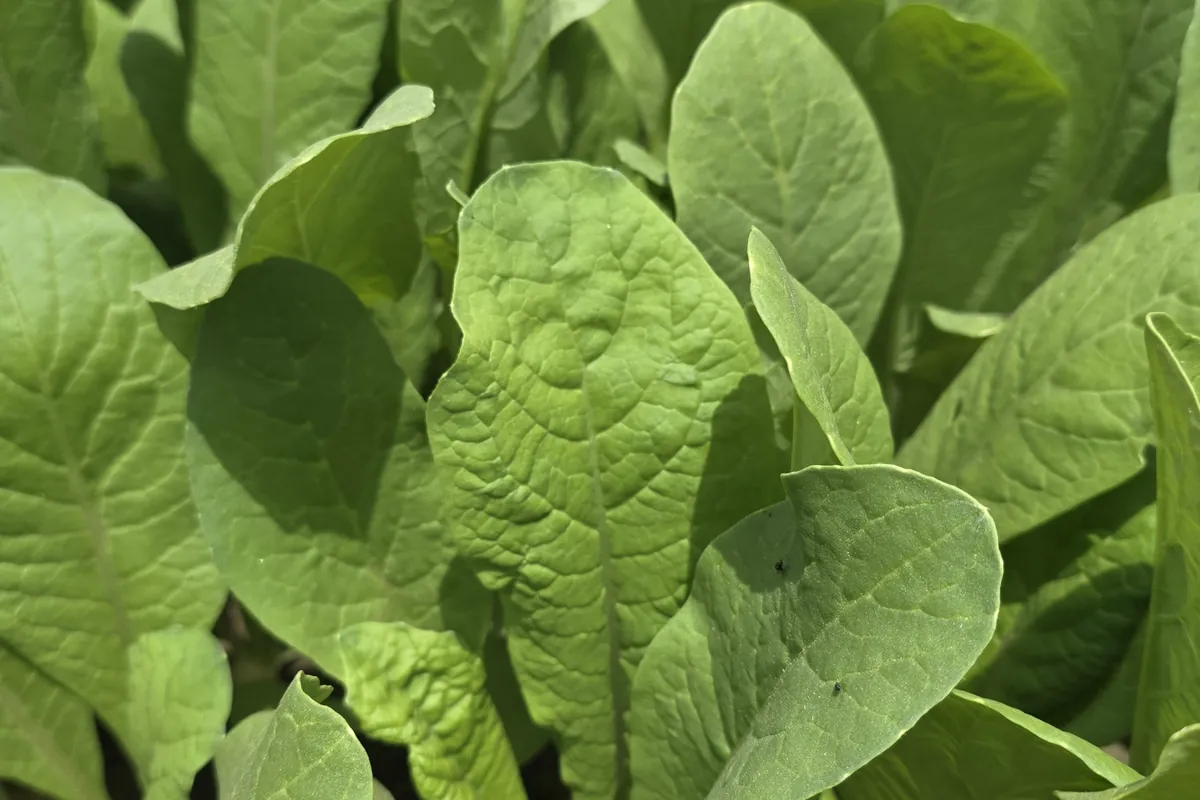
Mustard greens (sarson, shorshe) are the leaves of Brassica juncea, part of the cabbage and mustard family. They carry the same sharp, nose-tingling heat found in mustard seed, plus a gentle bitterness. Leaves are larger and firmer, and stems are more fibrous.
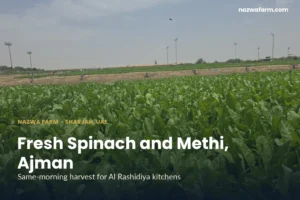
Spinach (palak) is Spinacia oleracea, from the amaranth family. It is mild, slightly earthy and very soft, and it cooks down in a few minutes.
On a South Asian menu, that difference decides the dish. Mustard greens give a saag its character. Spinach gives it volume, colour and smoothness.
Mustard greens vs spinach (sarson vs palak): comparison table
Use this sarson vs palak table when planning a menu or a weekly order.
| Point | Mustard greens (sarson / shorshe) | Spinach (palak) |
|---|---|---|
| Botanical name | Brassica juncea | Spinacia oleracea |
| Taste | Peppery, pungent, slightly bitter | Mild, earthy |
| Leaf and stem | Larger, firmer leaves; fibrous stems | Soft leaves; thin tender stems |
| Cooking time | Longer; needs slow cooking to soften | Short; wilts in minutes |
| Colour after cooking | Darker, deeper green | Bright green if not overcooked |
| Signature dishes | Sarson ka saag, shorsher shak bhaji | Palak paneer, dal palak, aloo palak |
| Role in a mixed saag | Flavour and bite | Body, colour, softness |
Why does sarson ka saag use both greens?
Classic Punjabi sarson ka saag greens are mostly mustard leaves, softened with a share of spinach and, in many homes, bathua (chenopodium). Mustard greens on their own can taste harsh and stay coarse; spinach rounds off the bitterness and makes the purée smoother.
The cooking is slow. The greens are chopped, simmered until very soft, mashed or coarsely blended with a little maize flour (makki ka atta) to bind, then finished with a tempering of ghee, garlic, ginger, onion and green chilli. It is traditionally served with makki di roti and a knob of butter.
Ratios vary by family and restaurant, so there is no single correct mix. What matters for a kitchen is consistency: once your chef settles on a ratio, order the two greens in matching proportions so the dish tastes the same every day.
How do Bengali kitchens cook shorsher shak?
In Bengali cooking, mustard greens are usually the star rather than a partner. A simple shorsor shak recipe, as cooked in many homes and restaurants, goes like this:
- Wash the greens well, trim tough stem ends and chop leaves and tender stems finely.
- Heat mustard oil until it shimmers, then add sliced garlic and dried red chillies, and sometimes a pinch of kalonji (nigella seed).
- Add the greens with salt and a pinch of turmeric; stir as they wilt.
- Cook uncovered until the moisture dries off and the greens are soft, adding a little green chilli at the end if you like.
- Serve as a bhaji with plain rice and dal.
Some cooks add small potatoes, shrimp or dried fish. Bengali menus also rely on other greens such as pui shak; our guide to Malabar spinach vs spinach explains how that one behaves differently.
How should you buy, store and prep each green?
Selection cues
- Mustard greens: firm, deep green leaves with no yellowing; stems that snap rather than bend; no holes or slimy patches.
- Spinach: crisp leaves with no wet, dark spots; fresh-cut stem ends; no strong smell.
Storage and prep
- Unpack both on arrival and keep them out of warm prep areas.
- Store unwashed or well drained in lined, covered containers in the chiller.
- Wash in several changes of water, lifting the leaves out so grit stays behind.
- For mustard greens, strip or chop tough stems separately; they need longer cooking.
- Blanch spinach briefly and refresh in cold water if you want a bright green purée.
Common mistakes
- Cooking mustard greens for the same short time as spinach, leaving them tough and harsh.
- Overcooking spinach until it turns olive-grey.
- Ordering by raw volume without allowing for shrinkage.
If your team also cooks water spinach, see kangkong vs spinach for a quick comparison.
Where to get mustard greens and spinach in Rolla, Sharjah
Rolla and Al Ghuwair are among Sharjah’s longest-established food streets, with many Bengali, Pakistani and Indian restaurants and groceries. Our fresh greens supply in Rolla and Al Ghuwair is built around exactly these menus: mustard greens, spinach, red palak, pui shak and methi.
Nazwa Farm grows these greens in soil on our family farm in Nazwa, Sharjah, and has done so since 1999. We harvest the same morning and sell farm-direct, without a middleman. Supply runs daily across Sharjah, Dubai and Ajman, and farm pickup in Sharjah is available every day.
To order, send your list, quantity and area on WhatsApp or email admin@nazwafarm.com, and we confirm the schedule the same day. For prices, message us for today’s farm-direct price.
Frequently Asked Questions
Can I use spinach instead of mustard greens in sarson ka saag?
You can make a green saag with spinach alone, but it will not taste like sarson ka saag. The dish gets its sharp, peppery character from mustard greens. Spinach is normally added only to soften that bite and smooth the texture. Without mustard greens, you are closer to a palak saag.
Why are mustard greens bitter?
Mustard greens contain the same natural compounds that give mustard seed its heat, which bring a peppery, slightly bitter taste. Longer, slower cooking mellows it, and mixing in spinach or another mild green softens it further. Fresher, younger leaves are usually less harsh than older, tougher ones.
What is shorshe shak in English?
Shorshe shak, also written shorsher shak or shorsor shak, is the Bengali name for mustard greens. Shorshe means mustard and shak means leafy greens. The same vegetable is called sarson in Hindi and Punjabi, and its botanical name is Brassica juncea.
Do mustard greens take longer to cook than spinach?
Yes. Spinach wilts within a few minutes, while mustard greens have firmer leaves and fibrous stems that need longer, slower cooking to become tender. In a mixed saag, start the mustard greens first, then add spinach later, or cook them together long enough for the mustard greens to soften.
Key Takeaways
- Mustard greens (Brassica juncea) bring peppery bite; spinach (Spinacia oleracea) brings body and colour.
- Sarson ka saag uses mostly mustard greens, softened with spinach; Bengali shorsher shak is usually mustard greens alone.
- Mustard greens need longer cooking and separate handling of tough stems.
- Fix your saag ratio and order the two greens in matching proportions for consistency.
- Rolla and Al Ghuwair kitchens can order both farm-direct from Nazwa, Sharjah.
Cooking saag or shorsher shak in Rolla or anywhere in Sharjah? Send us your list and quantity. Order on WhatsApp: +971 50 936 9091