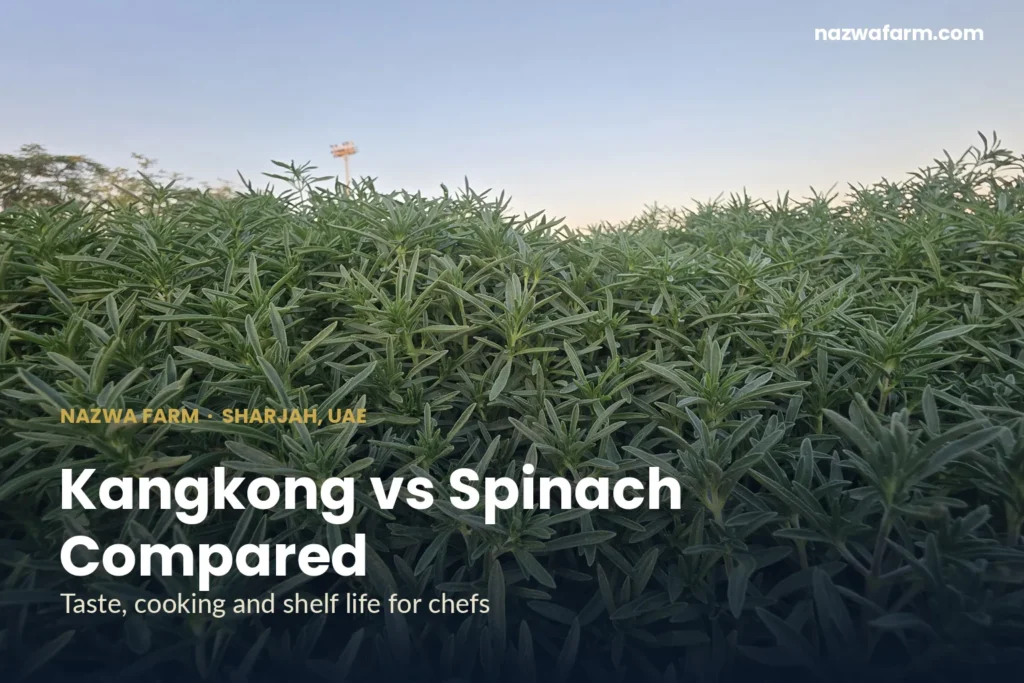
Quick answer: Kangkong vs spinach is not a case of two varieties of one plant. Kangkong (water spinach) is Ipomoea aquatica, a morning glory relative with hollow, crunchy stems. Spinach is Spinacia oleracea, with soft leaves that collapse when cooked. Kangkong suits fast stir-fries and sour soups; spinach suits curries, pies and salads.
Is kangkong a type of spinach?
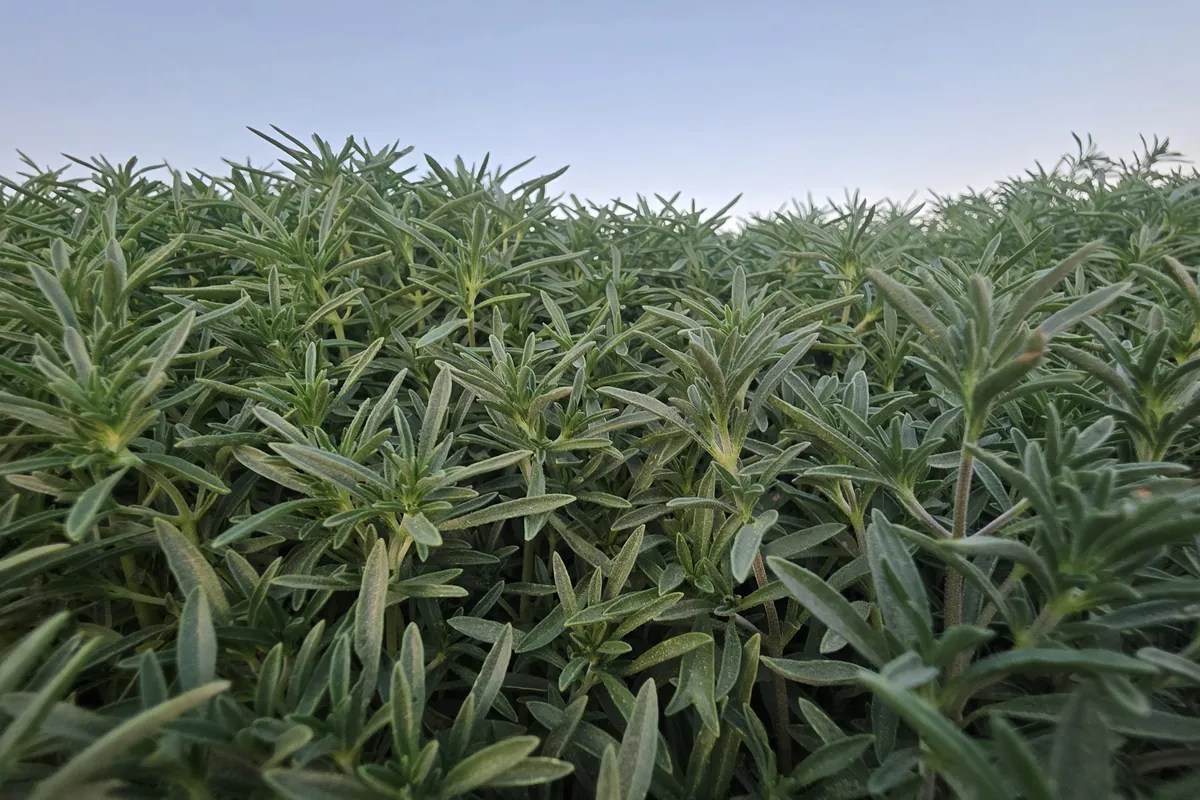
No. Despite the English name water spinach, kangkong (con cong) is not related to spinach. It belongs to the morning glory family, Convolvulaceae, the same family as sweet potato. It grows in wet ground or shallow water and has long, hollow stems with arrow-shaped leaves.
Spinach (palak) is Spinacia oleracea, from the amaranth family. It grows as a low rosette of broad leaves on short stems.
The “spinach” label stuck to kangkong because both are cooked as leafy greens. In the kitchen, though, they behave very differently, and swapping one for the other changes a dish.
Kangkong vs spinach: side-by-side comparison
This table covers the points chefs and buyers ask about most when comparing water spinach vs spinach.
| Point | Kangkong (water spinach) | Spinach (palak) |
|---|---|---|
| Botanical name | Ipomoea aquatica | Spinacia oleracea |
| Plant family | Morning glory (Convolvulaceae) | Amaranth (Amaranthaceae) |
| Other names | Con cong, rau muống, kangkung, ong choy | Palak, sabanekh |
| Structure | Long hollow stems, narrow arrow-shaped leaves | Broad leaves on short stems |
| Taste | Mild, slightly sweet, green | Earthy, slightly mineral |
| Texture when cooked | Stems stay crunchy, leaves soften | Leaves collapse to a soft mass |
| Best methods | Hot stir-fry, sour soups, quick braise | Curries, purées, pies, sautés, raw baby leaf |
| Shrinkage | Moderate | Heavy; a large volume cooks down a lot |
| Shelf life after harvest | Short; tips wilt and stems can darken quickly | Short; leaves yellow and turn slimy if wet |
How is kangkong cooked in Filipino and Southeast Asian kitchens?
Cooking kangkong is mostly about high heat and short time. The stems are cut into finger lengths and go into the pan first; the leaves follow seconds later.
- Adobong kangkong (Philippines): stir-fried with garlic, vinegar and soy sauce.
- Sinigang: added to the sour tamarind soup at the end, alongside other greens.
- Rau muống xào tỏi (Vietnam): stir-fried hard with plenty of garlic.
- Kangkung belacan (Malaysia, Indonesia): fried with shrimp paste and chilli.
- Pad pak boong (Thailand): flash-fried with garlic, chilli and soy bean sauce.
The same Filipino menus usually call for pechay too. Our explainer on pechay vs pak choy clears up the naming confusion around that green.
How is spinach used in South Asian and Arabic kitchens?
Spinach is cooked longer and often blended. It carries spices well and gives body to sauces.
- Palak paneer and saag: blanched, puréed and cooked with spices.
- Palak dal and aloo palak: chopped and stirred into lentils or potatoes.
- Fatayer bi sabanekh: Levantine pastries filled with spinach, onion, sumac and lemon.
- Sabanekh stew: spinach with meat or chickpeas, served with rice.
- Salads: young spinach leaves raw, with a sharp dressing.
Because spinach shrinks so much, order by cooked yield, not by how full the box looks. A kitchen that switches from imported baby spinach to bunched local palak should test-cook one batch to recalculate portions.
Which keeps better: kangkong or spinach?
Neither is a long-keeping vegetable, and both suffer in UAE heat. Kangkong is often the more fragile of the two once harvested, because its soft tips wilt fast and cut stems dry out. Spinach holds a little better if it stays dry and cold, but wet leaves turn slimy.
Storage checklist for both
- Unpack on arrival; never leave greens in a warm delivery area.
- Remove ties and any damaged leaves.
- Store unwashed or fully drained, in lined or perforated containers in the chiller.
- Keep kangkong stems upright or loosely laid, not crushed under other boxes.
- Wash just before prep, in plenty of cold water, lifting the greens out so grit stays behind.
- Order little and often rather than once a week.
What about kangkong nutrition?
Both are leafy greens that add vitamins, minerals and fibre to a meal, and both suit menus that want more vegetables on the plate. We keep it at that: neither is a medicine, and kitchens should present them simply as fresh, wholesome greens.
Where to get kangkong and spinach in International City
Nazwa Farm grows both con cong and spinach in soil on our family farm in Nazwa, Sharjah. We harvest the same morning we supply and sell farm-direct, without a distributor in between.
Restaurants, groceries and traders in International City, Dragon Mart and Warsan can order through our vegetable supply for International City and Warsan. Send your list, quantity and area on WhatsApp or by email, and we confirm the schedule the same day. We supply daily across Dubai, Sharjah and Ajman, with daily farm pickup in Sharjah.
Outside those routes, availability varies. If your kitchen is on the east coast, read our note on fresh vegetables for Fujairah and message us to check whether we can supply your area. For prices, message us for today’s farm-direct price.
Frequently Asked Questions
Can I substitute spinach for kangkong?
You can, but the dish will change. Spinach has no crunchy stems and collapses when cooked, so an adobong kangkong made with spinach becomes soft and wet. For a closer result, add spinach right at the end of cooking, or choose another stem-crunchy green. In soups such as sinigang the swap works better.
Why is kangkong called water spinach?
Kangkong grows naturally in wet ground and shallow water, and it is cooked as a leafy green like spinach, so English speakers called it water spinach. Botanically it is unrelated. Kangkong is Ipomoea aquatica from the morning glory family, while spinach is Spinacia oleracea from the amaranth family.
Do you eat kangkong stems?
Yes. The stems are one of the best parts of kangkong. They are hollow and stay crunchy after a quick stir-fry. Trim off the tough lower ends, cut the rest into short lengths and cook them a few seconds before adding the leaves so both are done at the same time.
How do you stop kangkong wilting before service?
Keep it cool and out of direct air flow, do not store it wet, and avoid stacking heavy boxes on top. Prep it close to service rather than hours ahead. Buying freshly harvested kangkong in smaller, more frequent orders also gives the kitchen more usable time.
Key Takeaways
- Kangkong (Ipomoea aquatica) and spinach (Spinacia oleracea) are from different plant families.
- Kangkong has crunchy hollow stems for fast stir-fries; spinach collapses and suits curries, pastries and purées.
- Both are perishable, so store them dry, chilled and uncrushed, and wash just before prep.
- Order spinach by cooked yield because it shrinks heavily.
- Same-morning harvested greens from Sharjah give International City kitchens more usable time.
Need kangkong, spinach or pechay for your Asian or South Asian kitchen? Send us your list and area. Order on WhatsApp: +971 50 936 9091