TL;DR
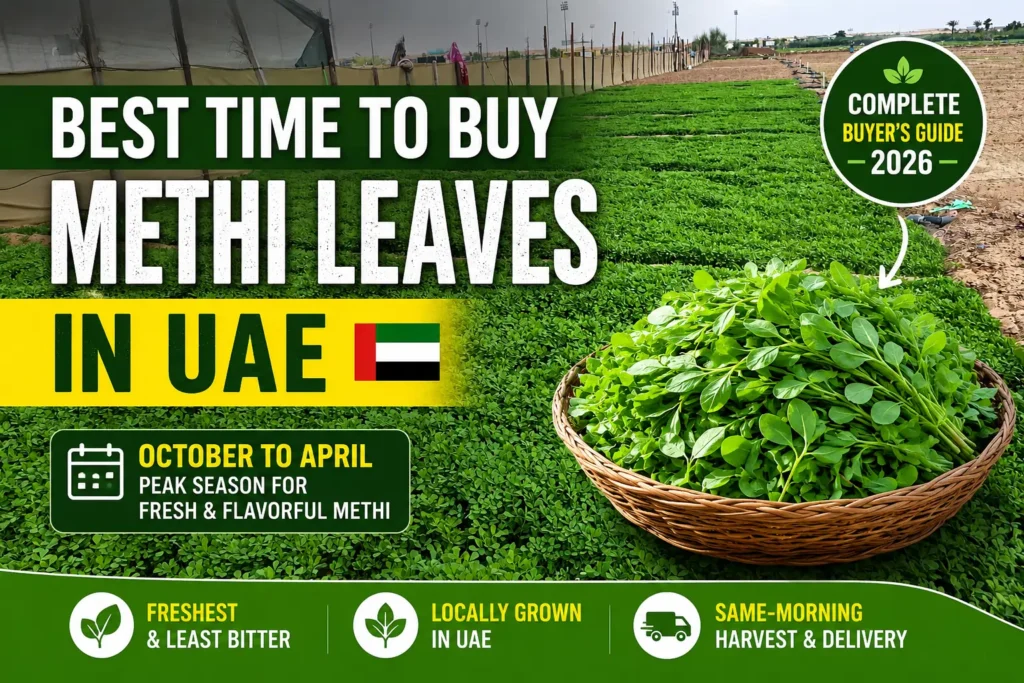
- The best time to buy methi leaves in the UAE is from October through April – the UAE’s cooler growing season when temperatures between 15°C and 28°C produce the most aromatic, least bitter, and most nutritionally dense fresh methi leaves.
- The UAE’s temperate growing season runs from October through April, during which local farms across Dubai, Abu Dhabi, Sharjah, and Al Ain flourish with fresh seasonal produce (NRTC, 2026).
- Peak quality methi months are November, December, January, and February – when UAE temperatures are ideal for fenugreek cultivation and the leaves grow tender, fragrant, and with lower bitterness.
- Methi available outside this local growing window typically comes from imported cold-chain supply, which means it has already aged during days of transit – arriving with faded aroma, higher bitterness, and a shorter remaining shelf life in your kitchen.
- Nazwa Farm grows fresh methi year-round in Nazwa, Sharjah using their 25+ years of soil farming expertise, and delivers same-morning harvested leaves to buyers across Dubai, Sharjah, Ajman, and Abu Dhabi with no middlemen and no cold-chain delays.
Why “When You Buy” Methi Matters as Much as “Where You Buy” It
Most buyers think of methi availability as a binary question – either the market has it or it does not. The more useful question is: what is the quality of what is available right now, and where did it actually come from?
Fresh methi leaves are a highly perishable leafy green. Fresh fenugreek is available in farmers’ markets from late November to early March – during this window the leaves offer unparalleled health benefits, a distinctive aroma, and unbeatable flavor (Foodiesonly, 2025).
When fresh methi is in peak season and sourced locally, it arrives with a strong, distinctive aroma, bright green color, tender leaves, and a bitterness level that is pleasant and manageable. When it has been in cold-chain transit for several days from India or Pakistan, the picture is different: muted aroma, yellowish-green color on older leaves, higher bitterness from age-related compound changes, and a very short remaining shelf life from the moment it reaches your kitchen.
This guide covers the UAE’s methi buying cycle month by month, what drives quality differences between seasons, how to tell good fresh methi from poor-quality methi at the point of purchase, and why a local UAE farm source changes the calculation entirely.
The UAE’s Growing Seasons and Why They Define Methi Quality
The UAE has two distinct agricultural seasons that directly determine what kind of fresh methi is available to buyers in Dubai, Sharjah, Ajman, and Abu Dhabi.
The Cool Season (October to April) – Peak Growing Period
In the UAE, the growing season typically begins in the cooler months from October to March. During this period, temperatures are more conducive to plant growth, and water evaporation rates are lower, allowing for more effective irrigation (Sprezzatura Holding, 2025).
Winter in the UAE is the peak gardening season. The cooler temperatures and occasional rainfall create ideal growing conditions. Many vegetables thrive in cooler temperatures including spinach and herbs (Warriors Landscape, 2025).
Fenugreek specifically is a cool-season crop. Fenugreek is a cool season crop that can tolerate frost conditions to some extent. Regions with high rainfall should be avoided for growing fenugreek (Asia Farming, 2022).
The combination of the UAE’s October-to-April cool season and fenugreek’s preference for exactly these conditions creates a natural alignment: this is when UAE soil-grown methi is at its absolute best.
The Hot Season (May to September) – Supply Shifts to Imports
UAE summer temperatures regularly exceed 40°C, with peak months of June, July, and August reaching 48°C or higher. Summer temperatures in the UAE regularly hit 122°F (50°C) (UAEpedia, 2025). These temperatures make open-soil cultivation of cool-season crops like methi extremely challenging.
During summer, most fresh methi available in UAE markets comes from imported supply – primarily from India and Pakistan, where fenugreek grows in cooler highland regions during this period. That methi travels by air freight or refrigerated sea container, spending 2 to 7 days in cold-chain transit before reaching UAE markets.
Delicate leafy greens may only last 7 to 10 days under proper cold chain conditions, and even a few hours at improper temperatures can reduce shelf life by several days and affect taste, texture, and nutritional value (Flex Foods, 2025).
This means summer-sourced imported methi often arrives having already used 2 to 5 days of its shelf life in transit – leaving very little remaining freshness from the moment it reaches the buyer.
Month-by-Month Methi Quality Guide for UAE Buyers
This calendar maps what to expect from fresh methi quality in Dubai, Sharjah, Ajman, and Abu Dhabi throughout the year.
| Month | UAE Temperature | Methi Quality | Primary Source | Buyer Recommendation |
|---|---|---|---|---|
| October | 28-35°C (cooling) | Good – early season | Local farms beginning harvest | Good time to start buying |
| November | 20-28°C | Excellent | UAE local farms at peak | Best buying window opens |
| December | 15-24°C | Excellent | UAE local farms – peak season | Prime quality – buy freely |
| January | 14-22°C | Excellent | UAE local farms – peak season | Prime quality – best of year |
| February | 16-24°C | Excellent | UAE local farms – peak season | Prime quality – buy freely |
| March | 20-30°C | Very Good | UAE local farms – late season | Good – slight quality decline as heat rises |
| April | 28-35°C (warming) | Good to Moderate | Local and imported mix | Acceptable – check freshness carefully |
| May | 35-42°C | Moderate | Primarily imported | Inspect carefully before buying |
| June | 40-46°C | Variable | Imported cold chain | Buy only from reliable suppliers |
| July | 42-48°C | Variable | Imported cold chain | Most challenging month for quality |
| August | 42-48°C | Variable | Imported cold chain | Most challenging month for quality |
| September | 38-44°C (cooling) | Moderate | Imported with some early local | Improving toward season end |
Sources: UAE climate data; UAE agricultural season guidance (NRTC, 2026; Warriors Landscape, 2025)
What Makes Cool-Season Methi Better: The Science
The quality difference between peak-season and off-season methi is not just a matter of freshness. The growing conditions during the UAE’s cool months produce structurally better leaves through three distinct mechanisms.
1. Temperature Controls Bitterness Level
Fenugreek bitterness comes primarily from saponins and alkaloids concentrated in the leaves. In cool temperatures, the plant grows more slowly and produces a more balanced ratio of these bitter compounds to the sugars and amino acids that give methi its characteristic warm, earthy flavor. Leaves grown in heat stress concentrate more bitter compounds as a physiological response to high temperatures.
This means cool-season methi from November to February is naturally milder in bitterness than heat-stressed summer methi – requiring less preparation work (salt soaking, squeezing) before cooking.
2. Cool Temperatures Preserve Volatile Aroma Compounds
The distinctive fragrance of fresh methi comes from volatile organic compounds – primarily sotolon – that evaporate rapidly at high temperatures. Cool-season methi retains these volatile compounds at higher concentrations both during growth and after harvest. This is why a bunch of November-harvested methi from Nazwa Farm fills a kitchen with its characteristic aroma immediately on opening, while a bundle of August cold-chain imported methi may smell faintly of the refrigerator with only a trace of the characteristic methi scent.
3. Optimal Growth Rate Produces Tender Leaves
Fenugreek grows best in cool weather. The optimal temperature range is from 10°C to 32°C (Agri Farming, 2023). In these conditions, the plant grows at the pace that produces the small, tender, trifoliate leaves with the most favorable texture and flavor for cooking. In heat stress above 35°C, if the plant survives at all, it accelerates toward bolting – flowering and becoming tough and more intensely bitter.
The practical upshot: buying methi between November and February from a UAE local farm gives you leaves that need less preparation, taste better, smell better, and stay fresh longer in your kitchen than off-season imported alternatives.
The Local Farm Advantage: Why Same-Morning Harvest Changes Everything
Even within the cool growing season, there is a significant quality difference between methi from a UAE local farm and methi imported through cold-chain logistics – even when both are technically “fresh.”
A high amount of losses – approximately 50% – still occur during the packaging, pre-cooling, transportation, and storage of fresh agricultural produce. Cold chain technologies have been employed to reduce quality loss but have not eliminated it (MDPI, 2020).
Cold storage slows deterioration but does not eliminate microbial growth or oxidative damage. In hot-climate supply chains, the weakest points are often outside temperature-controlled environments. Imported produce continues to lose freshness despite cold chain compliance (Miracle Everyday, 2026).
For methi specifically, the chain from Indian or Pakistani farm to UAE buyer typically looks like this: harvest, field packing, transport to a regional sorting facility (6 to 12 hours), cold storage (12 to 24 hours), air freight or refrigerated sea shipping (12 to 72 hours), UAE customs and clearance (12 to 24 hours), wholesale market distribution (24 hours), retail store shelf time (24 to 48 hours). By the time imported methi reaches the buyer’s kitchen, it is often 3 to 5 days post-harvest.
Same-morning harvest from Nazwa Farm means exactly that: leaves cut before sunrise, packed, and delivered to the buyer in Dubai, Sharjah, Ajman, or Abu Dhabi the same morning. The time from cutting to kitchen is measured in hours, not days. The aroma is intact, the color is vivid green, the bitterness is at its most manageable, and the remaining shelf life in the buyer’s kitchen is at its maximum.
How to Assess Methi Quality When Buying
Whether you are buying from a farm, a wholesale market, or a grocery store, these physical indicators tell you reliably what quality you are getting.
Signs of Peak-Quality Fresh Methi
Look for vibrant green leaves, avoiding any yellowing or wilting. Fresh fenugreek should have a strong, aromatic smell indicative of its flavor. Avoid leaves that show signs of mold, discoloration, or sliminess (Can I Eat Expired, 2025).
The full checklist for good fresh methi:
- Color: Bright, clear green leaves. Stems may have a slight reddish tinge at the base which is normal. No yellowing.
- Aroma: Pick up a leaf and crush it lightly between your fingers. The characteristic methi smell – warm, slightly bitter, earthy – should be immediately noticeable. Weak aroma means the volatile compounds have already evaporated.
- Leaf texture: Tender, not tough or leathery. Leaves should be pliable without being wilted or slippery.
- Stem condition: Stems should be firm, not slimy or browning.
- Avoid greens with flowers, as plants that have begun to flower have leaves that are tough and bitter to taste (Foodiesonly, 2025).
- No heat damage: Brown-tipped leaves or leaves with dried, curled edges indicate the methi has been exposed to heat at some point – during transport or storage.
Signs That Methi Has Passed Its Best
- Yellow or brown patches on leaves
- Slimy or wet stems
- Faint or absent aroma when crushed
- Visible flowering on the plant
- Leaves that feel papery or overly dry
- Any musty or fermented smell
The Morning Purchase Advantage
Buying methi in the morning from a daily-delivery supplier gives you the longest remaining shelf life. Methi that arrives at a market or shop at 6am and sits through the day in an air-conditioned display is still meaningfully older by late afternoon. For wholesale buyers who need 5 to 7 days of usable shelf life, timing the purchase to morning delivery matters.
Where to Buy Fresh Methi in Dubai, Sharjah, Ajman, and Abu Dhabi
The quality of fresh methi in the UAE varies significantly depending on the source, the season, and how recently it was harvested. Understanding the key supply channels helps buyers make better decisions.
Farm-Direct from Nazwa Farm (Best Quality Year-Round)
Methi (fenugreek leaves) from Nazwa Farm, Sharjah, is a specialist South Asian herb that very few UAE local farms grow consistently. Nazwa Farm is one of the very few UAE farms growing methi consistently – supplying South Asian restaurants, supershops, and F&V shops across Dubai, Sharjah, and Ajman with 25 years of UAE farming experience (Nazwa Farm, 2026).
Nazwa Farm’s advantage is straightforward: the leaves are cut the same morning as delivery. For buyers in Dubai, Sharjah, Ajman, and Abu Dhabi, this means receiving methi at maximum freshness regardless of the month – even in summer when imported cold-chain alternatives have aged in transit.
During the October to April cool season, Nazwa Farm’s methi is at its seasonal peak – combining the benefits of ideal growing temperatures with same-morning harvest. This is when quality is at its absolute highest.
During the May to September summer months, Nazwa Farm continues to supply methi by adapting cultivation to UAE summer conditions – using their 25 years of UAE-specific farming knowledge to manage heat stress and maintain consistent supply. The leaves may require more bitterness management in summer, but the same-morning harvest advantage still applies: the buyer receives the freshest possible product, not cold-chain-aged imports.
Dubai Aweer Market
Dubai’s Aweer wholesale market is the main fresh produce hub for the UAE. Nazwa Farm has been a direct supplier to Aweer market for 25+ years. Buyers at Aweer who specifically source from Nazwa Farm are getting farm-direct supply. General Aweer purchases of methi may come from various sources of varying freshness – apply the quality indicators above before buying.
South Asian Grocery Stores and F&V Shops
South Asian community grocery stores in Dubai’s Al Qusais and Deira areas, Sharjah’s Rolla and Al Wahda areas, and Ajman’s Rashidiya area regularly stock fresh methi. Quality varies by store and by day. Stores that receive daily deliveries from UAE local farms like Nazwa Farm will consistently have better product than stores relying on import cycles. Ask the store manager when their methi arrives and from which source.
Supermarkets
Large supermarket chains in the UAE typically source fresh herbs including methi through import supply chains. Quality during the October-to-April season may be acceptable, but the cold-chain transit time is real. During summer months, supermarket methi is almost entirely imported and should be assessed carefully using the quality indicators above.
Practical Buying Guide: What to Do by Season
October to November – Start of Season
Buy freely from UAE local farm sources. Early season methi is coming into peak quality as temperatures drop. This is a good time to establish your regular supply from Nazwa Farm if you are a restaurant or regular home buyer, as the best-quality season is beginning.
December to February – Peak Season
This is the best window of the year for fresh methi in the UAE. Buy in larger quantities if you have the storage capacity. Peak-season methi from a UAE local farm will last 7 to 10 days stored correctly in the refrigerator. This is the time to make and freeze methi for paratha dough, pre-blanch and freeze methi for summer use, and use fresh methi most generously in daily cooking.
March to April – Late Season
Quality remains good but begins to taper as UAE temperatures rise toward summer. Buy from a local UAE farm source rather than imports. Inspect each bunch carefully – leaves should still be bright green without yellowing. A slightly stronger bitterness than December methi is normal and manageable with standard salt soaking.
May to September – Summer Months
Summer is the most challenging window for fresh methi quality in the UAE. For buyers who need fresh methi year-round, the practical advice is:
- Buy from a supplier with a known UAE local source like Nazwa Farm who manages summer cultivation directly, rather than defaulting to imported cold-chain methi.
- Inspect more carefully before buying during these months: demand bright leaves and a clear aroma before accepting a bunch.
- If you bought extra in peak season and froze it, this is when to use your frozen supply.
- Use the salt-soak bitterness reduction method more consistently in summer, as hot-season methi may have higher bitter compound concentrations.
For Wholesale Buyers: Planning Your Methi Supply Calendar
Restaurants, hotel kitchens, and supershops with South Asian customer bases should plan their methi supply strategy around the UAE’s seasonal calendar.
October to April: Lock in a regular daily or weekly supply agreement with Nazwa Farm for peak-season quality. This is when methi-heavy menu items like aloo methi, methi dal, and methi paratha should be featured prominently on menus and shelves.
May to September: Communicate directly with Nazwa Farm about summer supply. As one of the only UAE soil farms growing methi consistently year-round, Nazwa Farm can maintain supply when imported alternatives are inconsistent or poor quality. Confirm availability and pricing for summer months as part of your annual supply planning.
Freezing ahead for summer: Wholesale buyers who use methi in consistent large quantities can work with Nazwa Farm during peak season to purchase extra volume for freezing. Blanching and freezing peak-season methi provides a backup supply for summer months at peak-season quality.
Where to Order Fresh Methi in the UAE
Nazwa Farm delivers same-morning harvested methi to buyers across Dubai, Sharjah, Ajman, and Abu Dhabi. Nazwa Farm is one of the very few UAE farms growing methi consistently – with 25 years of UAE farming experience, farm-direct pricing, and daily same-morning harvest (Nazwa Farm, 2026).
How to order:
- WhatsApp: +971 50 936 9091
- No minimum order, no contracts
- Delivery to Dubai, Sharjah, Ajman, and Abu Dhabi
- Same-day response guaranteed
- Orders in English, Arabic, Urdu, or Bengali
Order methi alongside other fresh leaves – spinach (palak), mustard leaves, coriander, red chira, and 22+ more varieties – all from the same UAE soil farm in one delivery. Visit nazwafarm.com/vegetables/methi for full supply details.
Frequently Asked Questions About Buying Methi Leaves in the UAE
When is the best time to buy fresh methi leaves in the UAE?
The best time is November to February, when UAE temperatures sit between 14°C and 24°C – the ideal growing range for fenugreek. During these months, UAE local farm-grown methi is at peak quality: most aromatic, least bitter, most tender, and longest-lasting after purchase. The broader good-quality window runs October to April. Summer months (May to September) are the most challenging for fresh methi quality, as most supply shifts to imported cold-chain product that has aged during transit.
Is fresh methi available in Dubai all year round?
Yes, fresh methi is available year-round in Dubai and across the UAE. The question is quality. From October to April, local UAE farm-grown methi is at its best. From May to September, most supply is imported from India or Pakistan through cold-chain logistics, arriving with several days of age already accumulated. Nazwa Farm grows methi year-round in Nazwa, Sharjah, and delivers same-morning harvested leaves to buyers across the UAE regardless of season.
How can I tell if fresh methi is good quality when buying?
Look for bright green leaves with no yellowing, a strong characteristic aroma when a leaf is lightly crushed between the fingers, firm (not slimy) stems, no visible flowers on the plant, and no brown tips or dried edges. Methi with weak or absent aroma has already lost its volatile flavor compounds and will produce a flat-tasting dish. Slimy stems or yellow leaves indicate the methi has been sitting too long after harvest.
Why does summer methi taste more bitter than winter methi?
Two factors contribute. First, methi grown in heat stress concentrates higher levels of saponins and alkaloids – the compounds that produce bitterness – as a physiological stress response. Second, imported summer methi has often spent several days in cold-chain transit before reaching UAE buyers, during which time bitter compounds increase while aromatic volatile compounds evaporate. Peak-season local farm methi grown at optimal temperatures has a more balanced flavor profile with naturally lower bitterness.
Does Nazwa Farm supply methi in summer?
Yes. Nazwa Farm is one of the very few UAE farms that grows methi year-round from their Nazwa, Sharjah soil farm. They manage summer cultivation using 25+ years of UAE-specific farming knowledge. WhatsApp +971 50 936 9091 to confirm current availability and pricing.
What is the difference between UAE-grown methi and imported methi in the UAE?
UAE-grown methi from a farm like Nazwa Farm is harvested the same morning as delivery, travels at most a few hours from farm to buyer, and arrives at maximum freshness with full aroma and color. Imported methi from India or Pakistan travels by air freight or refrigerated container, taking 2 to 7 days from harvest to UAE market before reaching the buyer’s kitchen. That transit time directly reduces remaining shelf life, aroma strength, vitamin C content, and flavor quality.
Key Takeaways
- The best months to buy fresh methi in the UAE are November through February, when UAE temperatures between 14°C and 24°C create ideal conditions for tender, aromatic, low-bitterness fenugreek leaves from local soil farms.
- The broader good-quality buying window spans October to April, aligned with the UAE’s cool agricultural season.
- Summer months (May to September) require more care when buying: inspect every bunch, use the salt-soak method to manage higher bitterness, and prefer a UAE local farm supplier over imported cold-chain alternatives.
- Same-morning harvest from a UAE local farm source is the single most important quality factor – it eliminates the 2 to 7 day cold-chain aging that imported methi accumulates before reaching UAE buyers.
- Nazwa Farm grows and delivers fresh methi year-round from Nazwa, Sharjah to buyers across Dubai, Sharjah, Ajman, and Abu Dhabi – with same-morning harvest, no middlemen, no minimum order, and 25 years of UAE farming expertise.
Nazwa Farm is a UAE soil farm established in 1999 by Md Mafzal Ahmed, supplying 22+ varieties of fresh leafy vegetables and herbs directly to restaurants, hotels, supermarkets, and home buyers across Dubai, Sharjah, Ajman, and Abu Dhabi. Order fresh methi via WhatsApp: +971 50 936 9091 or visit Methi Leaves page to buy Methi Leaves.