TL;DR
- Red chira leaves (Amaranthus tricolor) contain more iron per gram than most common leafy greens, making them one of the most practical dietary tools for preventing iron-deficiency anemia in the UAE.
- The deep crimson colour comes from betalains – water-soluble pigments in Amaranthus spp. with confirmed anti-inflammatory, antidiabetic, and cardiovascular-protective properties (MDPI Foods, 2024).
- A 2025 review confirmed Amaranthus tricolor has antimicrobial, hepatoprotective, neuroprotective, cardioprotective, and anti-inflammatory activity (International Journal of Pharmaceutical Sciences and Drug Research, 2025).
- Red chira contains 26.60% protein on a dry weight basis – significantly higher than spinach and most other leafy vegetables sold in Dubai and Sharjah markets (ScienceDirect, 2022).
- Fresh farm-direct leaves retain the highest concentration of betalains and vitamin C; both degrade quickly after harvest, making the source of supply directly relevant to nutritional value.
What Are Red Chira Leaves and Why Are They Different from Spinach?
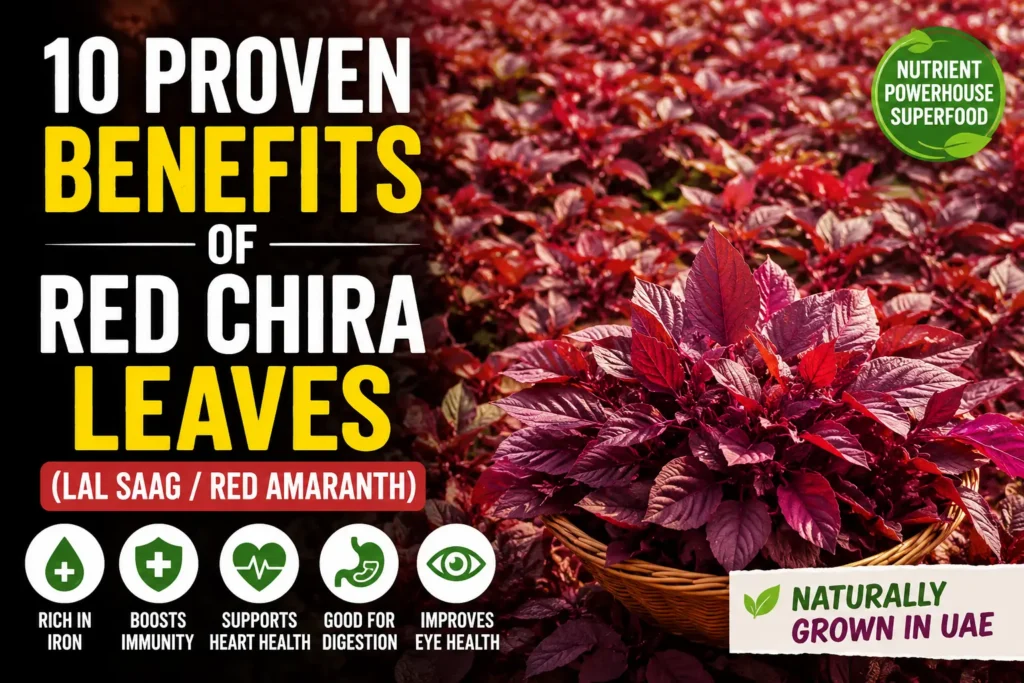
Red chira leaves are the fresh leaves of Amaranthus tricolor – a plant in the Amaranthaceae family, completely separate from green spinach (Spinacia oleracea). They are known as lal saag in Bengali and Hindi, tambdi bhaji in Marathi, red palak across the UAE, and red amaranth in fine dining contexts. The scientific name Amaranthus tricolor refers to the plant’s three-colour leaf display: deep crimson, green, and a blend of both.
As a leafy vegetable, Amaranthus tricolor is a rich source of essential nutrients including amino acids, vitamins, minerals such as iron, calcium, magnesium, potassium, and zinc, pigments, carotenoids, phenolics, and flavonoids. Compared to lettuce, it provides significantly more vitamins A, C, calcium, and iron.
The red colour itself is a health signal, not just a visual one. Among red and green amaranth, red amaranth contains more phytopigments, including betacyanins, amaranthine, betaxanthins, anthocyanins, carotenoids, and betalains. These are the same antioxidant pigment classes found in red beetroot and blueberries.
Red chira is a staple vegetable in South Asian and Bengali households across Dubai, Sharjah, Ajman, and Abu Dhabi. Traditionally, Amaranthus tricolor has been used in Siddha and Ayurveda to address a range of conditions including diarrhea, dysentery, bronchitis, and hemorrhagic ailments.
Nutritional Profile of Red Chira Leaves at a Glance
Before covering each benefit, it helps to see the full picture of what is in these leaves.
| Nutrient | Red Chira (per 100g dry weight) | Why It Matters |
|---|---|---|
| Protein | 26.60% | Muscle repair, enzyme production |
| Dietary fiber | 6.67% | Digestive health, blood sugar regulation |
| Iron | High (major mineral) | Hemoglobin production, oxygen transport |
| Potassium | 1080.02 mg | Blood pressure regulation |
| Carotenes | 15.37 mg | Eye health, immune support |
| Total antioxidant activity | 62.91 mg ascorbic acid equivalent/g | Cell protection |
| Quercetin + flavonoids | 16.75 mg quercetin equivalent/g | Anti-inflammatory, cardiovascular |
| Betalains | Betacyanin + betaxanthin | Anti-inflammatory, antidiabetic |
Sources: ScienceDirect, 2022; IJPSDR, 2025
Benefit 1: High Iron Content Prevents and Addresses Anemia
Red chira leaves are among the highest-iron leafy vegetables available in UAE markets. Iron is the mineral used by the body to produce hemoglobin – the protein in red blood cells that carries oxygen to every tissue.
Amaranth is rich in proteins and micronutrients such as iron, calcium, zinc, vitamin C, and vitamin A. Iron deficiency anemia is a major public health problem, particularly in young children in developing countries.
Amaranth greens contain higher levels of minerals than spinach, including calcium, manganese, magnesium, copper, and zinc. In a way similar to other greens like spinach and kale, amaranth in the diet helps prevent osteoporosis and iron-deficiency anemia.
For UAE residents – particularly South Asian and African communities, pregnant women, and vegetarians – red chira eaten regularly covers a meaningful portion of daily iron needs without relying on supplements or red meat.
How to maximize iron absorption: Eat red chira alongside a source of vitamin C – a squeeze of lemon over lal saag, or a small side of tomato. Vitamin C converts the non-heme iron in plants into a form the body absorbs more readily.
Benefit 2: Betalain Pigments Reduce Inflammation
The crimson colour of red chira leaves comes from betalains – a class of water-soluble pigments found in Amaranthus spp. Betalains are not the same as anthocyanins (which colour blueberries and red cabbage), but they have overlapping health effects.
Betalains are naturally occurring pigments found in Amaranthus spp. Several pharmacological activities have been reviewed in scientific literature, describing their potential implications for human health, including antioxidant, anti-inflammatory, antihypertensive, hypolipidemic, antidiabetic, hepatoprotective, neuroprotective, anticancer, and antimicrobial properties, in both in vitro and in vivo studies.
Studies confirmed the antidiabetic effect of betalains, which reduced glycemia by 40% without causing weight loss or liver impairment. This finding positions betalain-rich leaves like red chira as a practical dietary choice for the large diabetic and pre-diabetic population in the UAE.
Chronic low-grade inflammation is the underlying driver of Type 2 diabetes, cardiovascular disease, and joint problems – all of which are common health concerns among adults in Dubai and Sharjah. Adding red chira to the daily diet addresses this at the source.
Benefit 3: Higher Protein Than Most Leafy Greens
Most people do not associate leafy greens with protein. Red chira is a clear exception.
The nutritional analysis of red amaranth shows an appreciable quantity of protein (26.60 ± 0.42%), fat (4.49 ± 0.30%), fiber (6.67 ± 0.33%), and carbohydrate (39.80 ± 0.15%). The most abundant amino acid in red amaranth was glutamic acid (23.61 ± 0.16 mg/g), and lysine (14.32 ± 0.20 mg/g) was the highest among essential amino acids.
Lysine is an essential amino acid that is often low or absent in plant-based diets centred on grains like rice and wheat. Red chira provides it naturally alongside the greens themselves.
For vegetarians, vegans, and South Asian households in the UAE where plant-based meals are daily practice, red chira offers a protein contribution that most other leafy greens cannot match. It is particularly relevant for growing children and older adults managing muscle mass.
Benefit 4: Antioxidant Power Protects Cells from Damage
The total phenolic content, total flavonoid content, and total antioxidant activity in the methanolic extract of red amaranth were 30.27 ± 1.98 mg gallic acid equivalent/g, 16.75 ± 0.82 mg quercetin equivalent/g, and 62.91 ± 3.35 mg ascorbic acid equivalent/g extract respectively. Red amaranth also contained an appreciable amount of carotenes (15.37 ± 0.27 mg/100g).
The antioxidant capacity of red colour Amaranthus tricolor genotypes was excellent compared to the green colour genotype, with scavenging values for DPPH and ABTS radicals of 43.8 and 66.6 TEAC μg/g dry weight respectively for the red colour genotype.
In plain terms, red chira is significantly more antioxidant-active than green amaranth and most common green leafy vegetables. Antioxidants prevent oxidative stress – the cellular damage that accumulates with age and drives heart disease, cancer, and neurodegenerative conditions.
The bioactive components of Amaranthus tricolor, including betacyanin, betaxanthin, betalain, carotenoids, chlorophylls, ascorbic acid, flavonoids, and phenolic acids, contribute to quenching reactive oxygen species and help prevent cardiovascular diseases, arthritis, cancer, cataracts, retinopathy, atherosclerosis, emphysema, and neurodegenerative diseases.
Benefit 5: Bone Strength from Calcium and Vitamin K
Amaranth leaves are an excellent source of calcium and vitamin K, both of which are essential for strong and healthy bones. Vitamin K plays a role in bone mineralization, while calcium is a key component of bone structure.
The study suggests that red amaranth leaves also have the property of inhibition of calcium retention, and the leaves are rich in vitamins A, B, B2, vitamin C, and minerals like calcium and iron.
For UAE residents – particularly women over 40, older expats, and anyone with a diet low in dairy – red chira provides both the calcium and the vitamin K needed to keep that calcium depositing in bones rather than circulating unused in the bloodstream. This combination is more effective than calcium intake alone.
Benefit 6: Liver Protection
Pretreatment with the aqueous extract of Amaranthus tricolor root significantly prevented the physical, biochemical, histological, and functional changes induced by paracetamol in the liver. The extract showed significant hepatoprotective effects evidenced by decreased serum enzyme activities including SGPT, SGOT, ALP, and total bilirubin, with hepatoprotective activity comparable to the standard drug silymarin. The research concluded that Amaranthus tricolor has potential effectiveness in treating liver damage in a dose-dependent manner.
Regular consumption of red chira leaves provides the flavonoids, phenolics, and antioxidant compounds that protect liver cells from oxidative damage caused by environmental toxins, alcohol, and medication. Recent studies emphasize the diverse pharmacological potential of Amaranthus tricolor, showcasing its hepatoprotective activity.
For residents of Dubai and Abu Dhabi dealing with fatty liver disease – a growing concern linked to UAE dietary patterns – adding a hepatoprotective leafy green to weekly meals is a practical, food-based approach.
Benefit 7: Brain and Cognitive Protection
Amaranthus tricolor leaves have been utilized as traditional medicine for neuroprotection, as an astringent, to strengthen the liver and improve vision, and as a hepatoprotective, anti-nociceptive, anti-inflammatory, anticancer, and anti-arthritic agent.
A study specifically examined this neuroprotective effect. The study showed that hydroalcoholic extract of Amaranthus tricolor leaves produced significant effects including anti-stress, nootropic, and anti-cataleptic activity in a dose-dependent manner.
The mechanism is largely antioxidant-driven: the brain is particularly vulnerable to oxidative stress because of its high oxygen consumption. The phenolics and betalains in red chira leaves reduce the free radical activity that damages neurons over time.
Benefit 8: Cardiovascular Protection
The cardioprotective potential of Amaranthus tricolor was evaluated in ovariectomized rats subjected to isoproterenol-induced myocardial injury, a model designed to mimic post-menopausal cardiac stress. Administration of the extract markedly increased oxidative stress markers.
The evidence supporting the hypolipidemic effects of betalains from Amaranthus tricolor is promising, with preclinical and clinical studies showing significant improvements in lipid profiles. Their antioxidant and anti-inflammatory mechanisms may contribute to broader metabolic benefits, including mitigating oxidative stress and inflammation-associated lipid metabolism dysregulation.
Potassium was found as a major trace element in red amaranth at 1080.02 ± 32.51 mg/100g dry weight. Potassium is the mineral most directly linked to lower blood pressure by counteracting the effect of sodium – a particularly relevant benefit given the high-sodium diet common across UAE household and restaurant food.
Benefit 9: Digestive Health and Gut Function
The dietary fiber in amaranth greens promotes healthy digestion and regular bowel movements, preventing constipation and supporting gastrointestinal health.
Red amaranth shows a fiber content of 6.67 ± 0.33%, contributing to healthy bowel function.
Beyond basic fiber, Amaranthus tricolor has a traditional and research-supported role in managing diarrhoea and gastrointestinal disorders. Traditionally, Amaranthus tricolor has been used in Siddha and Ayurveda to address diarrhea, dysentery, bronchitis, and hemorrhagic ailments.
The combination of fiber, anti-inflammatory phenolics, and antimicrobial compounds makes red chira a vegetable that works on the gut at multiple levels simultaneously – not just as roughage.
Benefit 10: Eye Health from Carotenoids and Vitamin A
Amaranthus tricolor genotypes with abundant carotenoid components include zeaxanthin, lutein, violaxanthin, neoxanthin, total xanthophylls, and beta-carotene.
Lutein and zeaxanthin are the two carotenoids that accumulate specifically in the macula of the eye. They filter harmful blue light and protect photoreceptor cells from oxidative damage. Low dietary intake of these compounds is directly linked to age-related macular degeneration and cataracts.
Vitamin C content in amaranth leaves boosts the immune system, helping the body defend against infections, while the vitamin A content – approximately 2917 IU or 58% of the recommended daily intake per 100g – supports vision and immune function.
For UAE residents spending extended hours under intense sunlight and in front of screens, regular intake of lutein- and zeaxanthin-rich greens like red chira provides meaningful eye protection from within.
Red Chira vs. Green Spinach: Side-by-Side Comparison
Both are available in Dubai and Sharjah markets, but they are different plants with different nutritional profiles.
| Feature | Red Chira (Amaranthus tricolor) | Green Spinach (Spinacia oleracea) |
|---|---|---|
| Plant family | Amaranthaceae | Amaranthaceae |
| Iron content | Higher per gram | Good, but lower |
| Protein content | ~26.60% dry weight | ~2.9% fresh weight |
| Antioxidant pigments | Betalains + betacyanins | Chlorophyll + lutein |
| Vitamin A | Very high (58% DV per 100g) | High |
| Oxalic acid | Lower | Higher (reduces calcium absorption) |
| Cooking texture | Softer, more delicate | Holds texture longer |
| UAE availability | Specialist crop, fewer suppliers | Widely available |
| Best used for | Lal saag, stir-fry, soup, garnish | Palak paneer, smoothies, sautéed |
The lower oxalic acid content in red chira is a practical advantage: spinach contains oxalates that bind to calcium and iron and reduce their absorption. Red chira delivers these minerals with less interference.
How to Use Red Chira Leaves in UAE-Style Cooking
Red chira is a staple in Bengali, South Asian, and increasingly, fine dining kitchens across Dubai. Here are practical daily-use methods.
Lal saag bhaji: The classic preparation. Heat mustard oil or any cooking oil, add garlic or dried chili, then add washed red chira leaves. Stir-fry for 3-4 minutes. Serve with rice. The red colour deepens with heat. Do not overcook or the leaves lose their structure.
Red amaranth soup: Blanch leaves briefly in light broth with ginger and garlic. The betalain pigments create a deep crimson broth that is visually striking and nutritionally dense.
Dal and red chira together: Add a handful of red chira leaves to any dal in the final two minutes of cooking. This combines the protein of lentils with the iron and betalains of the leaves.
Fine dining garnish: Fresh red chira leaves placed raw on plated dishes add colour contrast without any preparation. This is why UAE hotel kitchens specifically request farm-direct supply – the red colour fades rapidly once leaves begin to wilt.
Storage: Wrap stems in a damp cloth or paper, stand in 2 cm of water in a glass, and refrigerate. Use within 3-4 days for full colour and nutritional integrity. Red chira is more delicate than green spinach and does not hold as long after harvest.
Where to Buy Fresh Red Chira Leaves in Dubai, Sharjah, Ajman, and Abu Dhabi
Red chira is a specialist crop. Very few UAE farms grow it consistently because it requires soil cultivation – hydroponic systems used by most modern UAE farms cannot produce red amaranth reliably.
Nazwafarm.com – founded in 1999 by Md Mafzal Ahmed in Nazwa, Sharjah – is one of the UAE’s only consistent sources of fresh red chira wholesale. The farm supplies same-morning harvested leaves across Dubai (Aweer Market, Al Khattal, Deira, Bur Dubai), Sharjah, Ajman, and Abu Dhabi. Farm-direct supply preserves the deep crimson colour and full betalain content that cold-chain import cannot match.
For South Asian restaurants, hotel kitchens, and supershops looking for a reliable red chira supplier in Dubai, WhatsApp +971 50 936 9091.
Frequently Asked Questions About Red Chira Leaves
What are red chira leaves called in the UAE?
Red chira leaves go by several names across the UAE’s multicultural communities. Bengali and Hindi speakers call them lal saag. In Marathi, the same plant is tambdi bhaji. In English, it is red amaranth or red spinach. In Arabic: سبانخ أحمر. In fine dining contexts across Dubai hotels, it appears on menus as red amaranth. All of these names refer to the same plant: Amaranthus tricolor, a red variety.
Is red chira the same as red spinach?
No, though the terms are sometimes used interchangeably in UAE markets. Red chira is Amaranthus tricolor. Red spinach (Spinacia oleracea) is a different species. Red chira has higher iron content, more protein per gram, lower oxalic acid, and different antioxidant pigments (betalains rather than anthocyanins). The cooking texture is also more delicate than spinach.
What are the main health benefits of eating lal saag regularly?
The ten primary benefits supported by research are: anemia prevention through high iron, anti-inflammatory effects from betalain pigments, high plant protein including lysine, broad antioxidant protection, bone strength from calcium and vitamin K, liver protection from phenolics and flavonoids, brain and cognitive support, cardiovascular protection from betalains and potassium, digestive health from fiber and antimicrobial compounds, and eye health from lutein, zeaxanthin, and vitamin A.
How often should I eat red chira leaves for health benefits?
No standardized human dose has been established by clinical trials for red chira leaves specifically. Traditional consumption in Bangladesh, India, and Sri Lanka – where it is a daily staple – typically involves one to two servings per week as part of a varied diet. Eating it 2-3 times per week alongside other leafy greens provides practical levels of its iron, protein, and antioxidant compounds without over-relying on any single food.
Does cooking destroy the red colour and the nutrients in red chira?
Cooking does reduce betalain concentration to some degree – heat and prolonged cooking break down these water-soluble pigments. Brief stir-frying (3-4 minutes) preserves more colour and nutrients than long boiling. Adding a small amount of lemon juice or vinegar after cooking helps stabilize the colour. For maximum antioxidant benefit, some leaves can be used raw as a garnish or in salads. Vitamin C, which is heat-sensitive, is best preserved in raw or lightly cooked preparation.
Why is fresh red chira better than imported or pre-packaged versions?
Betalains degrade with time and heat. Betalains accumulate in response to different stresses such as UV-B radiation and are water-soluble natural pigments with health-promoting properties. This means leaves that are days old, have been in cold storage for extended periods, or have been packaged airtight have significantly lower betalain levels than farm-direct same-day harvested leaves. The visible fading of the red colour is an accurate indicator of antioxidant degradation. For both nutritional value and visual impact in cooking, freshness is not optional – it is the delivery mechanism for the benefits.
Key Takeaways
- Red chira leaves (Amaranthus tricolor) are a distinct plant from green spinach with a higher iron, protein, and antioxidant profile than most leafy greens sold in UAE markets.
- The red colour is a direct indicator of betalain content – betalains are water-soluble pigments with confirmed anti-inflammatory, antidiabetic, cardiovascular-protective, and hepatoprotective properties (MDPI Foods, 2024; IJPSDR, 2025).
- Ten documented health benefits cover iron for anemia, bone strength, liver protection, brain support, heart health, digestion, eye protection, blood sugar regulation, antioxidant defence, and plant protein supply.
- Fresh farm-direct red chira from soil-grown UAE farms retains significantly more betalains and vitamin C than cold-chain imported or packaged alternatives.
- For daily use in UAE kitchens, lal saag bhaji, dal with red chira, and raw garnish are the most practical preparation methods to extract both nutritional and visual value from this specialist leafy green.