
Quick answer: UAE grown vegetables, especially leafy greens like spinach, coriander and parsley, usually reach kitchens with less travel time than imports, so they often arrive fresher and last longer in the chiller. Imports fill gaps in range and season. Many buyers use local greens for daily herbs and imports for items not grown nearby.
What is the real difference between UAE grown vegetables and imports?
The biggest difference for leafy greens is time. Once a herb or leaf is cut, it keeps losing moisture and freshness. Imported greens have to be harvested, cooled, packed, shipped or flown, cleared and then distributed before they reach a kitchen.
Locally grown greens can skip most of those steps. A farm in Sharjah can harvest in the morning and supply kitchens in Sharjah, Dubai and Ajman without long-haul transport.
That does not make imports bad. Importers handle cold chains carefully, and imports supply varieties and volumes that local farms may not grow. The point is that for delicate leaves, fewer days in transit usually show on the plate.
How do local and imported leafy greens compare?
Here is how the two typically compare on the factors that matter to kitchens and retailers.
| Factor | Locally grown | Imported |
|---|---|---|
| Time from harvest | Short; can be same-morning harvest | Longer, due to shipping and clearance |
| Chiller life after delivery | Usually longer, as leaves start fresher | Shorter, as part of the life is used in transit |
| Range | Herbs and greens suited to local growing | Wide, including temperate and exotic items |
| Seasonality | Some crops vary with the UAE seasons | Can cover gaps from other climates |
| Traceability | You can speak directly to the grower | Depends on the importer’s records |
Storage practice still matters for both. Our guide on how to store fresh herbs in a restaurant explains how to protect whatever you buy.
What changes for spinach, coriander and parsley?
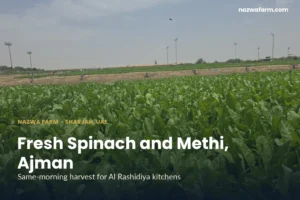
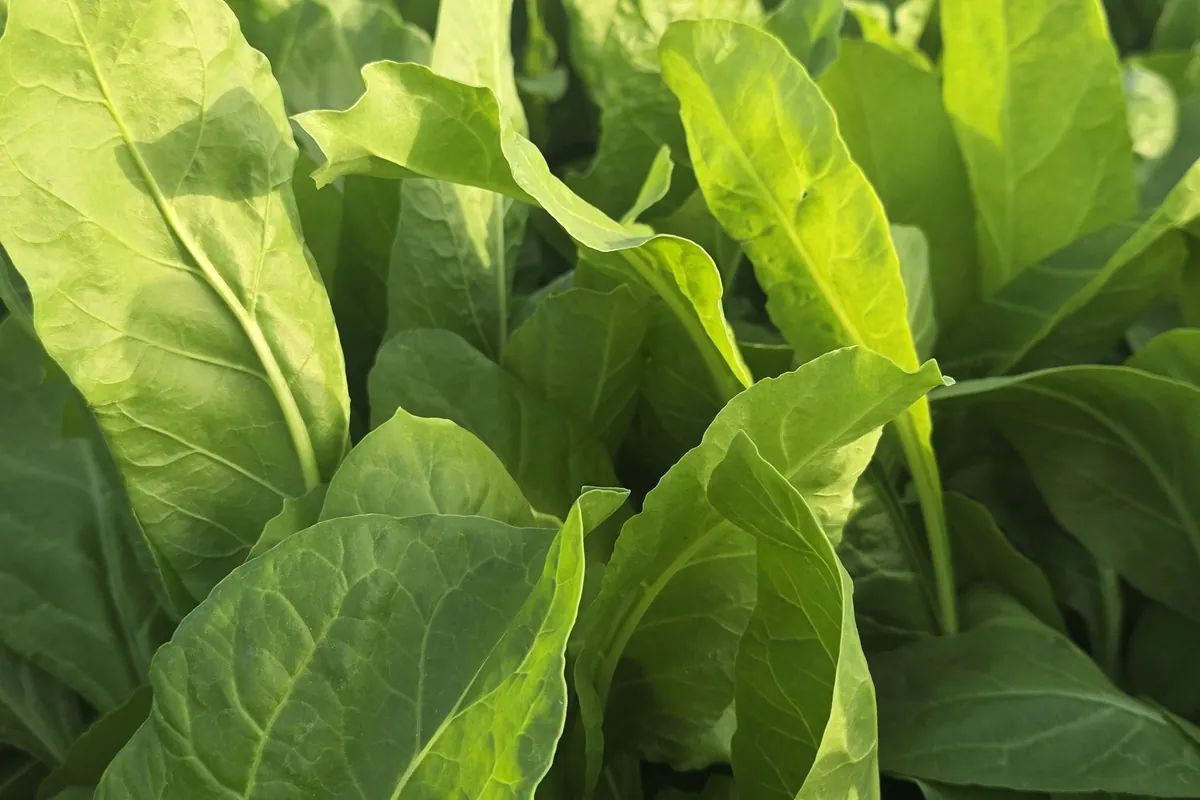
Spinach is high-volume for South Asian and Arabic kitchens. Fresh local spinach tends to arrive crisp, with fewer slimy or yellowing leaves, which means less sorting before it goes into the pot. Soil-grown spinach carries some soil, so plan to wash it well.
Coriander is where freshness shows most. It wilts and yellows quickly once cut, so a shorter path from field to kitchen usually means more usable leaves per bundle and less waste at the end of the week.
Parsley is sturdier, but colour and bite fade with time. For tabbouleh, fattoush and mezze, local parsley that arrives the same day it was cut keeps a brighter look on the plate. We cover this herb specifically in our article on UAE-grown parsley leaves.
Does locally grown mean better flavour?
Flavour depends on variety, growing conditions and freshness. What local supply mostly improves is freshness, and aroma is one of the first things herbs lose after cutting.
Chefs often notice that coriander and mint smell stronger when they arrive soon after harvest. That can mean using a little less to get the same effect, and it makes a visible difference in raw dishes such as chutneys, salads and garnishes.
Imported herbs that have been well handled can still taste good. The honest test is to compare both side by side in your own kitchen over a couple of weeks, noting aroma, colour and waste.
When does it still make sense to buy imported greens?
Most UAE buyers end up using both. Imports make sense in a few situations.
- When you need varieties that are not grown locally, such as certain lettuces or specialist herbs.
- When a local crop is out of season or in short supply.
- When a menu needs exact, uniform specifications that a particular imported line provides.
For everyday herbs and leafy greens that are grown locally, many kitchens find local supply the better default. If you are weighing how to buy them, our piece on buying farm-direct versus through a distributor explains the options.
Where to get UAE-grown greens in Al Nahda, Sharjah
Nazwa Farm has grown herbs and leafy vegetables in soil on our family farm in Nazwa, Sharjah since 1999. We grow 22+ varieties, harvest the same morning and sell farm-direct as a grower, not an importer. Supermarkets, groceries and restaurants can learn about our locally grown greens supply in Al Nahda.
To order, send your list, quantity and area on WhatsApp at +971 50 936 9091 or email admin@nazwafarm.com. We confirm the schedule the same day, and farm pickup in Sharjah is available daily. Ask us on WhatsApp which items are being harvested now.
Herbs and greens are sold in bundles, packed in boxes of about 60 bundles. For prices, message us for today’s farm-direct price.
Frequently Asked Questions
Are UAE grown vegetables fresher than imported ones?
For leafy greens they often are, because they spend less time between harvest and the kitchen. Imported greens need shipping, clearance and distribution, which uses up part of their shelf life. Freshness still depends on how each supplier harvests, handles and transports the produce, so check deliveries either way.
Which leafy vegetables are grown in the UAE?
Many herbs and leafy greens are grown locally, including coriander, mint, parsley, dill, spinach, rocket, methi and various South Asian and Asian greens. Nazwa Farm alone grows 22+ varieties in Sharjah. Availability of some crops can vary with the season, so ask your supplier what is currently being harvested.
Why do imported herbs sometimes wilt quickly?
Herbs lose moisture from the moment they are cut. Imported herbs spend extra days in transit and storage before reaching you, so by the time they arrive, a share of their life has already been used. Any break in cold handling along the way speeds up wilting further.
Is it worth switching to locally grown greens?
For everyday herbs and greens that are grown locally, many kitchens and retailers find the switch worthwhile because of fresher stock and less waste. Try it for a few weeks and compare aroma, colour, waste and prep time against your current supply. Keep imports for items not grown nearby.
How can supermarkets in Al Nahda order UAE-grown greens?
Send your list, quantities and location on WhatsApp at +971 50 936 9091 or email admin@nazwafarm.com. Nazwa Farm confirms the schedule the same day and runs daily wholesale supply in Sharjah. Farm pickup in Sharjah is also available daily for buyers who prefer to collect.
Key Takeaways
- The main advantage of UAE-grown leafy greens is a shorter time from harvest to kitchen.
- Fresher arrival usually means longer chiller life and less trimming waste.
- Coriander shows the difference most; spinach and parsley benefit too.
- Imports still fill gaps in range and season, so most buyers use both.
- Compare suppliers in your own kitchen on aroma, colour and waste.
Want locally grown greens for your Al Nahda store or kitchen? Send us your list. Order on WhatsApp: +971 50 936 9091