
TL;DR
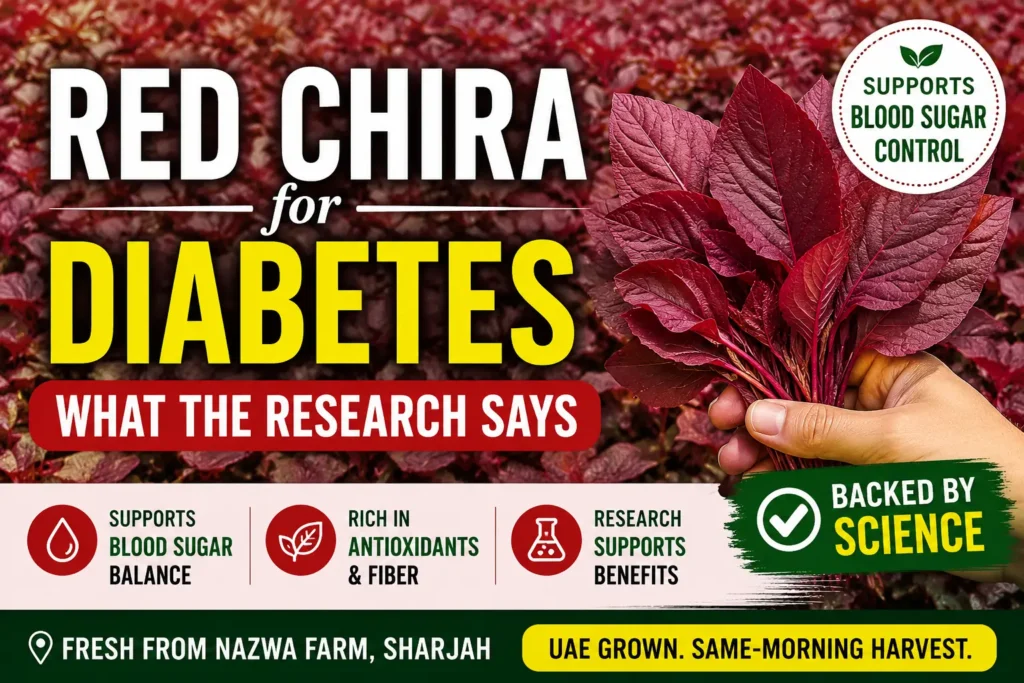
- Red Chira is the Bengali name for red amaranth leaves (Amaranthus tricolor/cruentus), also called Lal Shak in Bengali and red palak in broader South Asian usage.
- Research shows red amaranth leaves contain compounds – including flavonoids, polyphenols, and dietary fiber – that can help slow glucose absorption and support blood sugar regulation.
- A 2020 peer-reviewed study found that red amaranth leaf extract showed the greatest inhibitory effect on the enzymes alpha-amylase and alpha-glucosidase compared to white amaranth, both of which drive blood sugar spikes after meals (Tandfonline, 2020).
- Red Chira leaves are very low in carbohydrates (approximately 4g net carbs per 100g raw) and carry a low glycemic impact, making them suitable for a diabetes-friendly diet (USDA, 2023).
- Red Chira is grown and supplied fresh in the UAE by Nazwa Farm, harvested same morning from their Nazwa, Sharjah farm for delivery across Dubai, Sharjah, Ajman, and Abu Dhabi.
What Is Red Chira and Why Diabetics in the UAE Are Asking About It
Red Chira is a dark-red leafy vegetable from the amaranth family (Amaranthaceae), widely eaten across South Asia – particularly in Bangladesh, West Bengal, and parts of India. In the Bengali community, it goes by “Lal Shak” or “Red Chira.” Other regional names include Lal Marasa in Hindi, Tambdi Bhajji in Konkani, and Thotakura in Telugu (Easy Ayurveda, 2023).
The plant is Amaranthus tricolor or Amaranthus cruentus, depending on the variety. The leaves are the edible part most commonly used in everyday cooking – stir-fried with garlic, added to lentil dishes, or eaten as a simple saag. The deep red-purple color of the leaves comes from betalains and anthocyanins, which are the same pigments that researchers have linked to antidiabetic and antioxidant properties in multiple studies.
In the UAE, diabetes is a serious public health concern. The prevalence of diabetes across Gulf Cooperation Council (GCC) countries stands at 25.45%, compared to a global average of 12.69% in non-GCC countries (Scientific Reports, 2025). For the large South Asian and Bangladeshi communities living in Dubai, Sharjah, Ajman, and Abu Dhabi – many of whom already eat Red Chira as part of their regular diet – understanding what research actually says about this vegetable and blood sugar is both practical and relevant.
This article covers what the science says, what it does not say, what nutrients make Red Chira relevant for diabetics, and how to incorporate it into a diabetes-friendly diet.
What Makes Red Chira Different From Green Amaranth Leaves
Red Chira is not simply a colored version of green amaranth – the two have meaningfully different nutritional and phytochemical profiles, which matters when looking at diabetes-related research.
Research published in PLOS ONE (2019) found that red morph amaranth is a source of nutrients, antioxidant pigments, minerals, and phytochemicals compared to green morph amaranth. The leaves of red morph amaranth contain dietary fiber, carbohydrates, moisture, and protein, plus notable levels of potassium, calcium, magnesium, iron, manganese, copper, and zinc. The red variety also shows significantly higher total flavonoids, betalains, carotenoids, beta-carotene, and vitamin C than green amaranth (Sarker & Oba, 2019).
A further study comparing red and green amaranth genotypes found that the red variety contained far higher concentrations of phenolic acids – including caffeic acid, ferulic acid, chlorogenic acid, and p-coumaric acid – as well as flavonoids including rutin, quercetin, myricetin, and kaempferol. These compounds are recognized for antidiabetic, antiviral, and antibacterial properties (Sarker, 2019).
The bottom line: red amaranth leaves consistently outperform green amaranth in the specific compounds – flavonoids, polyphenols, betalains – that researchers have studied for blood sugar-related activity.
The Nutritional Profile of Red Chira Leaves and How It Affects Blood Sugar
Understanding why Red Chira is considered diabetes-friendly starts with its basic nutritional makeup.
| Nutrient | Per 100g (Raw Leaves) | Relevance for Diabetics |
|---|---|---|
| Calories | 23 kcal | Very low – minimal energy load |
| Net carbohydrates | ~4g | Low carb load, minimal glucose contribution |
| Dietary fiber | ~2-3g | Slows glucose absorption from the gut |
| Protein | ~2.5g | Helps slow digestion, supports satiety |
| Vitamin K | 1,140 mcg (950% DV) | Plays a role in insulin sensitivity |
| Vitamin C | 43mg (48% DV) | Antioxidant, reduces oxidative stress linked to diabetes |
| Iron | High | Supports red blood cell function |
Sources: USDA National Nutrient Database (2023), Foodstruct.com
Red amaranth leaves are low in carbohydrates and high in fiber, which helps minimize blood sugar spikes and provides a slow, steady insulin response. The low carbohydrate content combined with fiber content means minimal impact on blood glucose, with stable blood sugar levels expected over 2 to 3 hours after consumption (Blue Circle Diabetes Foundation, 2024).
This nutritional profile places Red Chira in the same category as spinach, kale, and Swiss chard for blood sugar impact – foods that provide substantial nutrition without a meaningful rise in blood glucose.
What the Research Says: 4 Key Findings on Red Amaranth and Diabetes
The research on red amaranth and diabetes covers four main areas: enzyme inhibition, polyphenol activity, animal study results, and one human clinical study. Each tells a different part of the picture.
Finding 1: Red Amaranth Leaf Extract Blocks Enzymes That Cause Post-Meal Blood Sugar Spikes
This is the most directly relevant finding for anyone eating Red Chira as part of a diabetes diet.
A 2020 peer-reviewed study investigated the phytochemical profiles and anti-diabetic activity of red and white amaranth. Researchers found that all extracts tested could limit the activity of both alpha-amylase and alpha-glucosidase – the two digestive enzymes that break down carbohydrates into glucose in the gut. The leaf portion of red amaranth showed the greatest inhibitory effects on both enzymes among all extracts tested. The researchers attributed this activity to the polyphenolic compounds and flavonoids in the red variety, and noted that anthocyanins specifically could improve insulin secretion and decrease insulin resistance (Tandfonline, 2020).
Alpha-glucosidase inhibitors (AGIs) are an entire class of approved diabetes medications – including acarbose – that work through exactly this mechanism. Red Chira is not a medication, but the in vitro data shows its extracts work on the same biological pathway.
Finding 2: Red Amaranth Flavonoids Demonstrate Antidiabetic Activity In Vitro
A study published in the journal PMC (2024) analyzed Amaranthus cruentus – red amaranth – specifically for its antidiabetic and antihypertensive potential. Researchers identified and quantified flavonoids including quercetin, kaempferol, catechin, hesperetin, naringenin, and cinnamic acid derivatives including ferulic acid and caffeic acid. In vitro antidiabetic activity testing against pancreatic alpha-glucosidase and intestinal alpha-amylase showed that the leaf extract reduced enzyme activity by 57 to 74%. In vivo tests on normoglycemic murine models showed improved glucose homeostasis after sucrose loading (PMC, 2024).
A 57 to 74% reduction in enzyme activity in lab conditions is a substantial result. This does not mean eating Red Chira produces the same magnitude of effect in a human eating a meal – but it confirms the mechanism is real and repeatable across studies.
Finding 3: Amaranth Consumption Improved Blood Markers in Human Diabetic Patients
In a clinical study of adults with type 2 diabetes, consuming 20g of amaranth daily for 3 months resulted in weight reduction, BMI reduction, and decreased levels of inflammatory adipokines including leptin, resistin, and visfatin – all of which are metabolic risk markers. The researchers also noted that the low glycemic index of amaranth (54-68 compared to wheat) led some participating doctors to reduce their patients’ sugar medication during the trial (ResearchGate, 2017).
This is the most direct human evidence available. The dose was 20g of amaranth daily – roughly a small side serving of leaves. This is well within normal consumption for someone eating Red Chira as a regular part of their diet.
Finding 4: Animal Studies Show Reduced Blood Glucose and Improved Insulin Function
Animal studies have shown that amaranth protein hydrolysates may improve insulin sensitivity and reduce blood glucose levels. A 2014 study found that rats fed amaranth protein had lower blood glucose and improved insulin responses compared to control groups (Caring Sunshine, 2024).
A further study on Amaranthus caudatus extract in type 2 diabetic rats found that both a single oral dose and a 21-day treatment with the extract improved glucose tolerance and reduced glycated hemoglobin (HbA1c) levels – by 19.83% in diabetic rats. Increased serum insulin levels were also observed in pancreatic tissue from treated animals (PMC, 2018).
Glycated hemoglobin (HbA1c) is the standard long-term blood sugar control marker used by doctors to monitor diabetes management. A reduction of nearly 20% in HbA1c in diabetic animal models is a clinically meaningful result – though it must be noted these are animal studies, not human trials.
What the Research Does Not Say – Important Limitations
Honest guidance on Red Chira and diabetes requires being clear about where the evidence stops.
- Most studies are preclinical. Several scientific studies suggest that amaranth seeds and leaves may have beneficial effects on blood glucose regulation, but the evidence is still limited and largely preclinical (Caring Sunshine, 2024). This means the majority of research is in lab conditions or animal models, not large human clinical trials.
- Amaranth grain is not the same as Red Chira leaves. Amaranth grain has a glycemic index value of 107, and earlier studies found that because of the high digestibility of its starch, amaranth grain may not be suitable for diabetics (IOMC, 2023). Red Chira refers to the leaves, not the grain. The leaves have a completely different nutritional profile – very low in starch, high in fiber, low glycemic impact. Do not apply grain amaranth warnings to the fresh leafy vegetable.
- Red Chira is not a diabetes treatment. No study to date positions amaranth leaves as a replacement for diabetes medication, insulin, or structured medical management. The research shows it is a supportive food – one that fits naturally into a diabetes-friendly diet.
- Serving size and preparation matter. Stir-frying Red Chira in oil with garlic is a low-impact preparation. Adding high-carb foods in the same meal changes the overall glycemic load of that meal.
If you have type 2 diabetes and are managing blood sugar with medication, speak with your doctor before making significant dietary changes.
How Red Chira Supports Diabetes Management: A Summary of the 5 Key Mechanisms
Based on the research above, here is how Red Chira works as a diabetes-supportive food:
- Enzyme inhibition: Flavonoids and polyphenols in the leaves slow alpha-amylase and alpha-glucosidase activity, reducing the speed at which carbohydrates convert to glucose after a meal.
- Fiber slowing digestion: Dietary fiber delays gastric emptying and glucose absorption, spreading the insulin demand over a longer window rather than creating a sharp post-meal spike.
- Anthocyanin activity: Anthocyanins in red amaranth have been reported to improve insulin secretion and decrease insulin resistance (Tandfonline, 2020).
- Oxidative stress reduction: Phytochemicals and extracts of amaranth have demonstrated antidiabetic potential, a decrease in cholesterol and blood pressure, and protection from oxidative stress and inflammation – all of which are concerns for people with type 2 diabetes (PubMed, 2024).
- Very low carbohydrate load: With approximately 4g net carbs per 100g raw, Red Chira contributes almost no glucose burden of its own while providing substantial micronutrients.
How to Include Red Chira in a Diabetes-Friendly Diet
Red Chira is straightforward to cook and pairs naturally with other low-glycemic foods. These preparation methods preserve the most nutritional value:
Simple stir-fry (recommended):
- Heat 1 teaspoon of oil in a pan over medium heat.
- Add one clove of minced garlic and stir for 30 seconds.
- Add a handful of washed Red Chira leaves (roughly 80 to 100g).
- Stir-fry for 2 to 3 minutes until just wilted. Do not overcook.
- Season with a pinch of salt. Serve immediately.
Pair it with:
- Brown rice or a small portion of basmati rice (lower glycemic than white rice)
- Lentil dal (adds protein, further slowing glucose absorption)
- Grilled fish or chicken (protein stabilizes the meal’s glycemic impact)
Serving size for diabetics: A side serving of 80 to 100g cooked Red Chira is a reasonable starting point. Because it is so low in carbohydrates, portion size is not as restricted as with starchy vegetables.
Frequency: There is no established upper limit for leafy greens in a diabetes diet. Eating Red Chira 3 to 5 times per week as a vegetable side is well within normal dietary guidance for people managing blood sugar (Diabetes UK, 2024).
Red Chira vs Other Diabetes-Friendly Leafy Greens
How does Red Chira compare to other greens commonly recommended for diabetics?
| Leafy Green | Net Carbs/100g | Notable Diabetes Benefit | Availability in UAE |
|---|---|---|---|
| Red Chira (red amaranth) | ~4g | Enzyme inhibition, anthocyanins, high iron | Grown locally – Nazwa Farm |
| Spinach (Palak) | ~1.4g | Low carb, magnesium, anti-inflammatory | Widely available |
| Methi (Fenugreek) | ~6g | Soluble fiber, proven glycemic control in human trials | Grown locally – Nazwa Farm |
| Mustard leaves | ~4.7g | Glucosinolates, antioxidants | Grown locally – Nazwa Farm |
| Rocket (Garger) | ~2g | Nitrates, antioxidants | Grown locally – Nazwa Farm |
Red Chira is competitive with any leafy green in this list for diabetes management. Its specific advantage is the combination of anthocyanin-driven enzyme inhibition and an iron content that makes it particularly valuable for South Asian diabetics who are also at risk for iron-deficiency anemia.
Where to Get Fresh Red Chira in Dubai, Sharjah, Ajman, and Abu Dhabi
The nutritional and research benefits of Red Chira are only relevant when the leaves are actually fresh. Wilted, days-old amaranth loses both flavor and a significant portion of its heat-sensitive nutrients including vitamin C and chlorophylls.
Nazwa Farm is a real soil farm based in Nazwa, Sharjah, founded in 1999 by Md Mafzal Ahmed. The farm grows and supplies 22+ varieties of fresh herbs and leafy vegetables directly to restaurants, hotels, supermarkets, and wholesale buyers across Dubai, Sharjah, Ajman, and Abu Dhabi – with same-morning harvest and no middlemen (nazwafarm.com).
Red Chira (also listed as Red Palak or Lal Saag) is one of the leafy varieties grown at Nazwa Farm. Because the leaves are cut and delivered the same morning, they arrive at peak nutritional density – not after days in cold storage transit from overseas.
How to order:
- WhatsApp: +971 50 936 9091
- No minimum order, no contracts
- Delivers to Dubai, Sharjah, Ajman, and Abu Dhabi
- Same-day response guaranteed
For restaurants, Indian and Bangladeshi grocery stores, and home cooks across the UAE who want a reliable local source of fresh Red Chira, Nazwa Farm is the only farm in the UAE growing it on real UAE soil.
Frequently Asked Questions About Red Chira and Diabetes
What is Red Chira in English?
Red Chira is a Bengali name for red amaranth leaves, specifically the edible leaves of Amaranthus tricolor or related species. In English it is called red amaranth leaves, red amaranth greens, or Chinese spinach. In Hindi, it is Lal Chaulai or Lal Marasa. In broader South Asian cooking, it is often called Lal Saag or red palak.
Is Red Chira safe to eat if you have type 2 diabetes?
Yes. Red Chira leaves have a very low carbohydrate content (approximately 4g net carbs per 100g raw), high fiber, and no meaningful impact on blood sugar when eaten as a cooked vegetable side. Research also shows the flavonoids and polyphenols in red amaranth can support blood sugar regulation. Red Chira is not a medication and does not replace diabetes treatment, but it is a genuinely supportive food for a diabetes-friendly diet.
Does Red Chira raise blood sugar?
No. Fresh Red Chira leaves contain very little digestible carbohydrate and a significant amount of dietary fiber. The fiber slows glucose absorption, and the active compounds in the leaves inhibit the enzymes that convert carbohydrates to glucose in the gut. The overall blood sugar impact of a normal serving is minimal.
What is the difference between Red Chira and Lal Saag?
Red Chira and Lal Saag refer to the same plant – red amaranth leaves. Red Chira is the Bengali community term, most common among Bangladeshi households. Lal Saag or Lal Shak is a broader South Asian term for the same leafy vegetable. Lal Palak is another name used in some regions, though technically palak refers to spinach, a different plant.
How much Red Chira should a diabetic eat per day?
No specific upper limit exists for leafy greens in a diabetes diet. An 80 to 100g cooked serving (roughly a medium-sized side dish) is a practical and well-tolerated amount. Because the carbohydrate load is very low, portion size is less critical than it is with starchy vegetables like potatoes or corn.
Is Red Chira available fresh in the UAE?
Yes. Nazwa Farm grows Red Chira (red palak/Lal Saag) on their soil farm in Nazwa, Sharjah, and delivers same-morning harvested leaves to buyers across Dubai, Sharjah, Ajman, and Abu Dhabi. WhatsApp +971 50 936 9091 to order with no minimum quantity and no contracts.
Can Red Chira help reduce HbA1c?
There is animal study evidence showing amaranth extract reduced HbA1c by approximately 20% in diabetic rats (PMC, 2018), and one human clinical study showing that daily amaranth consumption over 3 months led to improved metabolic markers in people with type 2 diabetes, including cases where doctors reduced sugar medication (ResearchGate, 2017). However, large-scale human clinical trials specifically targeting Red Chira leaves and HbA1c reduction have not yet been conducted. Red Chira can support blood sugar management as part of a broader diet, but it should not be used as a substitute for HbA1c management under medical supervision.
Key Takeaways
- Red Chira is the Bengali name for red amaranth leaves (Lal Shak), a leafy vegetable with a very low carbohydrate content and a meaningful body of research pointing to antidiabetic properties.
- Lab studies consistently show red amaranth leaf extract inhibits alpha-amylase and alpha-glucosidase – the enzymes responsible for post-meal blood sugar spikes – more effectively than green amaranth.
- The key active compounds are flavonoids, polyphenols, anthocyanins, and betalains, all of which are present in higher concentrations in red varieties than green.
- One human clinical study with type 2 diabetic patients showed improved metabolic markers after 3 months of daily amaranth consumption (ResearchGate, 2017).
- Fresh Red Chira leaves carry a minimal glycemic load and can be eaten regularly as part of a diabetes-supportive diet.
- In the UAE, fresh Red Chira is grown and supplied by Nazwa Farm in Nazwa, Sharjah – with same-morning harvest delivery to Dubai, Sharjah, Ajman, and Abu Dhabi.
Nazwa Farm is a UAE soil farm established in 1999, supplying 22+ varieties of fresh leafy vegetables and herbs directly to restaurants, hotels, supermarkets, and home buyers across Dubai, Sharjah, Ajman, and Abu Dhabi. Order via WhatsApp: +971 50 936 9091 or visit nazwafarm.com.