Quick answer: Red amaranth in Sharjah, sold as red palak, lal shak or red chira, is a tender leafy green with purple-red centres used in Bengali, Kerala and Tamil cooking. Kitchens in Muwaileh and University City can buy it farm-direct from Nazwa Farm, harvested the same morning, by sending their list on WhatsApp.
What is red palak, and is it the same as red amaranth?
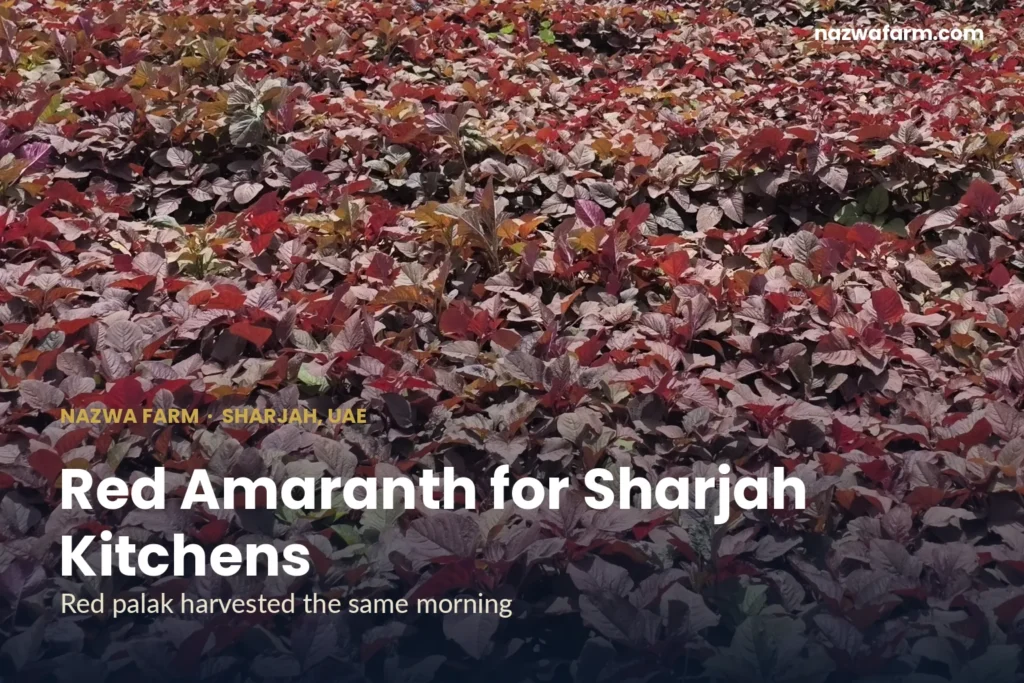
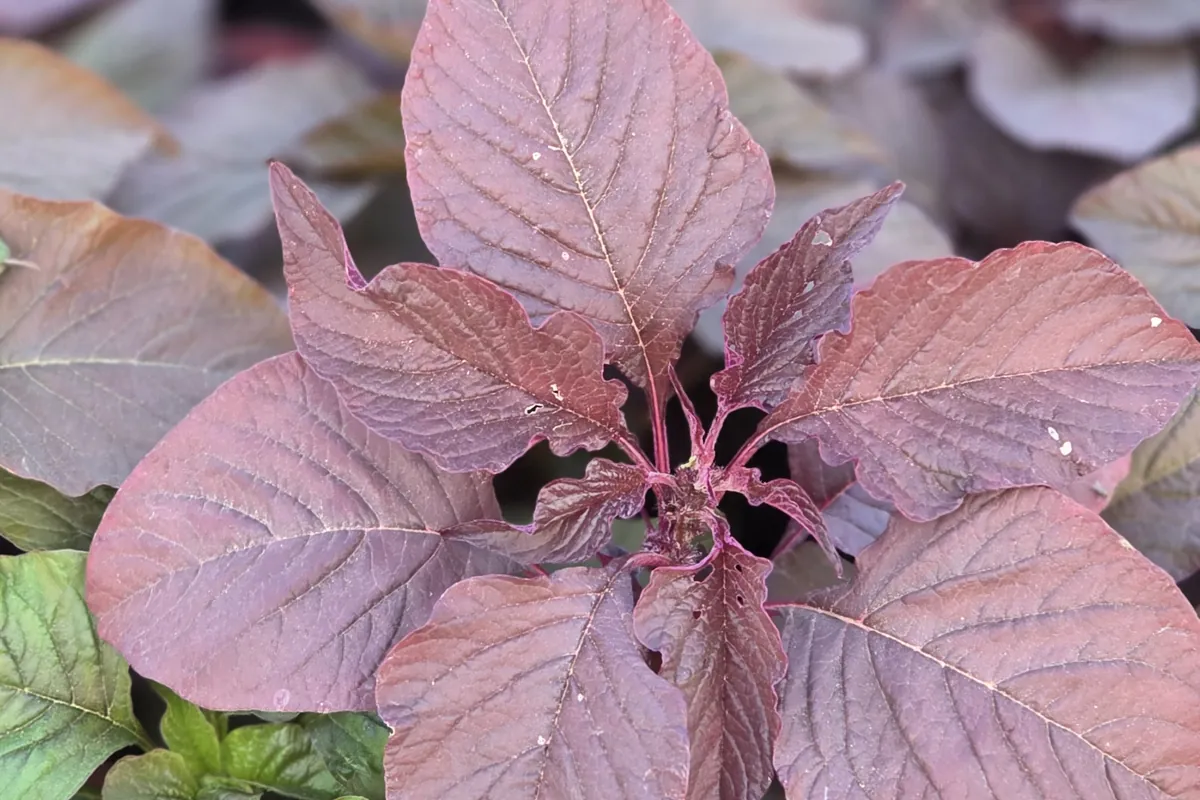
Yes. Red palak is the common market name in the UAE for red amaranth, a leafy green with soft, oval leaves splashed deep red or purple in the centre. Despite the name, it is not a type of spinach; it simply cooks in a similar way.
The same plant goes by many names across South Asian communities. Bengali cooks call it lal shak, Kerala kitchens know it as red cheera, Tamil cooks use the broader word keerai for amaranth greens, and many traders in Sharjah simply say red chira.
Knowing the names matters when you order. A Kerala chef asking for cheera and a Bengali cook asking for lal shak are usually asking for the same bundle of red palak (red amaranth).
Why is red amaranth in Sharjah so popular in Muwaileh and University City?
Muwaileh Commercial and University City have grown into busy food strips serving students, staff and young families from South Asia. Many of the restaurants and cafeterias here cook home-style meals, and a simple dish of greens is a menu staple.
Red amaranth fits that style well. It cooks in minutes, takes on garlic, chilli and mustard seed easily, and gives a plate a striking colour that customers recognise from home.
University canteens also benefit. A quick red amaranth stir-fry is an inexpensive vegetable side that adds variety to rice-based menus, and it suits vegetarian diners without extra effort.
How do you choose good red amaranth?
Freshness shows quickly in amaranth because the leaves are thin. Use this checklist when the box arrives.
| Check | Good sign | Warning sign |
|---|---|---|
| Leaf colour | Bright red-purple centres with clear green edges | Dull, brownish or faded leaves |
| Texture | Leaves spring back when touched | Limp, slimy or translucent patches |
| Stems | Snap cleanly near the top | Woody, hollow or very fibrous stems |
| Bundle | Even size, few yellow leaves | Heavy mud, weeds or crushed centres |
Younger plants with tender stems cook faster and need less trimming. If most stems are thick, set them aside for a longer-cooked dish or a dal.
How do South Asian kitchens cook red palak?
Each regional kitchen has its own favourite approach, which is useful when you plan a menu for a mixed customer base.
- Bengali lal shak bhaji: stir-fried with garlic, dried red chilli and sometimes a little poppy seed or shrimp. The cooking liquid turns pink, which diners expect.
- Kerala cheera thoran: finely chopped and cooked with grated coconut, shallots, green chilli and mustard seed.
- Tamil keerai poriyal or kootu: sautéed dry, or simmered with lentils for a softer side.
- North Indian dal: chopped into moong or toor dal near the end of cooking.
For more cooking ideas, our guide on how to use red chira in everyday dishes goes deeper into recipes. Many kitchens also pair red amaranth with other greens; fenugreek is a popular partner, and our article on finding a fresh methi supplier in Dubai explains how to handle methi in volume.
How should restaurants store and prep red amaranth?
Red amaranth is more delicate than spinach, so it rewards careful handling. Keep bundles in the chiller, loosely packed, and away from the coldest spot near the fan where thin leaves can get damaged.
Do not wash the whole box on arrival. Wash only what you will cook that shift, swishing leaves in a large sink of water and lifting them out so soil stays behind. Repeat until the water runs clear.
Pick leaves and tender tops, and chop stems separately so they can go into the pan a minute earlier. Cook quickly over high heat for stir-fries; overcooking turns the leaves dark and mushy.
If you already buy green spinach in volume, the same storage routine applies. Our article on palak wholesale in Dubai covers bulk spinach handling that works for red palak too.
Where to get red amaranth in Muwaileh and University City
Nazwa Farm grows red palak alongside 22+ other varieties in soil on our family farm in Nazwa, Sharjah. Founded in 1999, we harvest the same morning and sell farm-direct, without a middleman markup. You can read about our herb and greens supply in Muwaileh and University City for local details.
To order red amaranth wholesale, send your list, quantity and area on WhatsApp at +971 50 936 9091 or email admin@nazwafarm.com. We confirm the schedule the same day. Kitchens close to the farm can also use daily farm pickup in Sharjah.
Greens are sold in bundles, packed in boxes of about 60 bundles. For prices, message us for today’s farm-direct price, since rates depend on variety, volume and season.
Frequently Asked Questions
Is red palak the same as red chira and lal shak?
Yes. Red palak, red chira, lal shak and red cheera are all names used in the UAE for red amaranth leaves. The names come from different South Asian languages and regions, but buyers in Sharjah are generally asking for the same leafy green with red or purple centres.
Can red amaranth be eaten raw?
Red amaranth is usually cooked in South Asian kitchens, either stir-fried, cooked with coconut or added to dal. Very young leaves are sometimes used in salads, but most restaurants serve it cooked. Cooking quickly over high heat keeps the colour and texture at their best.
Why does red amaranth turn the cooking water pink?
The red pigment in the leaves leaches out when they are heated, colouring the oil or water a pinkish red. This is normal and expected in dishes such as Bengali lal shak bhaji. It is a sign of the leaf itself, not of any additive or poor quality.
How long does red amaranth stay fresh in a chiller?
Red amaranth has thin leaves, so it is best used within a few days of harvest. Keep it loosely packed in the chiller, unwashed, and away from direct fan airflow. Wash and cut only what you will cook that shift to avoid early wilting or sliminess.
Do you deliver red amaranth to Muwaileh and University City?
Nazwa Farm runs daily wholesale supply across Sharjah, as well as Dubai and Ajman. Send your list, quantity and location on WhatsApp and we will confirm the schedule the same day. Farm pickup in Sharjah is also available daily for buyers who prefer to collect.
Key Takeaways
- Red palak, red chira, lal shak and red cheera all refer to red amaranth.
- Look for bright red-purple centres, springy leaves and tender stems.
- Store unwashed and loosely packed; wash only what you cook each shift.
- It suits Bengali, Kerala, Tamil and North Indian dishes on Muwaileh menus.
- Order farm-direct on WhatsApp and confirm your schedule the same day.
Need red amaranth for your Muwaileh or University City kitchen? Send us your list. Order on WhatsApp: +971 50 936 9091