Quick answer: Most Malabar spinach UAE kitchens use is sold as puisak or pui shak. It is a thick, glossy, heat-loving green used in Bengali shak and Kerala thoran. Buy bundles with firm stems and unbruised leaves, keep them cool and dry, and order farm-direct from Nazwa Farm in Sharjah on WhatsApp.
What is Malabar spinach and why is it hard to find UAE-wide?
Malabar spinach in the UAE goes by many names. Bengali cooks call it pui shak, Kerala kitchens know it as vallicheera, Filipino cooks call it alugbati, and on wholesale lists it often appears as puisak or basella. Botanically it is not true spinach at all. It is a climbing vine with thick, fleshy, glossy leaves and soft green or reddish stems.
It is a staple for many South Asian families, yet it rarely shows up in mainstream supermarkets. The leaves bruise when packed tightly and lose their shine after a long chilled journey, so imported stock often arrives tired. A green like this is best when it travels a short distance from the field to the kitchen.
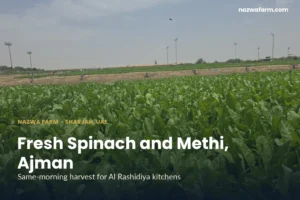
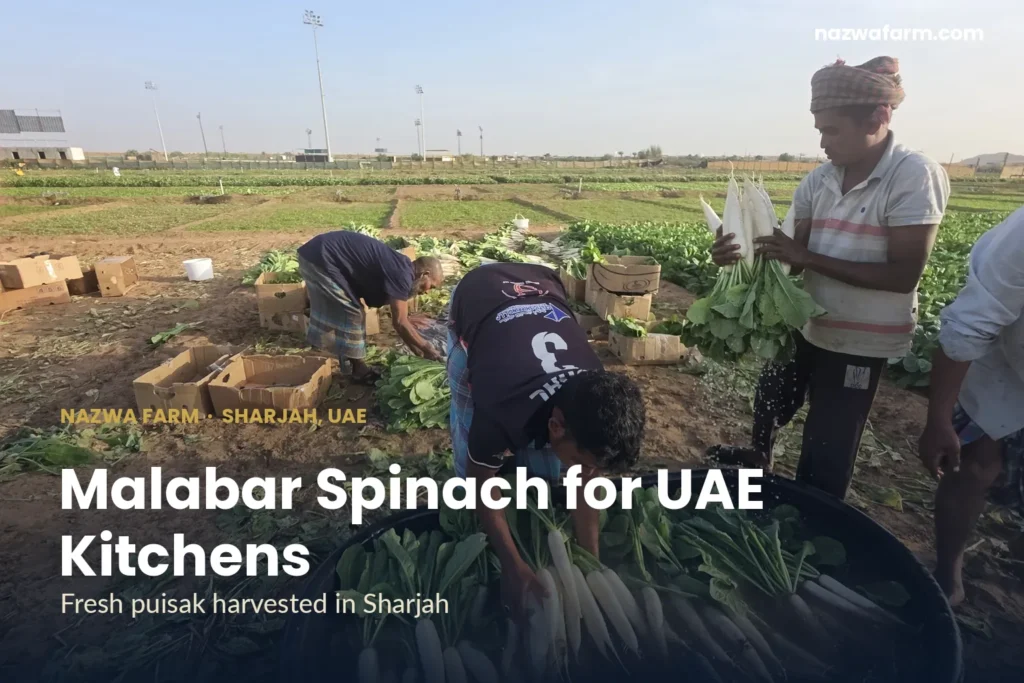
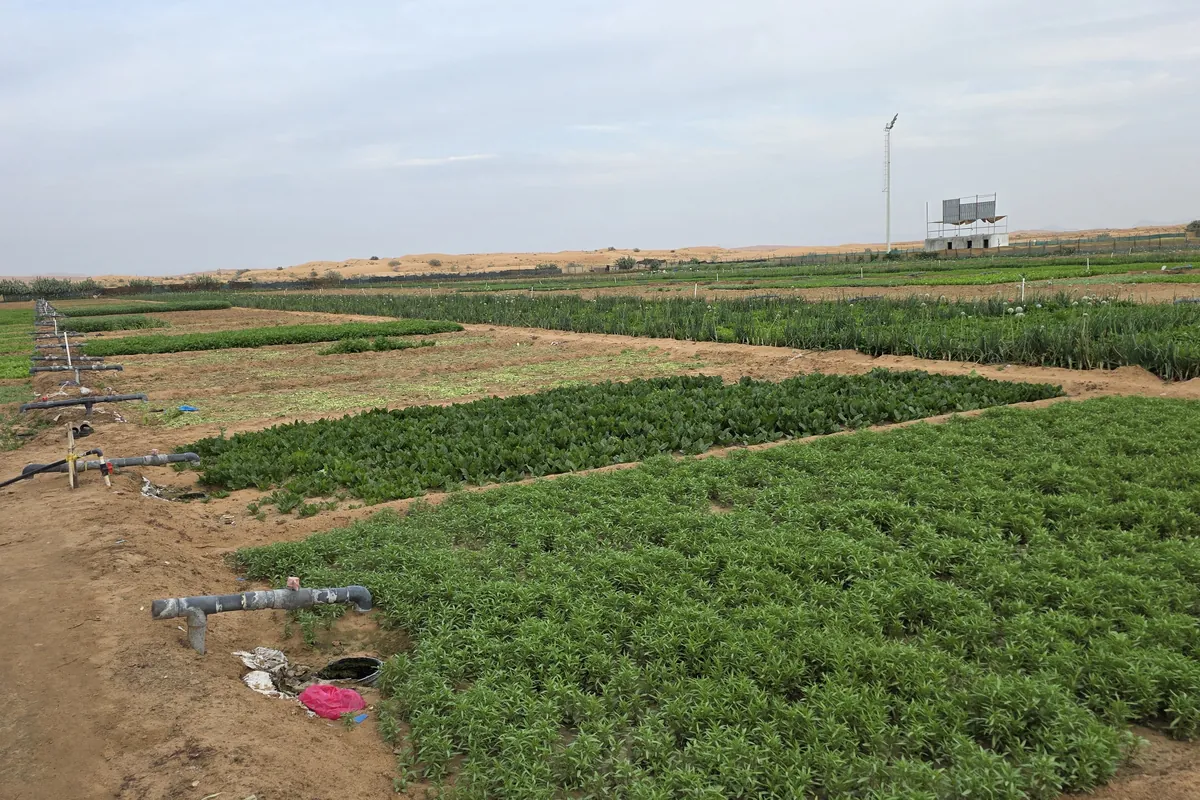
That is where our farm-grown puisak (Malabar spinach) fits. We grow it in soil on our family farm in Nazwa, Sharjah, harvest it the same morning, and supply it to restaurants, groceries and traders across Sharjah, Dubai and Ajman.
How do you choose good puisak for a restaurant kitchen?
Quality checks for puisak are simple once you know what to look for. Run through these points when a delivery arrives, before it goes into the walk-in.
| Check | Good sign | Warning sign |
|---|---|---|
| Leaves | Thick, glossy, deep green (or green with red veins on red-stem types) | Dull, papery, yellow patches or black spots |
| Stems | Firm, snap cleanly, moist at the cut end | Limp, hollow, slimy or dried out at the base |
| Bundle | Loose enough that leaves are not crushed | Packed so tight that leaves are torn or wet inside |
| Smell | Clean, faintly grassy | Sour or fermented smell from the centre |
| Tips | Tender shoots still upright | Wilted or blackened tips |
Young tips and tender stems are the prized part for stir-fries. Thicker stems are still useful: chop them small and give them a few extra minutes in the pan before the leaves go in.
How should you store Malabar spinach in a hot UAE kitchen?
Puisak copes with heat in the field, but once cut it needs gentle handling. The thick leaves hold water, and trapped moisture is the main reason a bundle turns slimy.
- Do not wash before storing. Wash only what you will cook that shift.
- Keep it cool, not freezing. Store in the chiller away from the coldest spot near the fan, where tender leaves can suffer cold damage.
- Wrap loosely. A dry cloth or paper inside a perforated bag or open crate lets moisture escape.
- Stand bundles upright if space allows, so the leaves are not crushed under heavier items.
- Use first in, first out. Leafy greens are best cooked soon after delivery, so order in amounts that match your menu rather than stocking up for the week.
Pick off any soft outer leaves early. Discard a bundle that smells sour, in line with normal food-safety practice.
How do Bengali and Kerala kitchens cook puisak?
The texture of Malabar spinach is the key to cooking it well. When cooked, the leaves turn soft and slightly silky, which helps to thicken curries and gravies naturally. Chefs either lean into that texture or balance it with dry heat and spice.
Bengali menus
- Pui shak with prawns (chingri diye pui shak): a homestyle favourite where the leaves and stems cook down with small prawns, potato and a little mustard oil.
- Pui shak chorchori: a mixed vegetable dish with pumpkin, potato and the chopped stems, finished with panch phoron.
- With fish heads: many home cooks pair puisak with fish heads or small fish for a rich everyday dish.
Kerala menus
- Thoran: finely chopped leaves stir-fried with grated coconut, mustard seeds, curry leaves and green chilli. Dry heat keeps the texture light.
- Curries and moru curry additions: some cooks add the leaves to lentil or yoghurt-based curries near the end of cooking.
Prep tips for a busy line
- Chop just before cooking. Cut leaves weep moisture if they sit.
- For a less silky finish, cook uncovered on higher heat and add a sour note such as tamarind or tomato.
How much Malabar spinach UAE restaurants should order
Ordering leafy greens is about matching volume to sales, not buying in bulk to save trips. A few practical rules work well for South Asian restaurants and cafeterias:
- Track covers by dish. Note how many puisak dishes you sell on weekdays versus weekends; Friday family lunches often move more homestyle greens.
- Order smaller, more often. A regular schedule of fresh bundles beats one large delivery that loses quality by the third day.
- Combine greens in one order. Puisak sits naturally alongside other Bengali greens such as mustard greens and red palak. Our guide to buying fresh mustard greens in Sharjah covers the shorshe shak side of the same menu.
- Plan for festivals and Ramadan. Tell your supplier in advance when demand changes, so the harvest can be planned.
Groceries in Al Nahda and Al Qasimia face the same balance: enough bundles on display to look full, but not so many that unsold stock goes limp on the shelf.
Where to get Malabar spinach in Al Nahda, Sharjah
Al Nahda is one of the densest residential districts in the UAE, with supermarkets, groceries and South Asian restaurants serving the many Bengali and Malayali families who live in its towers. Our fresh herb and leafy greens supply in Al Nahda, Sharjah is built for exactly these buyers.
Because we grow in Nazwa, Sharjah, our puisak is harvested the same morning it is supplied. We sell farm-direct as the grower, so there is no middleman or distributor markup between our field and your kitchen. We have also supplied traders at Al Aweer (Dubai Central Fruit & Vegetable Market) for about 25 years.
How to order:
- Send your list, quantity and area on WhatsApp +971 50 936 9091 or email admin@nazwafarm.com.
- We confirm your schedule the same day.
- Choose daily wholesale supply to Sharjah, Dubai or Ajman, or collect from the farm in Sharjah.
- For prices, message us for today’s farm-direct price.
You can browse our full range of herbs and leafy vegetables to build your order, or read more about how we serve Al Nahda buyers.
Frequently Asked Questions
Is Malabar spinach the same as normal spinach?
No. Malabar spinach (puisak or pui shak) is a different plant from common spinach. It is a climbing vine with thicker, glossier leaves that turn soft and slightly silky when cooked. It handles heat well in the field and is used in Bengali, Kerala and Southeast Asian cooking rather than as a direct swap for palak in every recipe.
What is pui shak called in other languages?
Pui shak is the Bengali name. Kerala cooks often call it vallicheera, Filipino cooks know it as alugbati, and in English it is Malabar spinach or basella. On wholesale lists in the UAE it is usually written as puisak, so it helps to use that name when you send your order to a supplier.
How long does fresh puisak last in the fridge?
It keeps best for a short time, so plan to cook it soon after delivery. Store it unwashed, wrapped loosely in a dry cloth inside a perforated bag or open crate, in the chiller but away from the coldest spot. Remove any soft leaves early and discard bundles that smell sour.
Can I buy puisak wholesale in Sharjah?
Yes. Nazwa Farm grows puisak on its family farm in Nazwa, Sharjah, and supplies restaurants, groceries, supermarkets and traders. Send your list, quantity and area on WhatsApp at +971 50 936 9091 and the schedule is confirmed the same day. Farm pickup in Sharjah is also available daily.
Do you supply Malabar spinach to Dubai and Ajman as well?
Yes. We run daily wholesale supply to Dubai, Sharjah and Ajman. Some Abu Dhabi buyers are supplied on agreed schedules, so confirm on WhatsApp first. For other emirates, message us to check whether we can supply your area before you plan a menu around it.
Key Takeaways
- Malabar spinach is sold in the UAE as puisak, pui shak, vallicheera or alugbati, and is a different plant from palak.
- Choose bundles with glossy, thick leaves and firm stems, and reject anything slimy or sour-smelling.
- Store it unwashed and loosely wrapped, and order little and often rather than in large batches.
- Separate stems from leaves when cooking; stems need a few extra minutes.
- Al Nahda and wider Sharjah kitchens can order farm-direct puisak from Nazwa Farm on WhatsApp.
Need fresh puisak for your Bengali or Kerala menu this week? Send us your list and area. Order on WhatsApp: +971 50 936 9091