

Quick answer: A good hotel herb supplier Dubai kitchens rely on should help you hold the right par level, not a full walk-in. Set par per outlet as daily usage multiplied by days between deliveries plus a small buffer, store basil warmer than dill and parsley, and review pars weekly against occupancy and events.
What is a herb par level and why do hotels need one?
Choosing a hotel herb supplier in Dubai is only half the job. The other half is deciding how much to hold. A par level is the quantity of each item you want on hand after a delivery arrives, enough to cover service until the next drop with a small safety margin.
Herbs are where pars go wrong most often. Hotels in Business Bay and Downtown run several outlets from one receiving dock: all-day dining, a fine-dining room, banqueting, in-room dining, a lobby café and often a bar. Each pulls from the same herb stock, and each over-orders “just in case”. The result is boxes of soft basil, yellowing dill and wilting parsley at the back of the walk-in.
A clear par system cuts that waste and keeps garnish quality consistent across every outlet.
How do you calculate herb par levels by outlet?
Use a simple formula for each herb and each outlet:
Par = (average daily usage × days until next delivery) + safety buffer
- Measure usage. For two weeks, record bundles used per day for each herb in each outlet. Include garnish, sauces, staff meals and bar use.
- Set the delivery gap. If herbs arrive daily, your gap is one day. With fewer deliveries, the gap grows and so does the par.
- Add a small buffer. Keep it modest for delicate herbs like basil and dill, which lose quality fastest. Hardier parsley can carry a slightly larger buffer.
- Adjust for forecast. Raise pars for banquets, brunches, holidays and high occupancy; lower them in quiet weeks.
- Review weekly. Compare what was thrown away with what ran out. Waste means the par is too high; running short means it is too low.
Illustrative example only: if an all-day dining outlet uses about four bundles of parsley a day and receives herbs daily, a par of five bundles covers service with one spare. The same outlet would need a much higher par if herbs arrived only twice a week, and quality on day three would suffer.
Which herbs need which storage in a hotel walk-in?
Not every herb likes the same conditions. Storing them correctly is the cheapest way to make a par level work.
| Herb | Main hotel uses | Storage | Common mistake |
|---|---|---|---|
| Basil | Italian outlet, pizza, caprese, pesto, bar cocktails | Cool but not the coldest spot; loosely covered, stems in a little water if possible | Storing near the evaporator fan, which blackens leaves |
| Dill | Smoked salmon, seafood, Arabic rice, sauces, breakfast buffet | Chilled, wrapped in a slightly damp cloth in a lidded container | Leaving it uncovered, so the fronds dry out |
| Parsley | Tabbouleh, mezze, garnish, sauces, banquet salads | Chilled, upright in a little water or wrapped and boxed | Washing before storage, which speeds decay |
Keep herbs away from ethylene-producing fruit such as ripening bananas and avocados, and away from strong-smelling items like spring onions. For more on basil grades and Italian and Thai uses, read our guide to choosing a fresh basil supplier in Dubai.
How should a central receiving dock split herbs between outlets?
In many Downtown and Business Bay properties, herbs arrive at one dock and are issued to outlets by requisition. A few rules keep this fair and reduce waste:
- Issue against par, not against requests. Each outlet tops up to its own par each morning rather than taking whole boxes.
- Label by outlet and date. A simple tape label shows who owns which bundles and how old they are.
- Prioritise delicate herbs for front-of-house. The freshest basil and dill go to fine dining and visible garnishes; older but sound bundles go to sauces, stocks and staff meals.
- Share one weekly waste log. Herb waste recorded by outlet shows which pars need adjusting.
- Keep banquet orders separate. Event herbs should be ordered for the event date, not pulled from daily outlet stock.
Hotel herb supplier Dubai checklist: what should you ask?
When you compare suppliers, look beyond the price list. These questions tell you whether a supplier can support tight pars:
- Who grows it? A grower controls the harvest. An importer or reseller depends on the next shipment.
- When was it harvested? Herbs picked the same morning hold their quality longer in the walk-in, so your buffer can stay small.
- Can you order frequently? Daily supply lets you run lower pars with less waste.
- How are herbs packed? Clear bundle sizes make par counting simple for receiving staff.
- Can one supplier cover the list? Fewer suppliers means fewer deliveries to check. Dill, for example, is used in both Western and Arabic outlets; our notes on fresh dill in Dubai explain what to look for.
Where to get fresh hotel herbs in Business Bay and Downtown
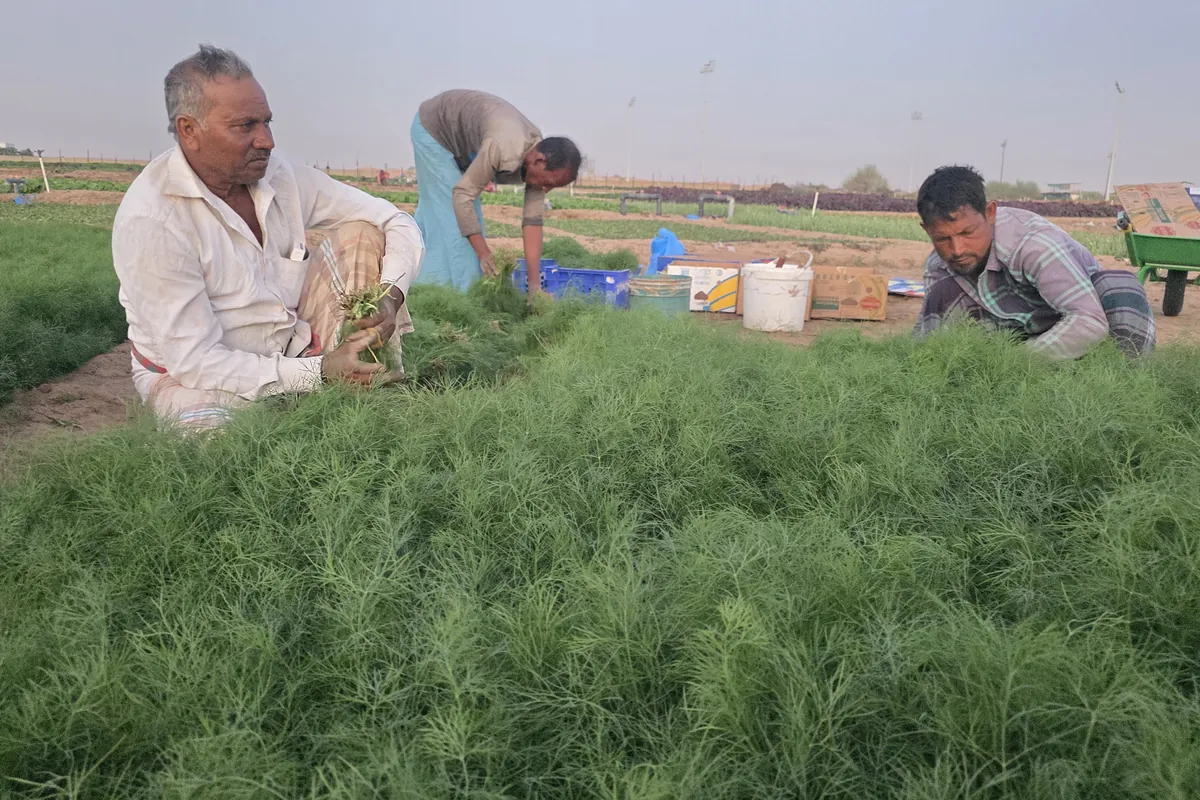
Business Bay and Downtown Dubai, around the Dubai Canal and Burj Khalifa, have one of the city’s densest mixes of hotels, fine dining and cafés. Our fresh herb supply for Business Bay and Downtown serves these kitchens from our family farm in Nazwa, Sharjah, where we have grown herbs in soil since 1999.
We harvest the same morning and sell farm-direct as the grower, with no middleman or distributor markup. Herbs come in bundles packed in boxes of about 60 bundles, which makes par counting straightforward. We grow 22+ varieties, including basil, dill, parsley, mint and coriander, and run daily wholesale supply to Dubai, Sharjah and Ajman.
How to set up supply:
- Send your herb list, quantities by outlet and your area on WhatsApp +971 50 936 9091 or email admin@nazwafarm.com.
- We confirm your schedule the same day.
- Herbs are harvested the same morning and supplied on your agreed schedule.
Message us for today’s farm-direct price.
Frequently Asked Questions
How often should a hotel order fresh herbs?
Daily or near-daily supply works best for delicate herbs such as basil and dill, because it lets you hold a low par with little waste. Hardier herbs like parsley can tolerate a slightly longer gap. Match the schedule to your occupancy, banquet calendar and outlet mix, and review it weekly.
Why does basil turn black in the hotel fridge?
Basil is sensitive to cold. When it sits in the coldest part of a walk-in, especially near the evaporator fan, the leaves darken and go limp. Store it in a slightly warmer spot, loosely covered, and order it in smaller amounts more often rather than holding a large stock.
What is a good herb par level for a hotel outlet?
There is no single number. Work it out per herb and per outlet: average daily usage multiplied by the days until the next delivery, plus a small buffer. Track two weeks of real usage first, then review pars weekly against waste and shortages, occupancy and events.
Does Nazwa Farm supply hotels in Business Bay and Downtown Dubai?
Yes. We run daily wholesale supply to Dubai, including Business Bay and Downtown, and our customers include hotels, restaurants and catering companies. Send your herb list and quantities on WhatsApp at +971 50 936 9091, and we confirm your schedule the same day.
Key Takeaways
- Par level equals daily usage multiplied by days to next delivery, plus a small buffer.
- Set pars per herb and per outlet, then review them weekly against waste and shortages.
- Store basil warmer than dill and parsley, and keep all herbs unwashed until use.
- Same-morning harvest and frequent supply let hotels run lower pars with less waste.
- Business Bay and Downtown hotels can order farm-direct herbs from Nazwa Farm on WhatsApp.
Setting herb pars for a Downtown or Business Bay hotel? Send us your list by outlet. Order on WhatsApp: +971 50 936 9091