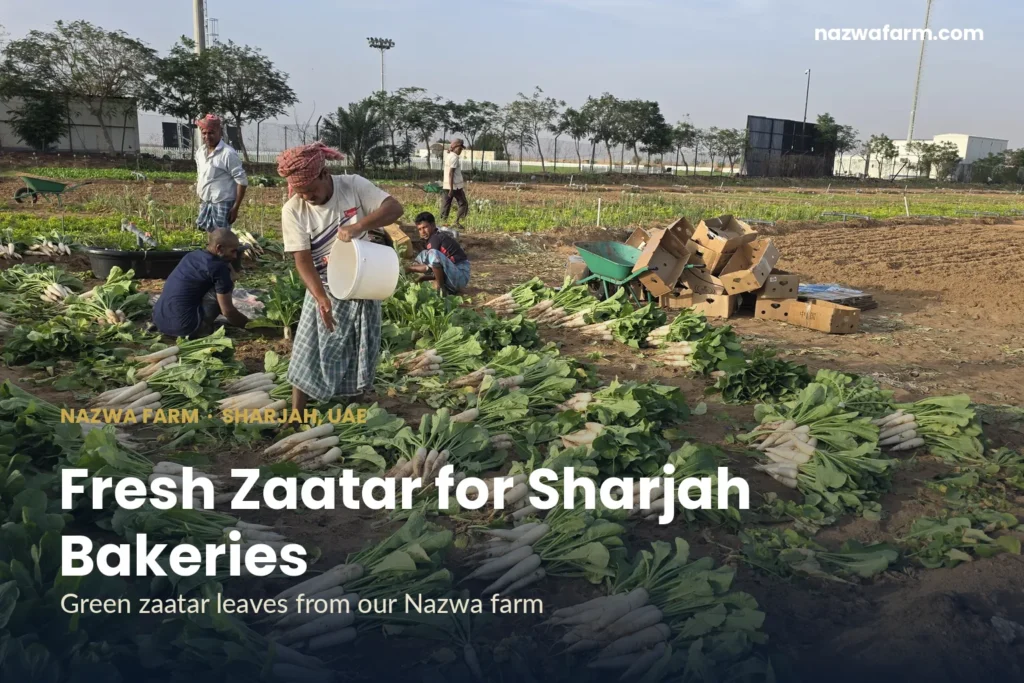
Quick answer: Fresh zaatar leaves Sharjah bakeries buy are the green herb itself, used whole in salads, fatayer and manaqeesh. The dried blend mixes the dried herb with sumac, sesame and salt. Nazwa Farm grows fresh zaatar in Nazwa, Sharjah, and supplies Al Qasimia bakeries farm-direct.
What Is the Difference Between Zaatar the Herb and Zaatar the Blend?
Zaatar (زعتر) means two things in an Arabic kitchen. It is the name of a fragrant green herb from the oregano and thyme family, and it is also the name of the famous dried blend that is spread on manaqeesh with olive oil.
In central Sharjah, around Al Qasimia, Abu Shagara and King Faisal Street, Arabic bakeries, Syrian and Egyptian restaurants and groceries use both. Knowing when to use the fresh leaf and when to use the blend helps bakeries widen their menu and make better use of each ingredient.
Fresh Zaatar Leaves vs Spice Blend: How Do They Compare?
| Factor | Fresh zaatar leaves | Dried zaatar blend |
|---|---|---|
| What it is | Whole green leaves and tender sprigs of the herb | Dried, ground herb mixed with sumac, toasted sesame and salt |
| Flavour | Bright, green, resinous and lightly peppery | Tangy, nutty, toasted and savoury |
| Main uses | Zaatar salad, fatayer filling, topping on manaqeesh, omelettes | Classic manaqeesh bi zaatar, dips with olive oil, seasoning |
| Shelf life | Short; best used within a few days | Long when stored dry and airtight |
| Prep | Pick leaves from woody stems, wash and dry | Mix with olive oil to a spreadable paste |
The two are not substitutes for each other. They work best together, and a bakery that offers both gives regular customers something new without changing its core product. Fresh leaves also photograph well on delivery apps, where a green topping stands out.
How Do Manaqeesh Bakeries Use Fresh Zaatar Leaves?
- Fresh zaatar manaqeesh: fresh leaves scattered over dough with olive oil, sliced onion and sometimes a little sumac or chilli before baking.
- Half and half: a classic zaatar blend manousheh finished with a handful of fresh leaves after baking for colour and aroma.
- Fatayer bi zaatar: fresh leaves mixed with onion, sumac, lemon and olive oil, folded into triangle pastries.
- Zaatar with cheese: fresh leaves over akkawi or halloumi manaqeesh.
- Salatet zaatar: fresh zaatar salad with onion, lemon and olive oil, popular in Levantine mezze.
Fresh leaves can scorch in a very hot oven, so many bakers add them near the end of baking or toss them in oil first.
How Should Bakeries Store and Prep Fresh Zaatar?
Fresh zaatar is sturdier than soft herbs like coriander, but it still needs care:
- Check on delivery: leaves should be green and fragrant when rubbed, without black spots. Stems should be firm, not mushy.
- Store dry: keep bundles unwashed in the chiller, loosely wrapped in paper, with some airflow.
- Pick efficiently: strip leaves by running fingers down the stem against the direction of growth. Woody lower stems are usually discarded.
- Wash and dry before use: rinse in cold water, then spin or pat dry. Wet leaves make soggy pastry and spit in hot ovens.
- Do not chop too early: chopped zaatar darkens. Prep in batches through the morning.
What Else Do Al Qasimia Bakeries Order With Zaatar?
Bakeries and Arabic restaurants in Al Qasimia often order fresh zaatar alongside other Levantine greens:
- Parsley for tabbouleh and fatayer fillings.
- Mint for salads and tea.
- Jarjeer for salads and grill plates. Our guide on fresh jarjeer for Sharjah grill restaurants covers how to keep rocket crisp.
- Moulokhia for Egyptian and Syrian kitchens. See our comparison of fresh and frozen molokhia.
Where to Get Fresh Zaatar Leaves Sharjah Bakeries Trust
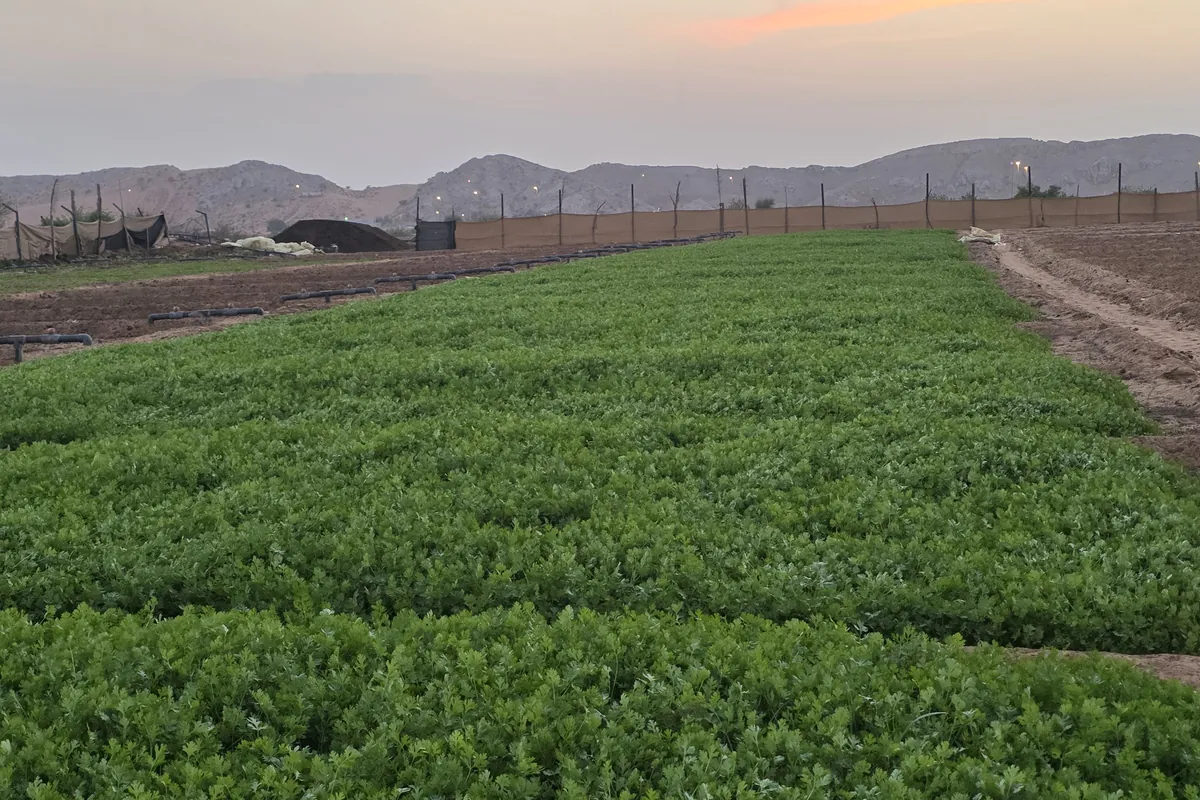
Nazwa Farm grows zaatar in soil on its family farm in Nazwa, Sharjah, where Md Mafzal Ahmed began farming in 1999. Being in Sharjah means short trips to Al Qasimia and Abu Shagara, and we harvest the same morning.
We supply bakeries, restaurants and groceries daily across Sharjah, Dubai and Ajman, farm-direct and with no middleman markup. Read more about our fresh herb supply in Al Qasimia and Abu Shagara, or collect from the farm any day.
To order, send your list, quantity and area on WhatsApp at +971 50 936 9091 or email admin@nazwafarm.com. We confirm the schedule the same day. Herbs come in bundles, packed in boxes of about 60 bundles. For prices, message us for today’s farm-direct price.
Frequently Asked Questions
Is fresh zaatar the same as thyme or oregano?
Fresh zaatar is a herb from the same family as oregano and thyme, and its flavour sits somewhere between them, green and slightly resinous. In the Levant the name usually refers to a specific wild oregano-type herb, though several related plants are sold as zaatar. It is distinct from the common thyme sold in supermarkets.
Can I make manaqeesh with fresh zaatar instead of the blend?
Yes. Fresh zaatar manaqeesh is made by scattering the leaves over dough with olive oil and often sliced onion before baking. It tastes greener and fresher than the classic blend version. Many bakeries offer both, or top a blend manousheh with fresh leaves after baking for colour and aroma.
How long do fresh zaatar leaves last?
Fresh zaatar keeps better than soft herbs like coriander but is still best used within a few days. Store bundles unwashed, dry and loosely wrapped in the chiller. Pick and wash only what you need for the day, because chopped or wet leaves darken and soften quickly.
Can I dry fresh zaatar to make my own blend?
Some bakeries dry fresh zaatar in a shaded, well-ventilated space, then grind it and mix it with sumac, toasted sesame and salt. The leaves must be completely dry before storing in airtight containers to avoid mould. Many bakeries prefer to buy the blend and use fresh leaves for fresh dishes.
Do you supply fresh zaatar to bakeries in Al Qasimia?
Yes. Nazwa Farm supplies bakeries, restaurants and groceries in Al Qasimia, Abu Shagara and across Sharjah daily. Send your list, quantity and area on WhatsApp at +971 50 936 9091 and we confirm the schedule the same day. Farm pickup in Sharjah is also available every day.
Key Takeaways
- Zaatar is both a fresh green herb and a dried blend of herb, sumac, sesame and salt.
- Fresh leaves suit salads, fatayer and fresh zaatar manaqeesh; the blend suits the classic manousheh.
- Add fresh leaves late in baking or after the oven to avoid scorching.
- Store bundles dry and prep leaves in batches through the day.
- Nazwa Farm grows fresh zaatar in Sharjah and supplies Al Qasimia bakeries farm-direct.
Add fresh zaatar manaqeesh to your Al Qasimia menu. Send us your list today. Order on WhatsApp: +971 50 936 9091