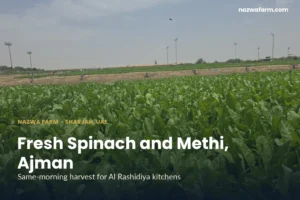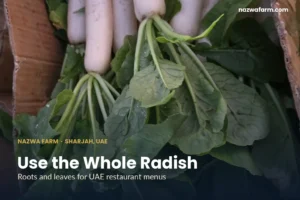
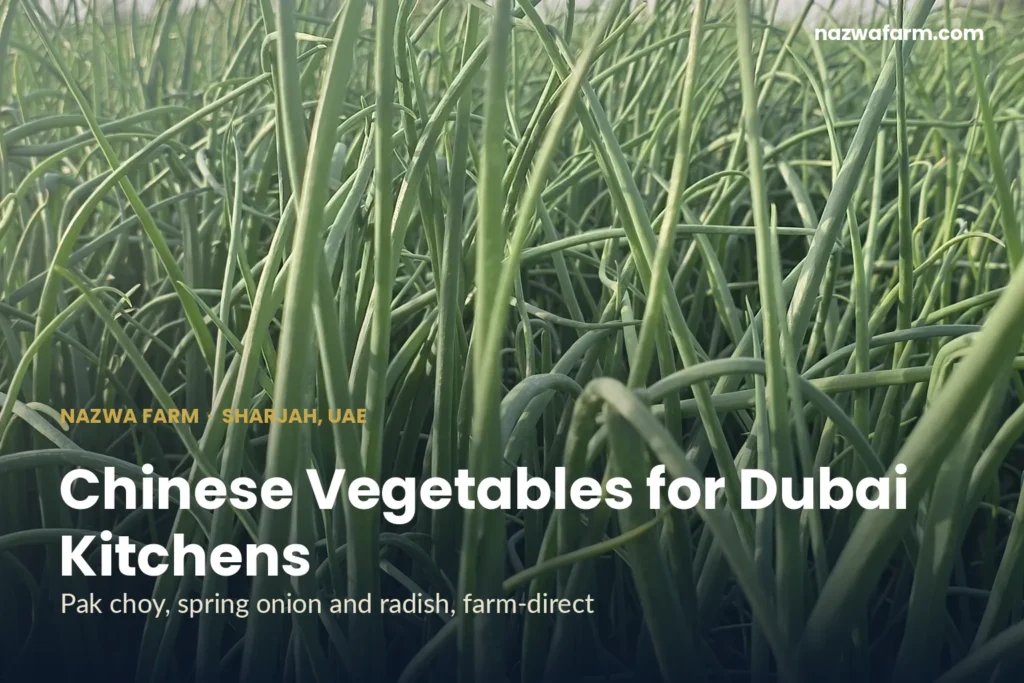
Quick answer: Chinese vegetables in Dubai are easiest to source reliably from a local grower who harvests the same morning. Nazwa Farm grows pak choy (pechai), spring onion, white and red radish and other Asian greens in Nazwa, Sharjah, and supplies International City and Warsan kitchens. Send your list on WhatsApp to confirm today’s schedule.
Which Chinese vegetables in Dubai kitchens are used most?
International City, Dragon Mart and Warsan hold one of the largest clusters of Chinese, Filipino and other Asian restaurants in the UAE. Woks run all day, and the greens they need are not always the ones a general produce supplier stocks well. Buyers searching for Chinese vegetables in Dubai usually need a short, dependable core list rather than an exotic catalogue.
That core list tends to look like this:
- Pak choy (pechai, bok choy) for stir-fries, noodle soups, steamed greens with oyster sauce and garlic, and hot pot.
- Spring onion (scallions, green onion) for almost everything: fried rice, ginger-scallion sauce, garnish, dumpling fillings and scallion pancakes.
- White radish (mooli) for braises, clear soups with pork or beef bones, pickles and radish cake.
- Kangkong (water spinach) for garlic stir-fries in Chinese, Filipino and Vietnamese kitchens.
Spring onion is the one item no Chinese kitchen can run out of. Pak choy and radish follow close behind, especially for restaurants with soup or hot pot menus.
How do you check pak choy, spring onion and radish on delivery?
Each of these vegetables fails in a different way, so receiving staff should know what to look for.
| Vegetable | Good signs | Warning signs | Kitchen note |
|---|---|---|---|
| Pak choy | Crisp white or pale green stems, glossy dark leaves, tight heads | Floppy stems, yellow outer leaves, brown cut base | Wash between the stems; soil collects at the base |
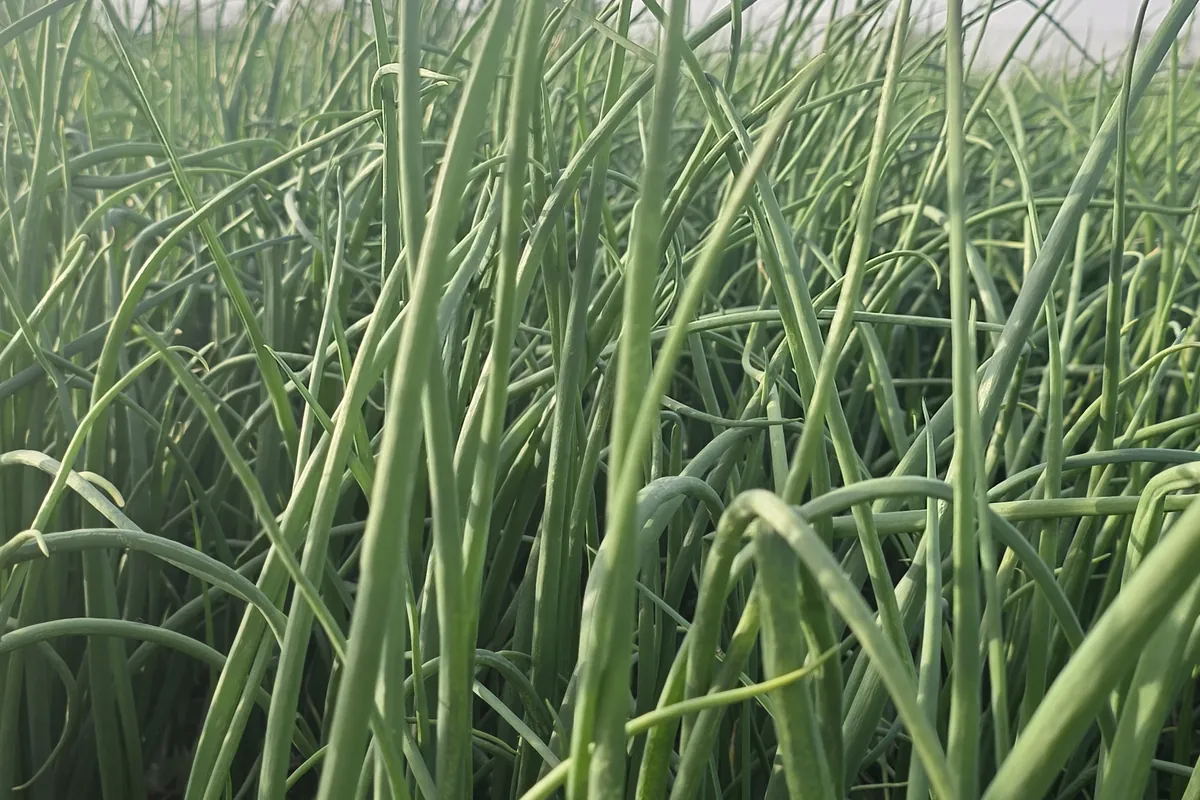
| Spring onion | Firm white bulbs, upright green tops, clean roots | Slimy outer layer, bent or yellow tops | Peel away the outer skin if it is loose |
| White and red radish | Heavy, firm roots with smooth skin; fresh leaves if attached | Soft or wrinkled roots, hollow sound, cracks | Remove leaves before storing roots |
Ask your supplier when the produce was harvested. A grower can give you a direct answer. A trader often cannot, because the stock may have passed through several hands since leaving the farm.
Why is local, same-morning pak choy better for a wok kitchen?
Wok cooking is fast and hot, and it exposes tired greens quickly. Pak choy that has lost water turns limp and stringy instead of staying crisp at the stem. Spring onion that has sat too long turns soft and loses the sharp, fresh bite that defines a good garnish.
Nazwa Farm grows these greens in soil on the family farm in Nazwa, Sharjah, and harvests them the same morning they are sent out. The farm is a grower, not an importer, so produce does not spend days in transit or cold storage before it reaches you. It has also supplied traders at Al Aweer for about 25 years, so it is used to the volumes and pace of busy wholesale buyers.
For high-volume kitchens such as staff canteens and student food courts, the same principles apply. Our guide to supplying campus canteens in Sharjah covers how large kitchens plan greens for steady daily volume.
How should Chinese kitchens prep and store these greens?
Good handling in your own kitchen protects what you paid for. A few simple habits make a clear difference:
- Pak choy: keep whole heads dry and chilled. Halve or quarter them only when you are about to cook, and soak briefly in cold water to release grit from the base.
- Spring onion: trim roots, remove any damaged outer layers, and store wrapped loosely in the chiller. Cut in batches per service rather than once a day.
- Radish: separate the leaves from the roots as soon as they arrive, because leaves draw moisture from the root. Roots keep well when chilled; leaves should be used within a day or two.
- Batch planning: order pak choy more often in smaller amounts, since it wilts faster than radish.
Spring onion is often the item that goes to waste first. For a detailed method, see how to store spring onions so they last.
What should you ask a Chinese vegetables supplier in Dubai?
Before you commit to a supplier, a short conversation saves trouble later. Use this checklist:
- Do you grow these vegetables yourself, or buy them from another trader?
- When are they harvested relative to delivery?
- How are herbs and greens packed? (At Nazwa Farm, herbs come in bundles packed in boxes of about 60 bundles.)
- Can I change quantities day to day for busy weekends or festivals?
- Can I collect from the farm if I need extra stock?
- Can you also supply related greens such as kangkong, coriander or mint, so I deal with fewer vendors?
Clear answers to these questions tell you more than a price list. A supplier who is vague about harvest timing is usually not the grower.
Where to get Chinese vegetables in International City, Dubai
Nazwa Farm supplies Dubai daily, including restaurants, traders and groceries in International City, Dragon Mart and Warsan. See the range and nearby areas we cover on our International City and Warsan supply page, or browse every variety on the full list of herbs and greens we grow.
To order, send your list, quantities and location on WhatsApp +971 50 936 9091 or email admin@nazwafarm.com. The team confirms your schedule the same day, the greens are harvested the same morning, and you can also arrange daily pickup from the farm in Sharjah. Prices change with season and volume, so message us for today’s farm-direct price.
Frequently Asked Questions
Where can I buy pak choy wholesale in Dubai?
Pak choy is available from Al Aweer traders, importers and some local farms. Nazwa Farm grows pak choy, also called pechai or bok choy, in Nazwa, Sharjah, and supplies Dubai restaurants and traders directly, including International City. Send your list on WhatsApp and the schedule is confirmed the same day.
Is pak choy the same as bok choy?
Yes. Pak choy and bok choy are two spellings of the same Chinese cabbage, and Filipino cooks often call it pechay or pechai. Kitchens use the stems and leaves together in stir-fries, soups and steamed dishes. When ordering, any of these names will be understood by Nazwa Farm.
Which radish is used in Chinese cooking?
Chinese kitchens mostly use long white radish, often called mooli or daikon, in soups, braises, pickles and radish cake. Red radish is more common in salads and mezze. Nazwa Farm grows both white and red radish, so you can order whichever your menu needs alongside your other greens.
Can International City restaurants collect greens from the farm?
Yes. Farm pickup in Sharjah is available daily, which suits restaurants and traders that run their own vans. Message the farm on WhatsApp with your list and quantities first, so your order is harvested and ready when you arrive. Delivery within Dubai can also be arranged on a regular schedule.
Key Takeaways
- Most Chinese kitchens in Dubai need a short, reliable list: pak choy, spring onion, radish and kangkong.
- Check pak choy stems, spring onion bulbs and radish firmness at every delivery.
- Same-morning harvest from a local grower keeps wok greens crisp.
- Separate radish leaves from roots and cut spring onion per service to cut waste.
- Order from Nazwa Farm on WhatsApp with your list, quantity and area.
Supplying a wok kitchen in International City? Send us your greens list. Order on WhatsApp: +971 50 936 9091