

Quick answer: How to store spring onions in a commercial kitchen: keep them whole, dry and chilled, wrapped loosely in paper inside a covered container, and away from the fan. Trim and slice only what the next service needs. Store whites and greens separately once cut, and use sliced greens quickly because they soften and lose colour.
What should you check when spring onions arrive?
Storage starts at the receiving door. Spring onions (also called scallions or green onions) that arrive warm, wet or crushed will not last however well you store them.
- Greens: upright, firm and evenly coloured, with no yellow tips or flattened, slimy tubes.
- Whites: firm, clean and glossy, with no soft or brown patches.
- Roots: fresh-looking; dry, shrivelled roots suggest older stock.
- Smell: clean onion aroma, not sour.
- Box: no pooled water or heat inside.
Move them to the chiller as soon as they are checked. In UAE kitchens, a box left by the back door for even a short time in summer heat loses a noticeable share of its shelf life.
How to store spring onions in the chiller
Spring onions keep best whole, cool and dry, with just enough humidity to stop the greens drying out. This is the routine that works for most restaurant kitchens.
- Leave them whole and unwashed until prep. Washing adds moisture that turns the greens slimy.
- Remove ties and damaged stems so one bad stem does not spoil the bunch.
- Wrap loosely in paper towel or lay them in a lined container, then cover with a lid or perforated film.
- Keep them on a shelf away from the fan, where cold air does not dry out or freeze the tips.
- Store covered, because their onion smell can travel to other foods.
- Label with the receiving date and use first in, first out.
Stored this way, whole spring onion shelf life is usually several days. Freshly harvested bunches give you the most room.
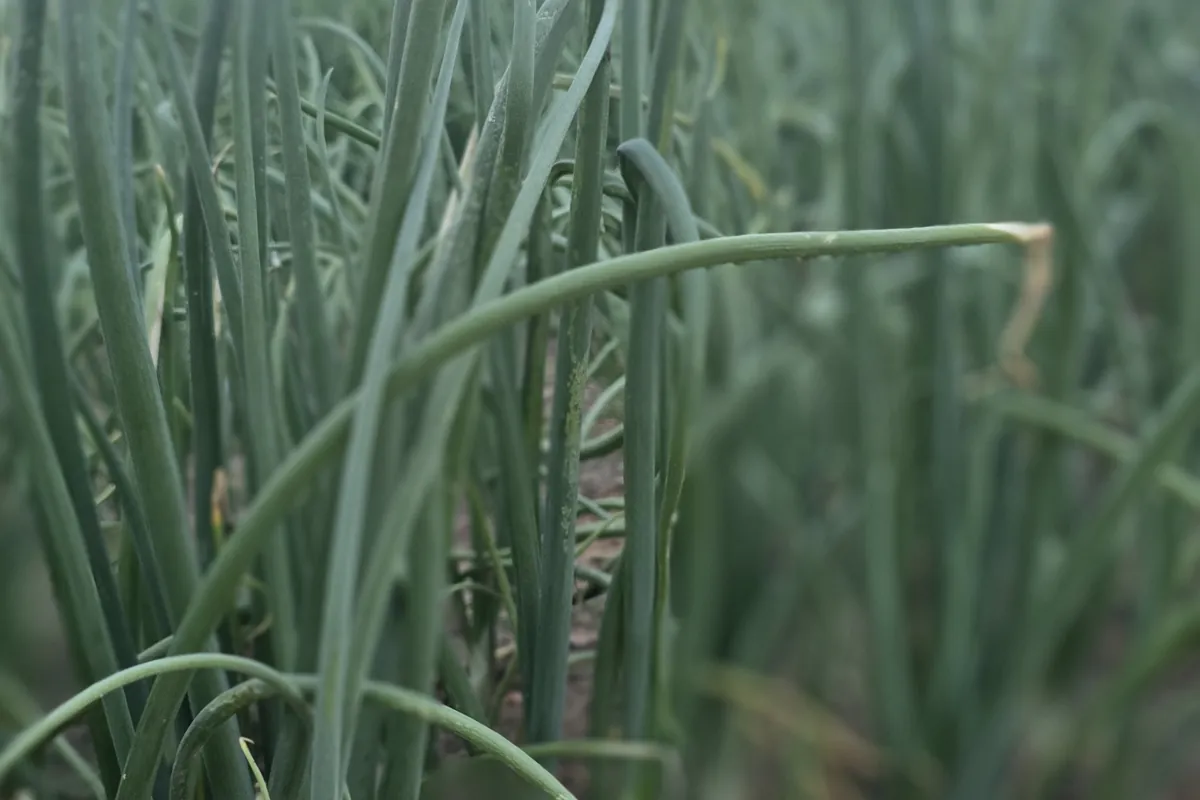
Green onion storage options compared
Kitchens use several methods. This table shows where each one fits.
| Method | Best for | Pros | Watch out for |
|---|---|---|---|
| Whole, wrapped in paper, covered, chilled | Main stock | Longest life, minimal handling | Check daily for damp spots |
| Roots standing in a little water, chilled | A small bunch at a bar or pass | Greens stay upright and fresh-looking | Change the water often; not practical for full boxes |
| Sliced greens in a lined, covered tub | Garnish for the next service | Ready to use | Soften and dull fast; slice to need |
| Sliced whites in a covered tub | Stir-fry and sauce bases | Hold better than greens | Strong smell; keep tightly covered |
| Chopped and frozen | Cooked dishes only | Reduces waste from surplus | Texture lost; not for garnish |
What is the best scallion prep workflow for a restaurant?
Good scallion prep in a restaurant is about doing it in the right order and in the right quantity.
- Trim: cut off the roots and any dry tips; peel away a slippery or damaged outer layer.
- Wash: rinse under cold water, opening the base slightly where soil collects. Our guide to washing leafy vegetables in a restaurant sets out a full washing routine.
- Dry: spin or pat dry; wet slices clump and spoil.
- Separate: divide whites, light green middles and dark green tops; they do different jobs.
- Cut to the dish: fine rings for garnish, bias cuts for stir-fries, long batons for noodle dishes, whole for grilling.
- Store and label: lined, covered tubs with prep date and time.
Using each part
- Whites: cook like a mild onion in stir-fries, sauces and fried rice.
- Middles: salads, salsas, omelettes and fillings.
- Greens: raw garnish on soups, noodles, grills and mezze plates.
What mistakes shorten spring onion shelf life?
- Washing the whole box on arrival and storing it wet.
- Slicing a full day of garnish in the morning; the rings go flat and dull by evening.
- Leaving spring onions in the coldest spot near the fan, where tips freeze and turn translucent.
- Packing bunches tightly so stems bruise and trap moisture.
- Storing uncovered, which dries the greens and spreads the smell.
- Over-ordering to save on deliveries; a smaller, more frequent order usually wastes less.
Heat makes all of these worse. Our article on leafy vegetables in the UAE summer covers how to adjust ordering and storage in the hottest months.
Where to get fresh spring onions in Al Barsha
Al Barsha and Barsha Heights are full of hotel apartments, mid-range restaurants and Asian eateries, and spring onion is on almost every one of their order lists. Our fresh herb and vegetable supply in Al Barsha includes spring onion alongside pechai, coriander, mint and basil.
Nazwa Farm grows spring onions in soil on our family farm in Nazwa, Sharjah, and harvests them the same morning we supply. We are a grower, not an importer, and sell farm-direct with no middleman markup. Supply runs daily across Dubai, Sharjah and Ajman, and farm pickup in Sharjah is available daily.
To order, send your list, quantity and area on WhatsApp or email admin@nazwafarm.com, and we confirm the schedule the same day. For prices, message us for today’s farm-direct price.
Frequently Asked Questions
Should spring onions be stored in water or in the fridge?
For a commercial kitchen, the chiller is the main answer. Store whole spring onions dry, loosely wrapped in paper and covered. Standing the roots in a little water in the chiller works for a small bunch at the pass, but it is not practical for full boxes, and the water must be changed often.
How long do spring onions last in a restaurant chiller?
Whole, unwashed spring onions stored dry, wrapped and covered in the chiller usually last several days. Sliced greens last much less and are best used in the same or next service. Actual shelf life depends on how fresh they were at delivery, so same-morning harvested bunches give you more time.
Can you freeze spring onions?
Yes, but only for cooked dishes. Chop them, freeze in a flat, sealed bag, and add them straight from frozen to stir-fries, soups, sauces or fried rice. Freezing destroys the crisp texture, so frozen spring onions are not suitable for raw garnish or salads.
Why do sliced spring onions go slimy?
Slicing breaks the cells and releases moisture. If the slices were wet when stored, or packed tightly in a sealed tub, that moisture builds up and the greens soften and turn slimy. Dry the stems well before slicing, line the tub with paper towel, and slice only what the next service needs.
Key Takeaways
- Check spring onions at receiving and chill them immediately, especially in summer.
- Store them whole, unwashed, loosely wrapped and covered, away from the chiller fan.
- Wash, dry and slice only what the next service needs, with whites and greens kept separate.
- Freeze surplus only for cooked dishes, never for garnish.
- Smaller, frequent orders of same-morning harvested spring onions reduce slimy waste.
Need fresh spring onions for your Al Barsha or Dubai kitchen? Send us your list and quantity. Order on WhatsApp: +971 50 936 9091