TL;DR
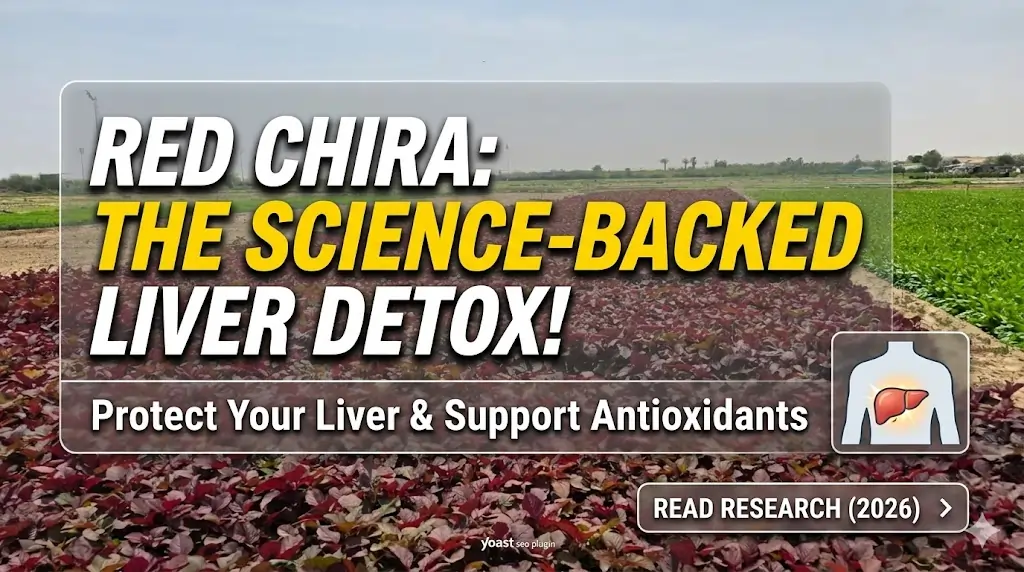
- Red Chira (Bengali: Lal Shak) is the common name for red amaranth leaves – Amaranthus cruentus or Amaranthus tricolor – a dark-red leafy vegetable grown and eaten widely across South Asia and increasingly studied for its liver-protective properties.
- Multiple peer-reviewed studies show amaranth leaf extracts can reduce elevated liver enzymes (ALT, AST, ALP), protect against hepatic damage from toxic injury, and support the liver’s antioxidant defense systems (ScienceDirect, 2021; BMRAT, 2024).
- The key liver-supporting compounds in Red Chira are betalains, flavonoids, polyphenols, and vitamin C – all of which are present in significantly higher concentrations in red morph amaranth than in green varieties (PMC, 2019).
- A 2021 University of Tokyo study found that amaranth supplementation significantly reduced liver triglycerides, total cholesterol, and phospholipids in high-fat diet-fed mice, and also reversed gut microbiota imbalance linked to liver stress (PMC, 2021).
- The Middle East and North Africa region has one of the highest rates of non-alcoholic fatty liver disease (NAFLD) globally, at 36.53% (Hepatology Journal, 2023) – making liver-supportive foods especially relevant for residents of Dubai, Sharjah, Ajman, and Abu Dhabi.
- Nazwa Farm grows and supplies fresh Red Chira leaves with same-morning harvest from their Nazwa, Sharjah farm, delivering directly to buyers across the UAE.
What Is Red Chira and Why Liver Health Matters in the UAE
Red Chira is the Bengali community name for red amaranth leaves, a leafy vegetable with a deep red-purple color grown from the Amaranthus plant family. It is also called Lal Shak in Bangladeshi households, Lal Chaulai or Lal Marasa in Hindi, and Tambdi Bhajji in Konkani-speaking communities. The plant’s botanical name is Amaranthus tricolor or Amaranthus cruentus depending on the variety, and the edible part is the fresh leaf – stir-fried, added to curries, or eaten as a simple saag.
In the UAE, liver disease is a growing concern. Non-alcoholic fatty liver disease (NAFLD) is present in more than 30% of patients with type 2 diabetes and in more than 50% of patients with obesity in the UAE (ClinicalTrials.gov, 2023). NAFLD prevalence in the Middle East and North Africa region stands at 36.53% – the second highest of any global region after Latin America (Hepatology, 2023).
Projections published in PubMed estimate 372,000 NAFLD cases in the UAE by 2030, with cases of non-alcoholic steatohepatitis (NASH) – the more severe progression of NAFLD – increasing at an even faster rate due to aging and disease progression (PubMed, 2018).
For the large South Asian, Bengali, and expatriate communities across Dubai, Sharjah, Ajman, and Abu Dhabi – many of whom already eat Red Chira regularly – understanding what research says about this vegetable and liver function is both practical and timely.
What the Liver Actually Does and Why It Needs Dietary Support
The liver is the body’s primary detoxification organ. It performs over 500 functions, including filtering toxins and waste products from the blood, producing bile for fat digestion, metabolizing fats and cholesterol, processing medications and alcohol, and manufacturing proteins needed for blood clotting and immune function.
When the liver is under stress – from excess dietary fat, alcohol, environmental toxins, medications, or chronic inflammation – three markers typically rise in blood tests: alanine transaminase (ALT), aspartate transaminase (AST), and alkaline phosphatase (ALP). These enzymes (ALT, AST, ALP) leak from damaged liver cells into the bloodstream, and elevated levels are the standard clinical signal of liver cell injury.
Glutathione is the most potent antioxidant synthesized and distributed mainly by the liver. It plays a central role in protecting liver cells from oxidative damage and maintaining redox balance. Non-alcoholic fatty liver disease is directly associated with low levels of plasma and hepatic glutathione (PMC, 2021).
This is where diet becomes directly relevant. Foods rich in antioxidants, polyphenols, flavonoids, and certain pigments can support the liver’s own glutathione production and reduce the oxidative stress that drives cell damage. Red Chira is one of the most concentrated natural sources of these exact compounds among all edible leafy vegetables.
Why Red Chira Is Especially Potent for Liver Support: The Pigment Advantage
The deep red-purple color of Red Chira leaves is not cosmetic. It comes from a group of pigments called betalains – specifically betacyanins (red-purple) and betaxanthins (yellow) – plus anthocyanins and carotenoids. These pigments are the same class of compounds studied extensively in red beet for liver and cardiovascular benefits, and Red Chira contains them in comparable or higher concentrations.
Red morph amaranth is a unique source of betalains, beta-xanthins, and beta-cyanins that have a demonstrated free radical detoxifying ability. Red morph amaranth leaves contain beta-cyanins, beta-xanthins, betalains, anthocyanins, amaranthine, carotenoids, and chlorophylls – all of which detoxify free radicals in the human body and act as potent antioxidants. The anti-inflammatory properties of these carotenoids, betalains, and beta-cyanins also protect against cardiovascular disease (Sarker & Oba, PMC, 2019).
Betalain intake has been shown in animal studies to increase levels of both superoxide dismutase and glutathione in liver tissue while significantly reducing markers of lipid damage. Betalains also activate the Nrf2 pathway, which enhances the liver’s own antioxidant enzyme production (ScienceInsights, 2026).
This Nrf2 pathway activation matters. Nrf2 is the master regulator of the body’s cellular antioxidant response – when activated, it tells the liver to produce more of its own protective enzymes. Foods that activate Nrf2 do not just provide antioxidants from outside; they switch on the liver’s internal defense systems.
Green amaranth leaves do not carry nearly as much of this pigment load. Research comparing red and green morph amaranth found remarkable levels of beta-cyanins, total flavonoids, beta-xanthins, betalains, carotenoids, total phenolics, beta-carotene, and vitamin C in red morph amaranth – with antioxidant activity in both DPPH and ABTS assays significantly exceeding green varieties (Sarker & Oba, 2019).
This is why Red Chira – specifically the red variety – is nutritionally distinct from ordinary green leafy vegetables, even other amaranth leaves.
What the Research Says: 5 Key Findings on Red Amaranth and Liver Health
The research on amaranth and liver function covers five distinct areas of evidence. Each builds a different part of the case for Red Chira as a liver-supportive food.
Finding 1: Amaranth Leaf Extract Directly Reduces Elevated Liver Enzymes
The most direct evidence comes from studies measuring ALT, AST, and ALP – the clinical markers of liver cell damage – before and after amaranth leaf extract administration.
A study published in ScienceDirect investigated a hydroalcoholic leaf extract of Amaranthus hybridus for its hepatoprotective effects on chemically induced liver damage in rats. The extract reduced elevated rat liver enzyme markers (the equivalent of AST and ALT) and restored total protein levels. The extract also increased the activities of superoxide dismutase and catalase – the body’s primary endogenous antioxidant enzymes. Histopathological studies showed an alleviation of tissue fibrosis and prevention of progression to cirrhosis. The researchers concluded that the hepatoprotective effect was due to the plant’s nutritional components and potent antioxidative capacity, and that the findings validate its traditional use in liver disease management (ScienceDirect, 2021).
Fibrosis is the scarring process that precedes cirrhosis. A treatment that alleviates fibrosis in animal models is significant because fibrosis reversal is considered difficult to achieve even with pharmaceutical interventions.
Finding 2: Red Amaranth Cruentus Leaf Extract Protected the Liver Against Lead-Induced Damage
A 2024 study published in Biomedical Research and Therapy tested a hydroethanolic extract of Amaranthus cruentus – the red amaranth species directly related to Red Chira – against lead-induced liver toxicity in rats. Using ALT, AST, ALP, bilirubin, albumin, and total protein as liver health indicators, the extract protected the liver against damage at rates of 35.2%, 53.8%, and 72.1% at increasing doses. The study concluded that the considerable potential of Amaranthus cruentus as a natural antioxidant makes it a promising alternative with minimal side effects for managing liver and kidney disorders (BMRAT, 2024).
A 72.1% liver protection rate at the highest dose is a substantial result. For context, the pharmaceutical reference standard in such studies – Silymarin, the active compound in milk thistle, which is widely used as a liver supplement – recorded 83.2% hepatoprotection in the same study. Red amaranth leaf extract reached approximately 87% of Silymarin’s performance in that comparison.
Finding 3: Amaranth Extract Reduced Liver Fat and Cholesterol in High-Fat Diet Models
This finding is particularly relevant to the UAE context, where NAFLD rates are driven by dietary patterns high in fat and refined carbohydrates.
A 2021 study from the Graduate School of Agricultural and Life Sciences at the University of Tokyo investigated the effects of dietary amaranth on lipid metabolism and gut microbiota in high-fat diet-fed mice. Amaranth supplementation significantly reduced the levels of triglycerides, total cholesterol, and phospholipids in the liver. Amaranth supplementation also downregulated the expression of lipogenesis-related genes in the liver – meaning it reduced the liver’s tendency to create and store new fat. The gut microbiota analysis showed that amaranth supplementation reversed the high-fat diet-induced reduction in bacterial diversity and richness (PMC, 2021).
Fat accumulation in the liver (steatosis) is the first and most reversible stage of NAFLD. A food that actively reduces liver fat deposition and also restores gut microbiota balance addresses two of the key drivers of NAFLD simultaneously.
Finding 4: Amaranthus Spinosus Reduced Liver Stress Markers in Obesity-Induced Metabolic Disorder
A study investigating Amaranthus spinosus – a species closely related to the red amaranth used as Red Chira – in rats with obesity-induced metabolic disorders found that all three forms tested (powdered supplement, methanol extract, and aqueous extract) significantly reduced weight gain, organ weight, and abdominal fat deposition. Improved glucose tolerance and lipid parameters were observed, and hepatic antioxidant status improved alongside a reduction in hepatosteatosis (fatty liver) (PMC, 2021).
The fact that even powdered food-form amaranth (not just concentrated extract) improved liver markers is relevant to dietary recommendations – it means eating Red Chira as a regular cooked vegetable, not just as a supplement, may carry real liver-supportive value.
Finding 5: Amaranth Reduced Fat Deposits in the Liver of Ethanol-Stressed Animals
A study published in PubMed found that amaranth contributed to a decrease of fat deposits in the liver of ethanol-treated rats, likely through the downregulation of key lipogenesis enzymes including acetyl-CoA carboxylase alpha and diacylglycerol O-acyltransferase (PubMed, 2014).
This mechanism – reducing the expression of the specific enzymes responsible for fat synthesis in the liver – explains at a molecular level why amaranth consumption is associated with lower liver fat in multiple animal models.
The 5 Compounds in Red Chira That Support Liver Function
Understanding why Red Chira supports the liver requires knowing which of its compounds do the work and what each one does.
| Compound | Found in Red Chira | Liver Mechanism |
|---|---|---|
| Betalains (betacyanins, betaxanthins) | High – responsible for red-purple color | Free radical scavenging; activates Nrf2 antioxidant pathway; boosts glutathione and superoxide dismutase |
| Flavonoids (quercetin, rutin, kaempferol) | Significantly higher in red vs green variety | Inhibits inflammatory pathways; reduces ALT/AST elevation; protects hepatocyte cell membranes |
| Polyphenols (chlorogenic acid, caffeic acid, ferulic acid) | High in red morph leaves | Reduces oxidative stress markers; anti-fibrotic activity in liver tissue |
| Vitamin C | 43mg per 100g raw (48% DV) | Regenerates other antioxidants; supports collagen repair in liver tissue; directly reduces oxidative stress markers |
| Dietary fiber | ~2-3g per 100g raw | Binds bile acids in the gut; supports healthy gut microbiota; reduces the liver’s bile recycling workload |
Sources: USDA National Nutrient Database (2023), Sarker & Oba, PMC (2019), ScienceDirect (2021)
Red Chira, NAFLD, and the UAE Context
Non-alcoholic fatty liver disease (NAFLD) is the liver condition most directly relevant to the general population in the UAE – and the one where Red Chira’s specific properties are most applicable.
NAFLD develops when excess fat builds up in liver cells. In its early stages it causes no symptoms. If left unaddressed, it can progress to non-alcoholic steatohepatitis (NASH), which involves liver inflammation and cell damage, and then to fibrosis and cirrhosis.
Obesity and type 2 diabetes mellitus prevalence has doubled in the last 30 years in the UAE. Nearly one fifth of the UAE population has type 2 diabetes, while more than a quarter has obesity. The Middle East region has one of the highest NAFLD prevalence rates globally, at up to 32% (ClinicalTrials.gov, 2023).
The lifestyle factors behind UAE NAFLD rates – high dietary fat intake, sedentary work environments, heat-driven low physical activity – are not easily or quickly changed. Dietary additions that specifically target liver fat accumulation and oxidative stress offer a practical, accessible complement to broader lifestyle changes.
Red Chira addresses the three main drivers of NAFLD progression directly:
- Liver fat: Amaranth supplementation reduced liver triglycerides, total cholesterol, and phospholipids in high-fat diet models (PMC, 2021).
- Oxidative stress: Betalains and flavonoids in Red Chira activate the Nrf2 pathway and boost glutathione and superoxide dismutase levels in liver tissue.
- Gut microbiota disruption: Amaranth supplementation reversed high-fat diet-induced reduction in bacterial diversity and richness in gut microbiota analysis (University of Tokyo, PMC, 2021). Gut microbiota health is directly linked to liver inflammation through the gut-liver axis.
What the Research Does Not Say: Important Boundaries
Responsible guidance on Red Chira and liver health requires being clear about where the evidence currently stops.
- Most studies are animal-based. The hepatoprotective studies reviewed here used rat and mouse models, not human clinical trials. The mechanisms identified – enzyme inhibition, antioxidant activity, fat reduction – are real and consistent across studies, but the exact effect in a human eating Red Chira as a cooked vegetable is not yet established through large human clinical trials.
- Red Chira is not a liver treatment. No study positions Red Chira as a replacement for medical management of liver disease, including NAFLD, hepatitis, or cirrhosis. If you have been diagnosed with a liver condition, speak with a gastroenterologist or hepatologist before making dietary changes.
- High consumption of any oxalate-rich green requires care for kidney stone patients. Amaranth contains a relatively high amount of oxalate, which has anti-nutritional properties and can contribute to calcium precipitation. People with a history of kidney stones should eat amaranth with caution and consult their doctor (ElmarSpices, 2022).
- Red Chira is a dietary support, not a detox protocol. The term “detox” in popular culture often refers to fasting, juice cleanses, or supplement regimens. This article uses “detox” in its accurate biological sense: supporting the liver’s continuous, normal function of filtering toxins, processing waste products, and managing oxidative stress – all of which Red Chira’s compounds support at a cellular level.
How to Use Red Chira to Support Liver Health: Practical Guidance
The research suggests that regular, consistent consumption of Red Chira as part of a varied diet is the most practical approach – not large occasional doses.
Simple Stir-Fry (Preserves Antioxidants Best)
The betalains and vitamin C in Red Chira are heat-sensitive. Quick, high-heat cooking for a short time preserves far more antioxidant activity than long, slow cooking.
- Heat 1 teaspoon of olive oil or mustard oil in a pan over medium-high heat.
- Add one clove of minced garlic and cook for 20 to 30 seconds.
- Add 80 to 100g of washed Red Chira leaves.
- Stir-fry on high heat for 2 to 3 minutes only – just until wilted.
- Season lightly with salt and a squeeze of lemon (the vitamin C in lemon also supports liver function and improves iron absorption from the leaves).
- Serve immediately.
Liver-Supportive Meal Pairings
Combine Red Chira with these foods in the same meal to amplify the liver-supportive effect:
- Lentils (dal): High in folate and protein; folate is directly used in liver methylation pathways that support detoxification.
- Garlic: Contains allicin and sulfur compounds that activate liver enzymes responsible for flushing out toxins.
- Turmeric: Curcumin in turmeric has independently demonstrated hepatoprotective activity across multiple studies; combining it with Red Chira creates a synergistic antioxidant load.
- Olive oil (small amount): Healthy fats help absorb fat-soluble carotenoids from the leaves.
Frequency Recommendation
Eating Red Chira 3 to 5 times per week as a vegetable side is realistic and well within normal dietary guidance for green leafy vegetables. There is no established upper limit for leafy greens in liver-health dietary guidelines. For people managing elevated liver enzymes or early-stage NAFLD through diet, daily consumption is reasonable under guidance from a healthcare provider.
Red Chira vs Other Liver-Supportive Leafy Greens Available in the UAE
| Green Vegetable | Key Liver Compound | Mechanism | Local UAE Source |
|---|---|---|---|
| Red Chira (red amaranth) | Betalains, flavonoids, polyphenols | Reduces ALT/AST; Nrf2 activation; liver fat reduction; anti-fibrotic | Nazwa Farm, Nazwa Sharjah |
| Methi (fenugreek) | Saponins, soluble fiber | Reduces cholesterol; bile acid binding; anti-inflammatory | Nazwa Farm, Nazwa Sharjah |
| Spinach (palak) | Folate, chlorophyll, nitrates | Liver methylation support; anti-inflammatory | Nazwa Farm, Nazwa Sharjah |
| Mustard leaves | Glucosinolates | Activates liver detox enzymes (Phase II detoxification) | Nazwa Farm, Nazwa Sharjah |
| Rocket (garger) | Nitrates, glucosinolates | Liver enzyme activation; anti-inflammatory | Nazwa Farm, Nazwa Sharjah |
Red Chira is the only leafy green in this list with betalain content comparable to beetroot – the food most widely cited in liver health research for betalain-driven hepatoprotective activity. That makes it functionally distinct from other greens, not just nutritionally similar.
Where to Buy Fresh Red Chira in Dubai, Sharjah, Ajman, and Abu Dhabi
The liver-supportive compounds in Red Chira – particularly betalains, vitamin C, and polyphenols – degrade with age, heat exposure during transit, and storage. Days-old cold-chain imports arrive with a fraction of the antioxidant activity of freshly harvested leaves.
Nazwa Farm is a real soil farm based in Nazwa, Sharjah, established in 1999 by Md Mafzal Ahmed. The farm grows and delivers 22+ varieties of fresh herbs and leafy vegetables directly to restaurants, hotels, supermarkets, and wholesale buyers across Dubai, Sharjah, Ajman, and Abu Dhabi – with same-morning harvest and no middlemen (nazwafarm.com, 2026).
Red Chira (also listed as Red Palak or Lal Saag) is grown directly on Nazwa Farm’s UAE soil and harvested the same morning as delivery. This matters for liver-supportive use because the antioxidant pigments that drive the research benefits – betalains, anthocyanins, vitamin C – are at peak levels in freshly cut leaves and decline with every hour and every degree of storage temperature.
How to order from Nazwa Farm:
- WhatsApp: +971 50 936 9091
- No minimum order, no contracts
- Delivery to Dubai, Sharjah, Ajman, and Abu Dhabi
- Same-day response guaranteed
For restaurants serving South Asian, Bengali, or health-focused menus, hotels sourcing ingredients for wellness menus, and home cooks across the UAE looking for a reliable local source of fresh Red Chira – Nazwa Farm is the only farm in the UAE growing it on real UAE soil with same-morning delivery.
Frequently Asked Questions About Red Chira and Liver Health
What is Red Chira and is it good for the liver?
Red Chira is the Bengali name for red amaranth leaves (Lal Shak), the edible leaves of Amaranthus tricolor or Amaranthus cruentus. Multiple peer-reviewed studies show that amaranth leaf extracts reduce elevated liver enzymes (ALT, AST, ALP), protect against liver cell damage from toxic injury, reduce liver fat accumulation in high-fat diet models, and support the liver’s antioxidant defense systems. It is not a liver medication, but it is a well-researched liver-supportive food.
How does Red Chira help detox the liver?
Red Chira supports the liver’s natural detox processes through three mechanisms. First, its betalains and polyphenols activate the Nrf2 pathway in liver cells, increasing the liver’s own production of glutathione and superoxide dismutase – the enzymes that neutralize toxins and free radicals. Second, its flavonoids reduce the inflammatory signals that damage liver tissue over time. Third, its dietary fiber supports gut microbiota diversity, which is directly linked to liver inflammation through the gut-liver axis.
What is the difference between Red Chira and Green Chira for liver health?
Red Chira contains significantly higher concentrations of betalains, anthocyanins, flavonoids, total phenolics, beta-carotene, and vitamin C than green amaranth. These are precisely the compounds with demonstrated liver-protective activity in research. For liver health purposes, the red variety has a meaningfully stronger nutritional profile than the green variety.
Can Red Chira help with fatty liver (NAFLD)?
Research in animal models shows that amaranth supplementation significantly reduces liver triglycerides, total cholesterol, and phospholipids – directly addressing fat accumulation in the liver. Amaranth also reversed gut microbiota imbalance associated with high-fat diets, which is a secondary driver of NAFLD progression (University of Tokyo, PMC, 2021). While large human clinical trials on Red Chira and NAFLD specifically are not yet available, the animal study evidence is consistent and the mechanisms are well-supported. For anyone managing NAFLD through diet, Red Chira is a relevant and low-risk addition.
How much Red Chira should I eat for liver health?
There is no clinically established dose of Red Chira leaves for liver health in humans. Based on the dietary patterns of populations that traditionally eat it, a 80 to 100g cooked serving 3 to 5 times per week is a practical and realistic frequency. For people actively managing elevated liver enzymes or early-stage NAFLD through dietary means, daily consumption is reasonable under medical supervision.
Are there any side effects of eating Red Chira?
Red Chira is a normal food vegetable with no significant side effects at normal dietary amounts. The one caution is for people with a history of kidney stones: amaranth leaves contain oxalates, which can contribute to kidney stone formation in susceptible individuals. If you have kidney stones or are at high risk, speak with your doctor before significantly increasing your consumption of any oxalate-rich green including spinach, beetroot leaves, and red amaranth.
Is fresh Red Chira available in Dubai and the UAE?
Yes. Nazwa Farm grows Red Chira on their soil farm in Nazwa, Sharjah, and delivers same-morning harvested leaves to restaurants, supermarkets, hotels, and home buyers across Dubai, Sharjah, Ajman, and Abu Dhabi. WhatsApp +971 50 936 9091 to order with no minimum quantity and no contracts. Visit nazwafarm.com for more details.
Key Takeaways
- Red Chira (Lal Shak, red amaranth leaves) contains betalains, flavonoids, polyphenols, and vitamin C at concentrations significantly higher than green amaranth or standard leafy greens – compounds with consistent, research-supported hepatoprotective activity.
- Peer-reviewed studies show amaranth leaf extracts reduce ALT, AST, and ALP (liver damage markers), alleviate fibrosis, and protect against hepatocyte damage – with one study showing 72.1% liver protection approaching the performance of pharmaceutical Silymarin.
- The University of Tokyo found that amaranth supplementation reduced liver triglycerides, total cholesterol, and phospholipids in high-fat diet models and reversed gut microbiota imbalance – directly relevant to NAFLD management.
- The MENA region has the second-highest NAFLD prevalence globally at 36.53%, making liver-supportive dietary habits particularly relevant for UAE residents.
- Red Chira should be cooked quickly at high heat to preserve betalains and vitamin C; long cooking significantly reduces these heat-sensitive compounds.
- Fresh Red Chira is grown and delivered same-morning by Nazwa Farm, Nazwa Sharjah, to buyers across Dubai, Sharjah, Ajman, and Abu Dhabi.
Nazwa Farm is a UAE soil farm established in 1999, supplying 22+ varieties of fresh leafy vegetables and herbs directly to restaurants, hotels, supermarkets, and home buyers across Dubai, Sharjah, Ajman, and Abu Dhabi. Order via WhatsApp: +971 50 936 9091 or visit nazwafarm.com.