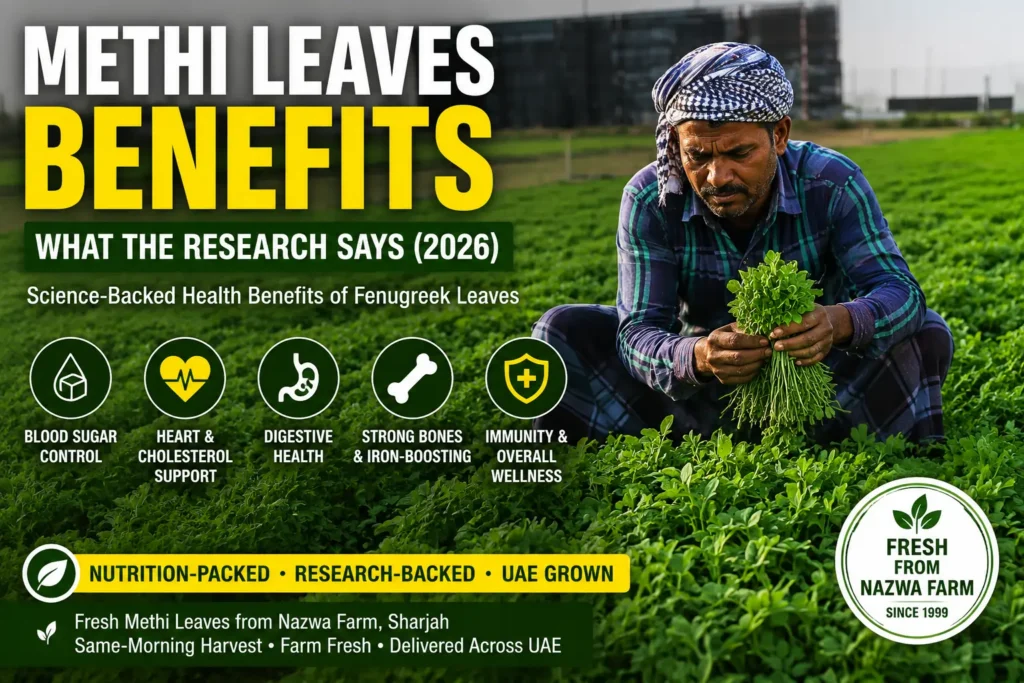
TL;DR
- Methi leaves (also called fenugreek leaves, حلبة خضراء in Arabic) are the fresh green leaves of Trigonella foenum-graecum – one of the most nutritionally dense leafy vegetables grown in the UAE.
- Fresh methi leaves contain 6.5mg of iron per 100g and 395mg of calcium per 100g – the calcium content rivals dairy, making methi one of the best plant-based sources of both minerals (USDA National Nutrient Database; ICMR Indian Food Composition Tables, 2017).
- The most studied health benefits of methi are blood sugar management, cholesterol reduction, digestive support, and bone health – all backed by peer-reviewed research.
- Fresh methi leaves are nutritionally superior to dried kasuri methi for micronutrients: the drying process removes 83 to 85% of vitamin C content (Garni Foods, 2025).
- Nazwa Farm grows and supplies fresh methi leaves with same-morning harvest from their Nazwa, Sharjah farm – one of the very few UAE farms growing this specialist South Asian crop consistently – delivering to Dubai, Sharjah, Ajman, and Abu Dhabi.
What Are Methi Leaves and Why They Are Worth Eating Every Week
Methi leaves are the fresh green leaves of the fenugreek plant (Trigonella foenum-graecum), a legume-family herb that has been used in South Asian, Middle Eastern, and North African cooking and traditional medicine for centuries. In Arabic the plant is called حلبة (hulba), and the fresh leaves are حلبة خضراء. The plant produces small trifoliate leaves – three-leaflet clusters that resemble clover – with a characteristic bitter-nutty aroma that is entirely unlike any other leafy green.
Fresh methi leaves are the young green leaves of the Trigonella foenum-graecum plant. They are higher in vitamins A, C, and K than the seeds, and are used primarily as a vegetable and culinary herb rather than a therapeutic supplement (Medstown, 2026).
The three main forms of methi are fresh leaves (used as a vegetable in methi dal, aloo methi, methi paratha, and methi gosht), dried leaves called kasuri methi (used as a concentrated flavoring herb), and methi seeds (used medicinally and as a spice). This article focuses specifically on the fresh leaves – the form grown and supplied by Nazwa Farm, and the form with the highest micronutrient content.
Methi is a specialist crop. Most UAE hydroponic farms cannot grow it – it requires soil cultivation. Nazwa Farm, established in 1999 in Nazwa, Sharjah, is one of the very few UAE farms growing fresh methi consistently and supplying it wholesale across Dubai, Sharjah, Ajman, and Abu Dhabi.
Methi Leaves Nutritional Profile: What 100g Contains
Fresh methi leaves have a nutritional profile that stands apart from most common leafy greens. Their iron and calcium content in particular are exceptional.
| Nutrient | Per 100g Fresh Methi Leaves | Relevance |
|---|---|---|
| Calories | ~49 kcal | Low energy load |
| Iron | 6.5mg | Higher than most vegetables; prevents anemia |
| Calcium | 395mg | Rivals dairy for calcium density |
| Protein | ~4.4g | High for a leafy green |
| Dietary fiber | ~7.2g | Soluble and insoluble; supports gut and glycemic health |
| Vitamin K | ~140mcg (117% RDI) | Bone mineralization and blood clotting |
| Vitamin A | High | Eye health, immunity, skin repair |
| Vitamin C | ~52mg | Antioxidant; degrades in drying – fresh leaves only |
| Magnesium | ~191mg | Muscle function, blood pressure regulation |
| Folate | Significant | DNA synthesis; critical in pregnancy |
Sources: USDA National Nutrient Database; ICMR Indian Food Composition Tables (2017); Zandu Care (2025)
The iron content of fresh methi leaves at 6.5mg per 100g is higher than most commonly consumed vegetables and is particularly relevant for anemic patients and menstruating women. The calcium content of 395mg per 100g rivals dairy in density, making methi an exceptionally valuable food for lactose-intolerant individuals and postmenopausal women managing bone density. The vitamin K content at 117% of the recommended daily intake plays a direct role in bone mineralization and blood coagulation (USDA National Nutrient Database; ICMR, 2017).
Fresh fenugreek greens are an excellent source of several vital antioxidants and minerals including vitamin C, vitamin A, vitamin E, carotenes, calcium, iron, magnesium, potassium, selenium, and manganese. Soluble and insoluble dietary fiber content in the leaves aids digestion and smooth bowel movements (Nutrition-and-You).
Fresh Methi vs Kasuri Methi: Why the Form You Eat Matters
Understanding the difference between fresh methi leaves and kasuri methi (dried fenugreek leaves) helps you get the most out of this plant in both cooking and nutrition.
Because of the drying process, kasuri methi has 83 to 85% less vitamin C compared to fresh methi leaves. Kasuri methi contains a stronger aroma and flavor and can be stored for a long time, while fresh methi spoils quickly (Garni Foods, 2025).
Fresh methi leaves carry a lower concentration of active alkaloids than the seeds but provide superior micronutrient content and are safe for daily, unrestricted consumption as a vegetable – which seeds are not (Medstown, 2026).
The practical summary:
| Form | Best Use | Vitamin C | Shelf Life | Safe Daily Quantity |
|---|---|---|---|---|
| Fresh methi leaves | Vegetable dishes, daily nutrition | Full (52mg/100g) | 3-5 days refrigerated | Unrestricted as a vegetable |
| Kasuri methi (dried) | Flavoring and finishing dishes | Reduced by 83-85% | Months in sealed container | Small amounts as a herb |
| Methi seeds | Therapeutic/medicinal use | Minimal | Years | Controlled – consult a doctor |
For maximum nutritional benefit, fresh methi leaves sourced as close to harvest as possible are the best choice. This is why same-morning harvest from a UAE soil farm makes a meaningful difference – not just in taste but in the vitamin C and other heat- and oxidation-sensitive nutrients that degrade with every hour post-harvest.
9 Science-Backed Health Benefits of Methi Leaves
Benefit 1: Blood Sugar Management – The Most Researched Property
Methi’s effect on blood glucose is the single most studied aspect of fenugreek across all research. The mechanism is well understood and operates through two distinct pathways.
Fenugreek’s relationship with blood glucose management is the most thoroughly studied of all its health associations, with evidence spanning laboratory studies, animal models, and human clinical trials. The primary mechanism operates through an unusual amino acid called 4-hydroxyisoleucine, found almost exclusively in fenugreek among all plants (Medstown, 2026).
The second mechanism involves galactomannan – a soluble dietary fiber found in fenugreek that slows carbohydrate absorption in the gut.
Galactomannan, the primary soluble dietary fiber in fenugreek, suppresses intestinal glucose absorption, inhibits hepatic glucose production, promotes the generation of pancreatic beta-cells, improves glucose resistance, and suppresses oxidative stress, lipid peroxidation, and inflammation (PMC, 2022).
Research conducted in India found that consuming 100 grams of defatted fenugreek seed powder helped patients with type-1 diabetes reduce their fasting blood sugar levels. Another controlled trial showed that adding 15 grams of fenugreek seed powder to a meal helped reduce post-meal blood sugar levels (Sunova, 2024).
An important distinction: most blood sugar clinical trials have used fenugreek seed powder, not fresh leaves. Fresh leaves carry a lower concentration of the active compounds but provide superior micronutrient content and are safe for daily unrestricted consumption as a vegetable (Medstown, 2026). For daily dietary use, fresh methi leaves eaten regularly as part of meals is a practical and low-risk approach. For therapeutic blood sugar management, consult a doctor before using seed-based supplements.
Benefit 2: Cholesterol Reduction and Heart Protection
Beyond cholesterol, fenugreek’s saponins and flavonoids have demonstrated antiplatelet activity in laboratory research, reducing the tendency of platelets to aggregate – directly relevant to cardiovascular risk reduction. For patients managing both diabetes and cardiovascular risk, regular methi consumption represents an accessible and evidence-informed dietary intervention (Medstown, 2026).
Fenugreek also helps in decreasing serum triglycerides and LDL cholesterol levels (Nutrition-and-You).
Extensive preclinical and clinical research has outlined the pharmaceutical uses of fenugreek as antidiabetic, antihyperlipidemic (cholesterol-reducing), antiobesity, anti-inflammatory, and antioxidant. The pharmacological actions are attributed to steroids, alkaloids, saponins, polyphenols, flavonoids, lipids, carbohydrates, amino acids, and hydrocarbons present in the plant (ResearchGate).
Benefit 3: Digestive Health and Gut Microbiota Support
Methi leaves provide both soluble and insoluble dietary fiber, each supporting different aspects of digestive function.
Galactomannan, the soluble fiber in fenugreek, has been studied for its prebiotic properties and shown to support the growth of Lactobacillus and Bifidobacterium species – two genera consistently associated with improved metabolic health outcomes. Beyond prebiotic function, fenugreek leaves have mild mucilaginous properties – they produce a slight protective coating on the gastrointestinal mucosa that soothes irritation (Medstown, 2026).
Galactomannan fenugreek fiber acts as a prebiotic, providing food for the beneficial bacteria in the gut, which helps promote overall gut health and prevent digestive problems. The fiber also has an anti-inflammatory effect which supports the immune system (LinkedIn, 2023).
Insoluble fiber in the leaves draws water to the intestine, preventing constipation and supporting regular bowel movements. The combined effect of soluble and insoluble fiber makes methi a genuinely useful food for anyone managing digestive irregularity, irritable bowel tendencies, or poor gut microbiota diversity.
Benefit 4: Iron and Anemia Prevention
The iron content of fresh methi leaves at 6.5mg per 100g is higher than most commonly consumed vegetables and is particularly relevant for anemic patients and menstruating women (ICMR, 2017).
Iron deficiency anemia is the most common nutritional deficiency globally, and it is widespread across the South Asian expatriate communities in the UAE – populations for whom methi is already a regular part of the diet. A 100g serving of fresh methi leaves provides approximately 36% of the recommended daily intake of iron for adult women (WHO recommended daily intake: 18mg/day for premenopausal women).
Fenugreek leaves help prevent iron deficiency anemia. Fenugreek leaves are also a very good source of folic acid, which has an important role in DNA synthesis, and when given early in pregnancy, may help prevent neural tube defects in newborns (Nutrition-and-You).
To maximize iron absorption from methi leaves, pair them with a vitamin C source – lemon juice squeezed over cooked methi, or a side of tomatoes. Vitamin C converts plant-based iron from its non-heme form (lower absorption) to a more bioavailable form.
Benefit 5: Bone Health – Calcium, Vitamin K, and Magnesium Working Together
The combination of calcium at 395mg per 100g, vitamin K at 140mcg per 100g, magnesium, and phosphorus in fresh methi leaves makes it genuinely useful for bone density maintenance – a concern particularly relevant to postmenopausal women, elderly individuals, and diabetic patients who carry elevated osteoporosis risk (ICMR, 2017).
The reason the combination of nutrients matters: calcium alone is not sufficient for bone strength. Vitamin K activates osteocalcin – the protein produced by bone-building cells that is required for calcium to be properly incorporated into bone tissue. Without adequate vitamin K, calcium is absorbed but not effectively deposited where it is needed most.
While calcium is the structural mineral of bone matrix, vitamin K activates osteocalcin, a protein produced by osteoblasts (bone-building cells) that is required for calcium to be properly incorporated into bone. Without adequate vitamin K, calcium is absorbed but not efficiently used for bone mineralization (Medstown, 2026).
Fresh methi leaves deliver all three nutrients – calcium, vitamin K, and magnesium – in a single food, making them a particularly efficient dietary choice for bone health support.
Benefit 6: Weight Management and Appetite Regulation
Galactomannan fiber found in fenugreek expands in the stomach, promoting a feeling of fullness and reducing overall calorie intake (Natural Remedy Ideas, 2026).
Galactomannan fenugreek fiber is known to have a high water-absorbing capacity, which results in the formation of a gel-like substance in the stomach. This gel-like substance slows down the digestive process, leading to a feeling of fullness and reducing appetite. This can help reduce calorie intake and promote weight loss over time (LinkedIn, 2023).
The practical value of this mechanism is straightforward: eating a dish that contains methi leaves as a substantial component creates stronger and longer-lasting satiety than a comparable dish without methi. This is not a dramatic pharmaceutical effect, but it is a real and consistent one – relevant for anyone managing calorie intake or trying to reduce portion sizes at subsequent meals.
Benefit 7: Anti-Inflammatory Protection
Fenugreek demonstrates anti-inflammatory properties through its diverse array of phytoconstituents including polyphenols, flavonoids, and saponins (ResearchGate).
Fenugreek’s saponins and flavonoids have demonstrated antiplatelet activity in laboratory research, reducing the tendency of platelets to aggregate – directly relevant to cardiovascular risk reduction (Medstown, 2026).
Chronic low-grade inflammation is the common underlying factor in type 2 diabetes, cardiovascular disease, metabolic syndrome, and NAFLD – all of which are significantly prevalent in the UAE’s population. Regular consumption of foods with anti-inflammatory polyphenols and saponins is a practical dietary strategy for reducing baseline inflammatory load.
Benefit 8: Lactation Support for Nursing Mothers
Fenugreek has been used as a galactagogue – a food that promotes breast milk production – across South Asian, Middle Eastern, and North African cultures for centuries. The scientific basis for this traditional use is now reasonably well supported.
Studies have shown that fenugreek stimulates the expression of genes involved in milk synthesis and milk flow through modulation of the insulin/GH/IGF-1 axis and oxytocin secretion (NCBI LactMed, 2026).
Fenugreek has been used for centuries to help nursing mothers enhance milk production. Its action is thought to involve stimulating the synthesis of prolactin, a hormone essential for breastfeeding (Journal of Natural Remedies, 2024).
Fresh methi leaves eaten as a regular vegetable represent the safest and most culturally familiar form of fenugreek for nursing mothers in South Asian communities. Unlike concentrated seed extracts or supplements, fresh leaves used at normal culinary quantities do not carry the same risk of overshooting therapeutic doses.
Benefit 9: Skin and Hair Health
The health benefits of fenugreek include improving hair health. It also reduces cholesterol levels and protects heart health, while simultaneously boosting the immune system and protecting against flu and various infections (Organic Facts, 2024).
Fenugreek leaves contain biotin, a water-soluble nutrient that strengthens hair and nails. They are also high in all eight essential B vitamins, especially folate. Vitamin A – present in significant amounts in fenugreek leaves – is critical for proper vision, immunity, reproductive health, and growth and development (Signos, 2026).
Fenugreek is also an ingredient in commercial skin care and hair care products specifically because of its high content of protein, biotin, vitamin E, and mucilaginous compounds. Fresh methi leaves in the diet provide these compounds systemically rather than topically, supporting skin cell turnover and scalp health from the inside.
Fresh Methi vs Other Common UAE Leafy Greens: Nutritional Comparison
| Leafy Green | Iron /100g | Calcium /100g | Vitamin K /100g | Fiber /100g | Notable Benefit |
|---|---|---|---|---|---|
| Fresh Methi | 6.5mg | 395mg | 140mcg | 7.2g | Highest calcium and fiber of common greens |
| Spinach (Palak) | 2.7mg | 99mg | 483mcg | 2.2g | Highest vitamin K; rich iron |
| Red Chira (Red Amaranth) | 2.3mg | 215mg | 1,140mcg | 2-3g | Highest antioxidant pigments; liver support |
| Mustard Leaves | 1.6mg | 115mg | 257mcg | 3.2g | Glucosinolates; detox support |
| Coriander Leaves | 1.8mg | 67mg | 310mcg | 2.8g | Volatile oils; digestive support |
Sources: USDA National Nutrient Database (2023); ICMR (2017)
Fresh methi stands out specifically for its calcium content – significantly higher than any other leafy green in this comparison – and for its fiber content, which surpasses all the others. For anyone who does not consume dairy, methi is one of the most efficient plant-based calcium sources available in UAE markets.
How to Get the Most Health Value From Fresh Methi Leaves
The nutritional and health benefits of methi are most accessible when the leaves are fresh and the preparation is appropriate.
Buy and use at peak freshness. Vitamin C content in fresh methi drops rapidly after harvest. The drying process removes 83 to 85% of vitamin C compared to fresh leaves (Garni Foods, 2025). The same degradation happens more slowly from harvest to consumption. Same-morning harvest from a UAE soil farm and using the leaves within 2 to 3 days gives you the most complete nutritional profile.
Do not overcook. Quick stir-frying, adding to dal in the final few minutes, or using in paratha dough preserves more vitamin C and heat-sensitive antioxidants than long, slow cooking. Methi is fully cooked in 5 to 7 minutes as a stir-fry.
Pair with vitamin C for iron absorption. A squeeze of lemon juice over cooked methi, or eating it alongside tomatoes, significantly increases the bioavailability of the non-heme iron in the leaves. This pairing matters most for anyone eating methi specifically to address anemia or low iron levels.
Eat regularly, not occasionally. The benefits of methi – particularly its prebiotic fiber effects on gut microbiota, its gradual contribution to cholesterol management, and its consistent supply of iron and calcium – build over time with regular consumption, not from a single large serving.
Use the stems as well as the leaves. The stems of young methi plants carry comparable nutritional value to the leaves. Chop them finely and include them in cooking rather than discarding.
Important Cautions About Methi Consumption
Methi leaves used as a regular vegetable at normal culinary amounts are safe for most people. The following cautions apply specifically to concentrated seed extracts and supplements, but are worth knowing.
Pregnancy: Large doses of fenugreek may cause a harmful drop in blood sugar and symptoms such as diarrhea, nausea, and digestive issues. People with a health condition or taking prescription medications should speak with a doctor before taking fenugreek supplements (Medical News Today, 2024). Pregnant women should use methi in normal food quantities and avoid concentrated seed supplements.
Medication interactions: Because fenugreek can lower blood glucose and has antiplatelet effects, people taking diabetes medications or blood thinners should inform their doctor if they significantly increase methi consumption.
Seed supplements vs fresh leaves: The cautions for fenugreek supplements relate to seed extracts taken at therapeutic doses – not to fresh leaves eaten as a vegetable. Fresh methi leaves in a normal serving (50 to 100g in a dish) are a food, not a supplement, and carry no meaningful risk at culinary quantities for healthy adults.
Where to Get Fresh Methi Leaves in Dubai, Sharjah, Ajman, and Abu Dhabi
Fresh methi (fenugreek leaves) from Nazwa Farm, Sharjah, is a specialist South Asian herb that very few UAE local farms grow consistently. Nazwa Farm supplies South Asian restaurants, supershops, and F&V shops across Dubai, Sharjah, and Ajman – with 25 years of UAE farming experience and same-day harvest (nazwafarm.com, 2026).
Methi is a specialist crop that requires real soil cultivation. Most UAE hydroponic farms cannot grow it, which makes consistent local supply rare. Nazwa Farm, based in Nazwa, Sharjah, is one of the very few UAE farms growing it throughout the year.
The difference between same-morning harvested methi and imported cold-chain methi is measurable: the drying process removes 83 to 85% of vitamin C (Garni Foods, 2025), and the same degradation happens progressively from harvest to plate. Days-old methi that has traveled through cold-chain transit arrives with significantly less vitamin C, reduced aroma, and a shorter remaining shelf life than leaves cut the same morning.
How to order from Nazwa Farm:
- WhatsApp: +971 50 936 9091
- No minimum order, no contracts
- Delivery to Dubai, Sharjah, Ajman, and Abu Dhabi
- Same-day response guaranteed
- Orders accepted in English, Arabic, Urdu, and Bengali
Visit nazwafarm.com/vegetables/methi for full supply details.
Frequently Asked Questions About the Health Benefits of Methi Leaves
What are the main health benefits of methi leaves?
The nine main health benefits of fresh methi leaves supported by research are: blood sugar management, cholesterol reduction, digestive health and gut microbiota support, anemia prevention through high iron content, bone health through calcium, vitamin K, and magnesium, weight management through appetite suppression, anti-inflammatory protection, lactation support for nursing mothers, and skin and hair health through biotin, vitamin A, and B vitamins.
How much iron is in methi leaves?
Fresh methi leaves contain approximately 6.5mg of iron per 100g – higher than most commonly consumed vegetables. This is around 36% of the recommended daily intake for premenopausal women. Pairing cooked methi with lemon juice or other vitamin C sources increases iron absorption significantly.
Are methi leaves good for diabetes?
The research on fenugreek and blood glucose management is the most extensive of all fenugreek health studies. The galactomannan fiber in methi slows carbohydrate absorption from the gut, and the amino acid 4-hydroxyisoleucine stimulates insulin secretion from the pancreas. Most clinical studies have used seed powder rather than fresh leaves, which have lower concentrations of these active compounds. Fresh methi leaves eaten regularly as a vegetable are a supportive dietary choice for blood sugar management, but are not a replacement for diabetes medication.
Are methi leaves better than spinach nutritionally?
Methi and spinach have different nutritional strengths. Methi has significantly higher calcium (395mg vs 99mg per 100g), higher fiber (7.2g vs 2.2g), and higher protein (4.4g vs 2.9g). Spinach has higher vitamin K (483mcg vs 140mcg) and is lower in calories. For calcium, fiber, and gut health, methi is the stronger choice. For vitamin K and iron, spinach is comparable or stronger. Both are valuable and complement each other when eaten regularly.
What is the difference between fresh methi, kasuri methi, and methi seeds?
Fresh methi leaves are the young green leaves used as a vegetable in cooking. They have the highest vitamin C and micronutrient content of the three forms. Kasuri methi is the air-dried version – more concentrated in flavor but with 83 to 85% less vitamin C than fresh leaves, used as a finishing herb in small amounts. Methi seeds are the dried hard seeds with the highest concentrations of 4-hydroxyisoleucine, galactomannan, and trigonelline – used at controlled quantities in therapeutic contexts.
How often should you eat methi leaves?
There is no established upper limit for fresh methi leaves eaten as a vegetable. Consuming a 50 to 100g serving 3 to 5 times per week is consistent with normal dietary patterns in South Asian communities where methi is a staple. Daily consumption as part of a varied diet is a standard approach for anyone wanting to regularly benefit from its iron, calcium, and fiber content.
Where can I buy fresh methi leaves in Dubai or the UAE?
Nazwa Farm grows and supplies fresh methi leaves from their soil farm in Nazwa, Sharjah, delivering to buyers across Dubai, Sharjah, Ajman, and Abu Dhabi. They are one of the very few UAE farms growing this specialist crop consistently. Order via WhatsApp at +971 50 936 9091 – no minimum order, no contracts, same-day response. Full details at nazwafarm.com/vegetables/methi.
Can methi leaves help with weight loss?
Galactomannan – the soluble fiber in fenugreek – absorbs water in the stomach and forms a gel-like substance that slows digestion and creates a feeling of fullness. This reduces appetite and overall calorie intake, supporting weight management over time. Fresh methi leaves eaten as part of meals deliver this fiber along with protein, making them one of the more satiating leafy greens available.
Key Takeaways
- Fresh methi leaves (fenugreek leaves) are among the most nutritionally dense leafy greens available, with exceptional levels of iron (6.5mg/100g), calcium (395mg/100g), fiber (7.2g/100g), and vitamin K.
- The calcium content of methi rivals dairy, making it one of the most practical plant-based calcium sources for lactose-intolerant individuals and postmenopausal women in the UAE.
- Galactomannan fiber in methi supports blood sugar management, cholesterol reduction, digestive health, prebiotic gut bacteria, and appetite regulation through consistent, well-documented mechanisms.
- Fresh methi leaves contain 83 to 85% more vitamin C than kasuri methi – the drying process destroys most of this critical nutrient. Fresh, same-morning harvested leaves provide the most complete nutritional benefit.
- Eating methi regularly at normal culinary quantities is safe for most adults. The cautions around fenugreek relate to concentrated seed supplements at therapeutic doses, not to fresh leaves used as a vegetable.
- Nazwa Farm is one of the UAE’s only consistent sources of fresh methi, growing it on real soil in Nazwa, Sharjah, and delivering same-morning harvested leaves across Dubai, Sharjah, Ajman, and Abu Dhabi.
Nazwa Farm is a UAE soil farm established in 1999 by Md Mafzal Ahmed, supplying 22+ varieties of fresh leafy vegetables and herbs directly to restaurants, hotels, supermarkets, and home buyers across Dubai, Sharjah, Ajman, and Abu Dhabi. Order fresh methi and other vegetables via WhatsApp: +971 50 936 9091 or visit Methi Leaves Page To buy Methi Leaves.